A head injury can bleed inside the skull for hours before anyone sees a symptom. There is no cut to dress, no swelling to point at — just a quiet bleed that keeps growing while the patient waits for a CT scan that may be hours away, in a hospital that may be further still. In Ahmedabad, a company called Bioscan Research looked at that waiting time and decided it was the problem to solve. Its answer is CEREBO, a handheld device that can spot bleeding inside the brain in under a minute, at the roadside, in an ambulance, or in a rural clinic — no scanner room, no radiation, no specialist required.
Bioscan Research began in Ahmedabad in 2013, founded by Anupam Lavania and Shilpa Malik with a single conviction: that the first check after a head injury should travel to the patient, not the other way round. The company works across optics, electronics, mechanics and software to build medical devices that detect life-threatening conditions non-invasively, and CEREBO is its flagship — a point-of-care scanner built for the golden hour after trauma, when every minute of delay changes the outcome.
The device: light that reads the brain
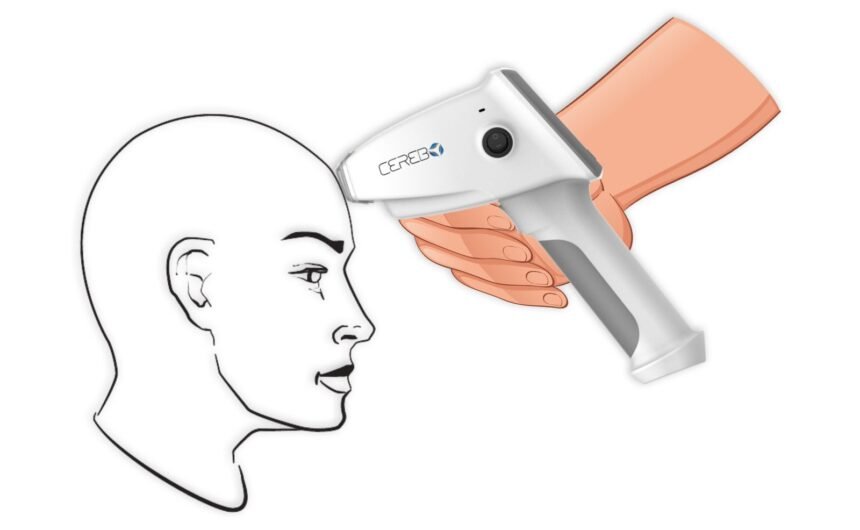
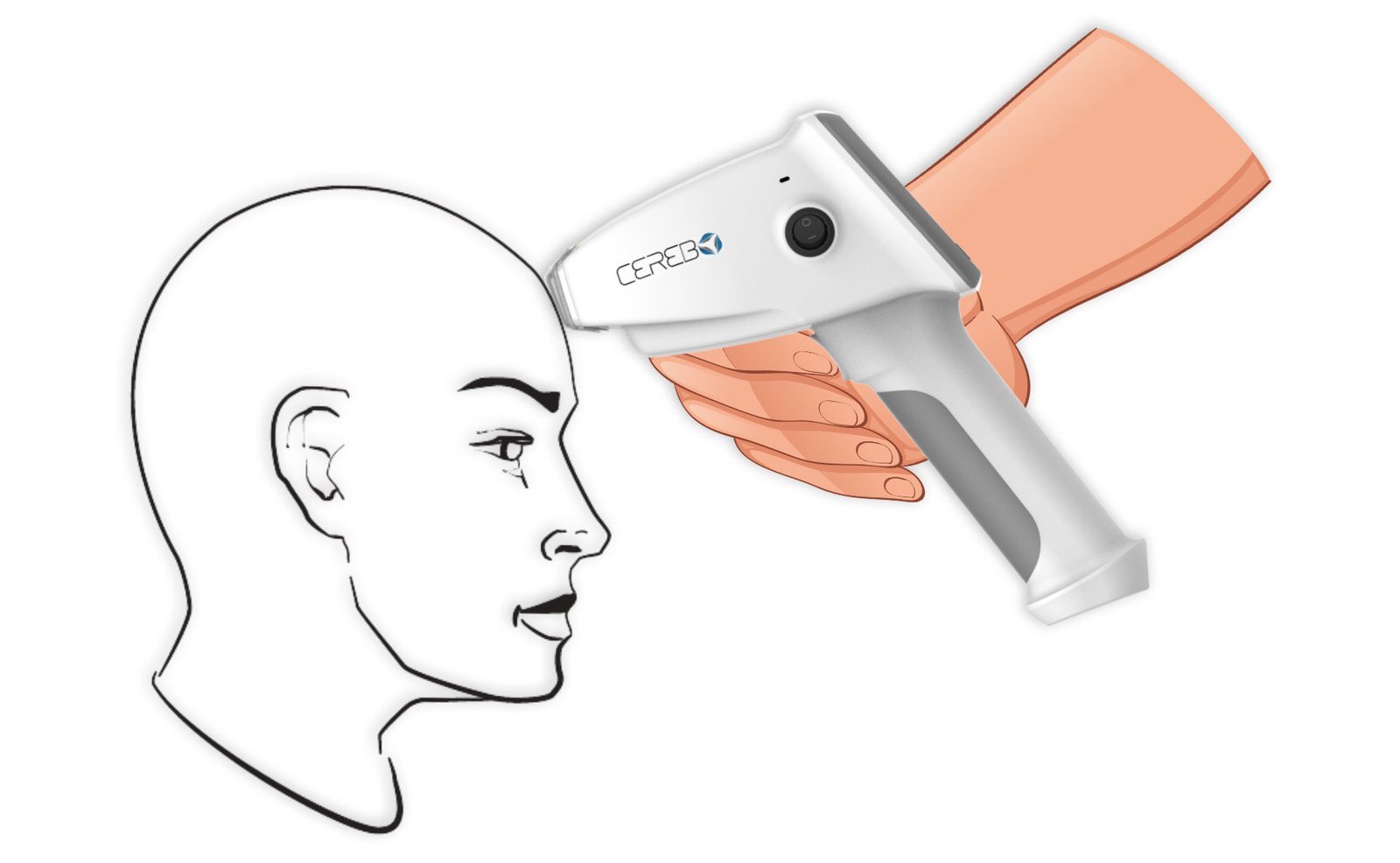
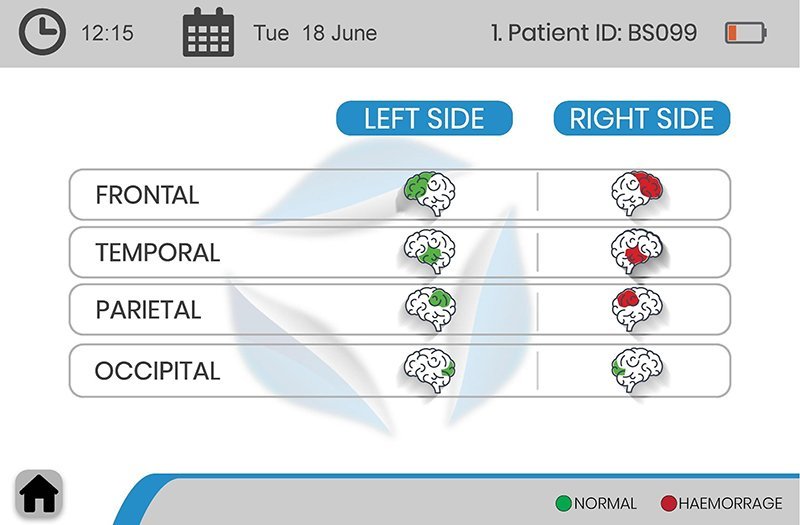
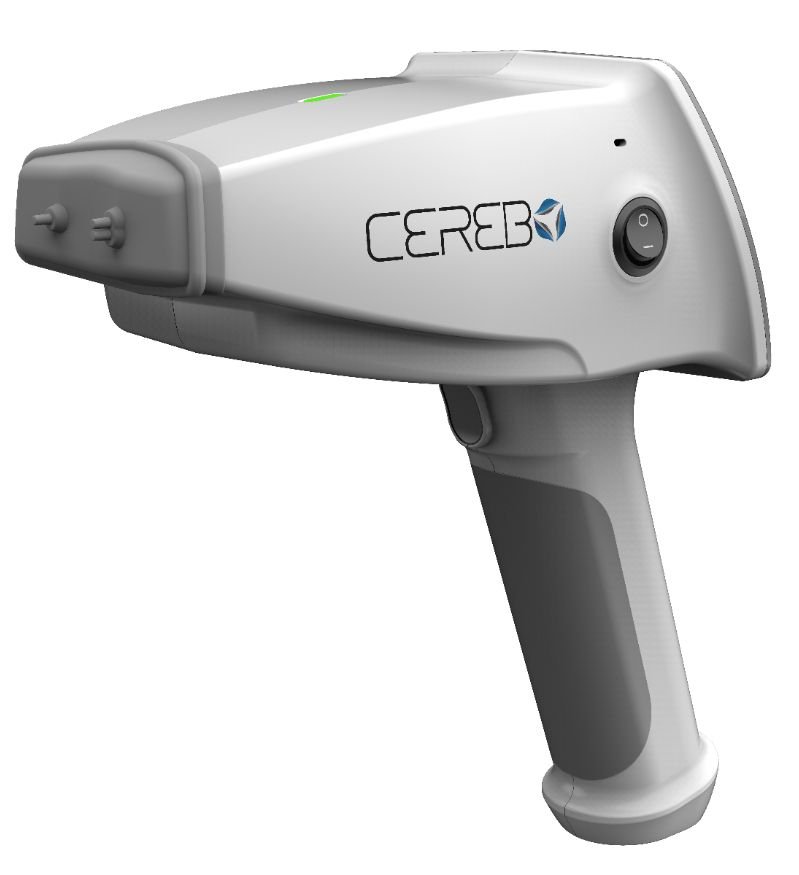
CEREBO works with near-infrared spectroscopy, a technique that shines harmless near-infrared light through the skull and reads how it interacts with haemoglobin in the brain. Machine-learning algorithms turn that reading into an answer in under a minute: a green light when there is no bleed, a red light when there is one, and a colour-coded report across the frontal, temporal, parietal and occipital regions on each side of the head. The detailed report can be downloaded from the company’s Cerebo Cloud and shared with a doctor.
The device is shaped a little like a small hair dryer, and it is designed to be used wherever the patient is. It is radiation-free, so it is safe for infants and pregnant women, and it needs only about 30 minutes of training — a paramedic or first responder can run it. At around Rs 15 lakh, the company says, it costs a fraction of the CT or MRI machines that cost several crores, which is exactly the point: CEREBO is built for triage, the first objective check that tells a medical team who needs a scan right now.
Built with India’s medical institutions
CEREBO was developed in 2023 through a collaboration between the Indian Council of Medical Research’s Medical Device and Diagnostics Mission Secretariat, AIIMS Bhopal, NIMHANS Bengaluru, and Bioscan Research. The device has undergone clinical validation and multi-centre trials, received regulatory clearance from the Central Drugs Standard Control Organisation, and its findings have been published in the journal Neurology India. It is listed on the Government e-Marketplace, where government hospitals can procure it, and the ICMR has urged state governments to adopt it for ambulances, trauma centres and rural clinics.
“TBI is a major public health challenge, particularly in emergency settings,” ICMR Director-General Dr Rajiv Bahl has said of the need the device addresses. More than 50 million people suffer a traumatic brain injury every year around the world, the company notes, and in India the gap between the accident and the scan is often the most dangerous part of the journey. A device that closes that gap at the point of care changes what the first hour after an injury can look like.
More Read
From Ahmedabad to the world
The work has been gathering momentum. In 2019 Bioscan Research won a special prize from C-CAMP at the National Bio Entrepreneurship Competition, and in July 2026 the company raised $1 million in a seed round led by Unicorn India Ventures to expand in India and overseas, upgrade the product and create new intellectual property. The company says it grew five-fold over the past year, holds ISO 13485:2016 certification for medical-device quality management, and has already fielded enquiries from Nigeria, Kenya and South Africa as well as the Gulf region.
That reach follows naturally from what the device is for. CEREBO is designed for ambulances and trauma centres, for rural clinics far from any scanner, for disaster response and for military medicine — anywhere a brain injury needs an answer before the hospital does. A small handheld scanner from Ahmedabad now carries that answer in a single minute, and it carries it to exactly the places that have waited longest for one.
Keep reading: Turning Methane Into Protein: Inside String Bio, the Bengaluru Company Brewing Food From Greenhouse Gas · The Liquid Cornea: Inside Pandorum, the Bengaluru Biotech Growing Human Tissue in a Lab · More Chemicals, Materials & Life Sciences stories
Like stories like this? Add Exceptional Technology as a preferred source on Google to see more of our reporting in your search results and Discover feed.