A soldier on patrol in the mountains spots a target a valley away. A decade ago, calling in a strike meant radios, coordinates and waiting. Today, the answer can fit inside a tube slung over a shoulder — a small aircraft that pops out of a canister, finds its own way through jammed skies, watches the target, and finishes the job. In Pune, a company called Artemon Aerospace has spent more than a decade building exactly that kind of machine.
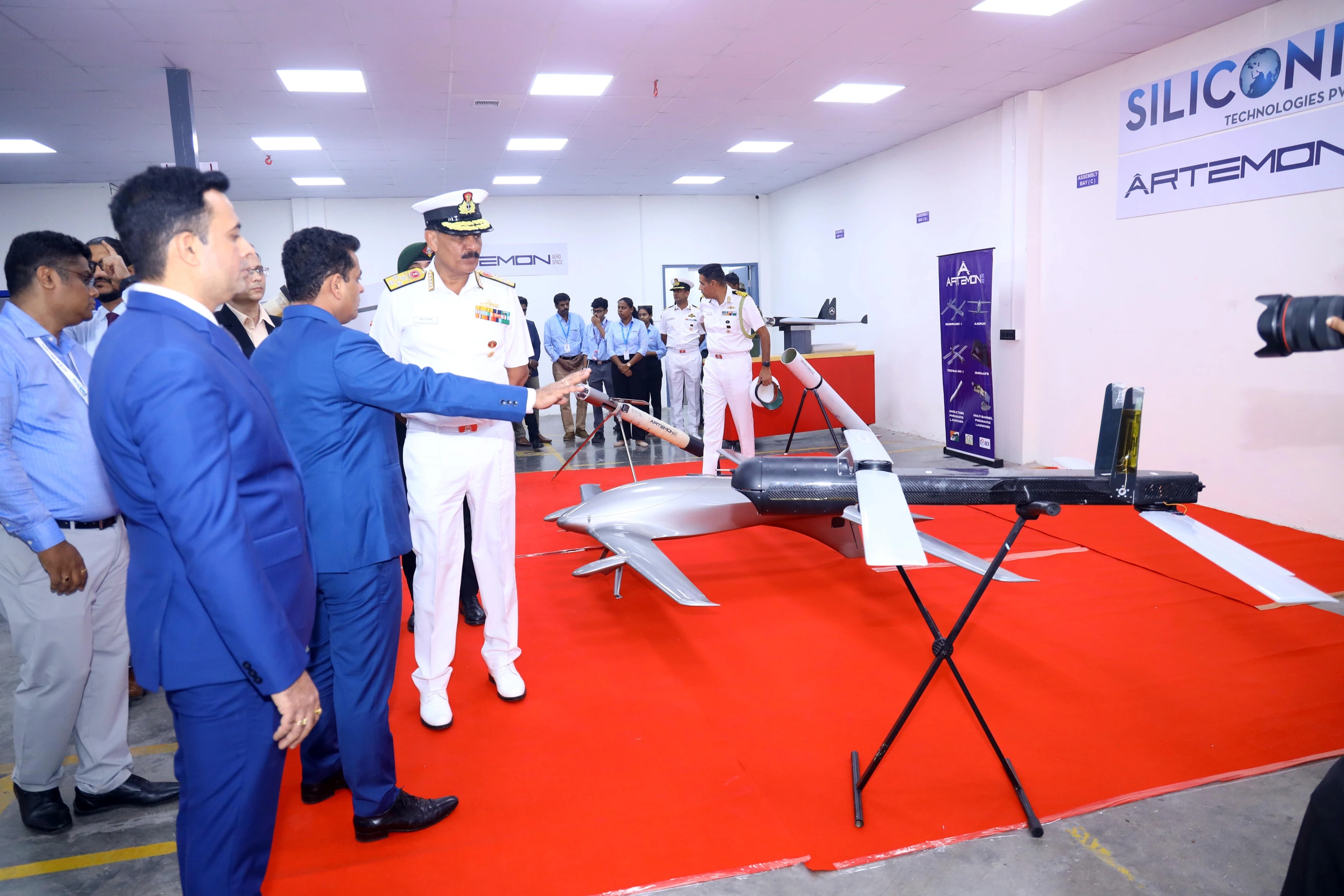
Artemon Aerospace & Infra Pvt. Ltd. designs, develops and manufactures loitering munitions and unmanned aerial systems from its base in Pune. Founded in 2012 by brothers Sushil Ghule and Saurabh Ghule, the bootstrapped company has grown from an iDEX challenge winner into a supplier whose aircraft have flown in Indian Army trials — and whose newest platforms were on show at the Indian Navy’s Swavlamban 2026 exhibition in New Delhi this November.
A fleet, not a single drone
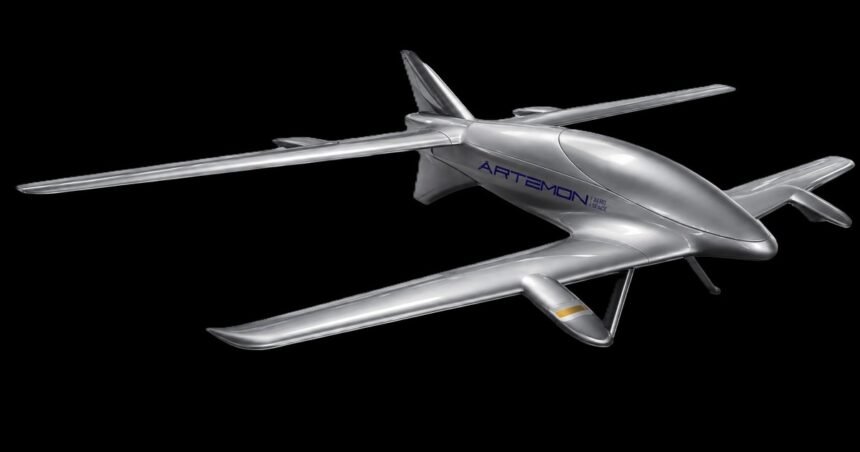
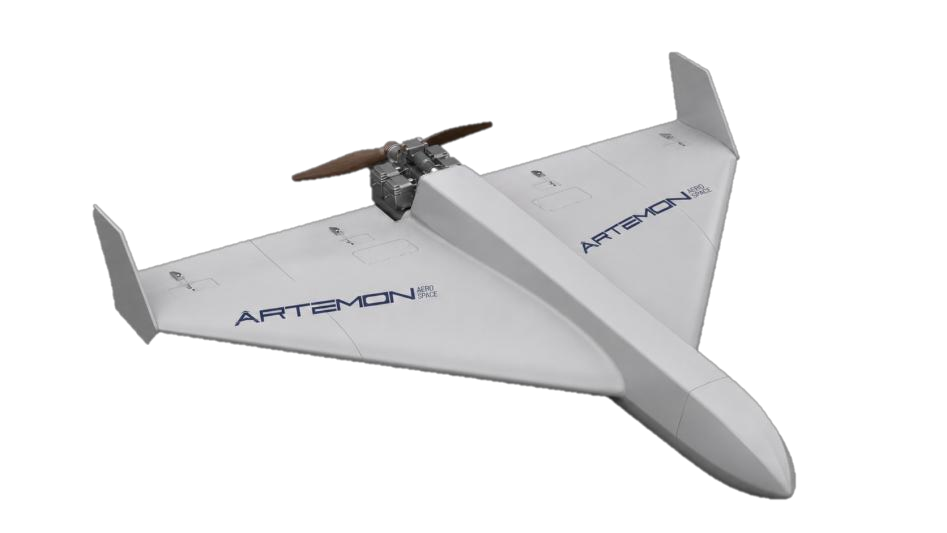
Artemon’s catalogue reads like a ladder of reach. At the top sits VAJRASTRA, a one-way attack unmanned aerial system in a flying-wing configuration, with a mission range of up to 1,000 km. It launches by rocket-assisted take-off or catapult, needs no runway, and can operate from advanced landing grounds with rail launch — the company says its optical and inertial navigation keeps it on course even where satellite signals are denied.
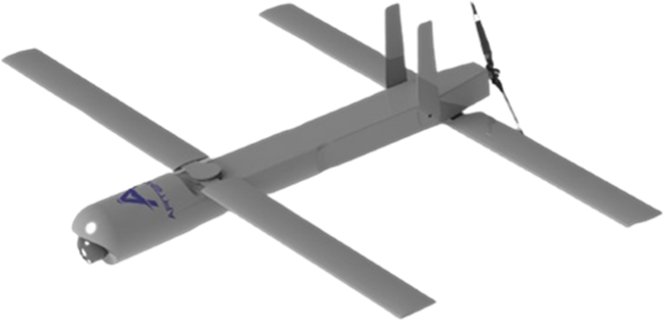
Then comes RUDRA MK-I, a 25 kg loitering UAV built to be carried, assembled in minutes and launched from a canister or pneumatic tube. It flies beyond visual line of sight, in autonomous or man-in-loop mode, navigates by inertial and optical sensors when GPS is jammed, and can fly in swarms. Around them sits the rest of the fleet — TEEVRA MK-I, ADVAY, AAGHAT and UMRAATS — plus single and multi-barrel pneumatic launchers and Nanoweave Composites, the company’s own carbon-fibre airframe work.
Proven with the Army
The designs have been tested where it counts. Artemon first showed its loitering munitions to the armed forces at the iDEX Swavlamban event in 2023, and at Swavlamban 2024 it unveiled a version that launches from the sonobuoy tubes of the Indian Navy’s P-8I maritime patrol aircraft — up to 120 munitions on a single mission, flying as a swarm. In trials with the Indian Army’s Infantry Directorate, announced in July 2025, its canister-launched medium-class system held a stable video link beyond 50 km, flew more than 170 km in total and stayed airborne for about an hour and a half, carrying a 1 to 1.5 kg warhead. The same aircraft can fly the mission again as a reusable surveillance platform — the company builds it to be both a precision strike weapon and a set of eyes in the sky.
The engineering behind that is deliberately layered: two propulsion options — electric ducted fan and micro-turbojet — across three loitering-munition classes carrying 1–2 kg, 2–4 kg and 7–8 kg payloads, with ranges from 20 to 150 km. Bigger airframes in the pipeline stretch to 30–40 kg take-off weight with 8–10 hours of endurance, and a coaxial-rotor design up to 150 kg. The company says about 63% of the canister-launched system is indigenous by components and 68% by cost.
More Read

Built in Pune, built for the front line
Everything is designed and built in Pune, at the company’s R&D and prototype manufacturing unit in Wagholi, with its office in Hadapsar. The team is led by chief technology officer Cdr. Charith A V (Retd), who previously served as a Joint Director at the Aeronautical Development Agency and in the Indian Navy. The company is ISO 9001:2015 certified and a DPIIT-approved MSME in the UAV sector — and at Swavlamban 2026 it presented its full portfolio of loitering munitions and long-range UAVs, with modular payloads, autonomous target acquisition and beyond-line-of-sight communications, to the Navy in New Delhi.
Watch Artemon’s launch and flight footage:
Loitering munitions have become one of the defining weapons of modern conflict, and for years India bought the idea from abroad. Artemon Aerospace is part of the small group of Indian companies determined to build it at home instead — tube by tube, airframe by airframe, trial by trial. From a workshop in Pune, its aircraft are now flying the missions they were designed for.
Keep reading: Flying Blind on Purpose: Inside Beijan, the Student-Built Module That Lets Army Drones Navigate Without GPS · India’s First Inflatable Space Habitat: Inside Akashalabdhi’s AntarikshHAB · More Aerospace & Defense stories
Like stories like this? Add Exceptional Technology as a preferred source on Google to see more of our reporting in your search results and Discover feed.