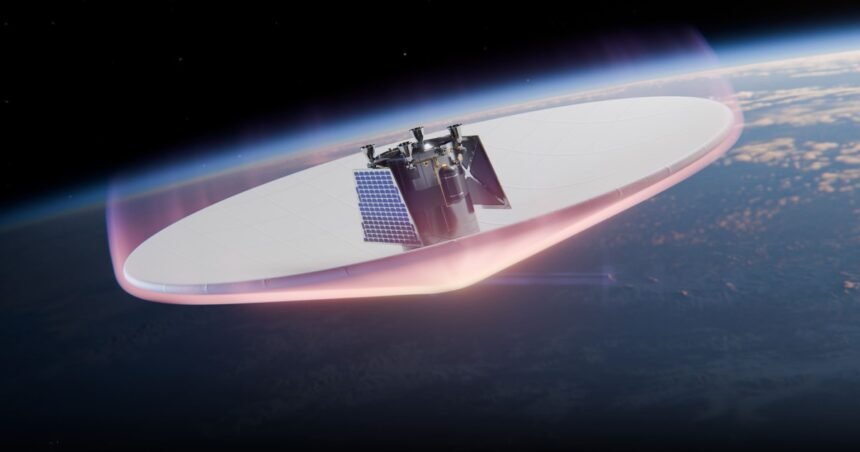
Getting to orbit has become almost routine. Coming back is the hard part. Every rocket launch is still, in effect, a one-way ticket: what goes up either stays up there or burns up on the way home. An Ahmedabad startup is building the missing half of the journey — a way to bring heavy cargo home from space, on schedule, like freight.
Catalyx Space, founded in 2024 by Rifath Shaarook, Clinton D Antony, Keerthan Chand Aluvala and Saqib Hussain — all former Space Kidz India executives — builds ReX, a family of orbital return vehicles designed to carry cargo from low Earth orbit back to designated ocean recovery zones. The company calls it the back-end infrastructure for space: launch is predictable, it says, but downmass isn’t — and Catalyx is turning the return leg into a bookable service.
The largest heat shield ever flown
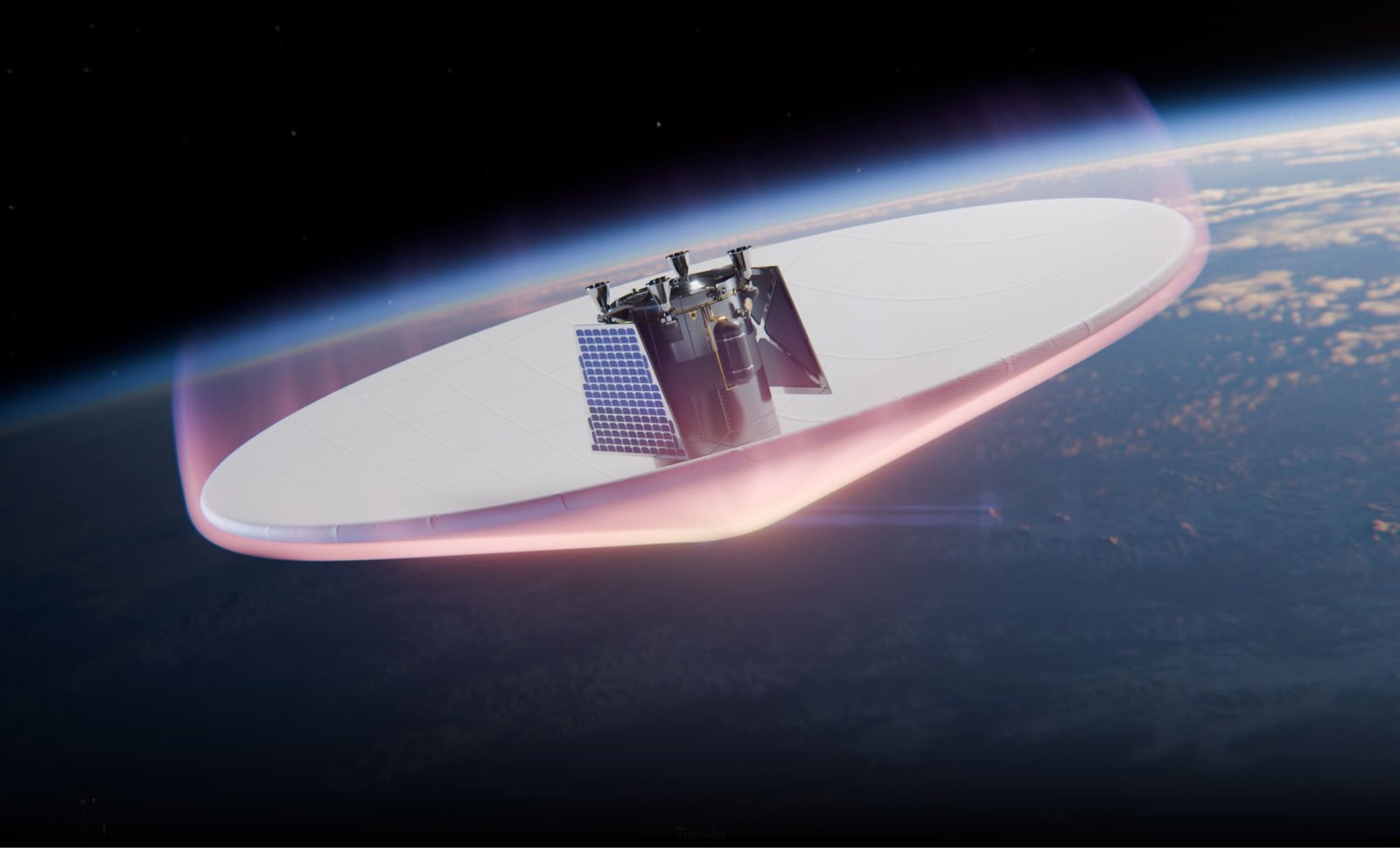
The heart of ReX is its thermal protection system: a foldable, deployable heat shield built on what the company calls cable-tensioned hypersonic decelerator technology. Instead of a small rigid capsule, the shield unfurls into a vast disc — the company calls it the largest heat shield ever flown, spanning 10 to 40 metres depending on the vehicle. Because the shield is so wide, the vehicle slows down gently, with an ultra-low ballistic coefficient of around 45, against roughly 350 for a conventional rigid capsule. That gentler ride is the whole point: it means sensitive cargo — semiconductors, medicines, biocargo — can survive the trip home intact.
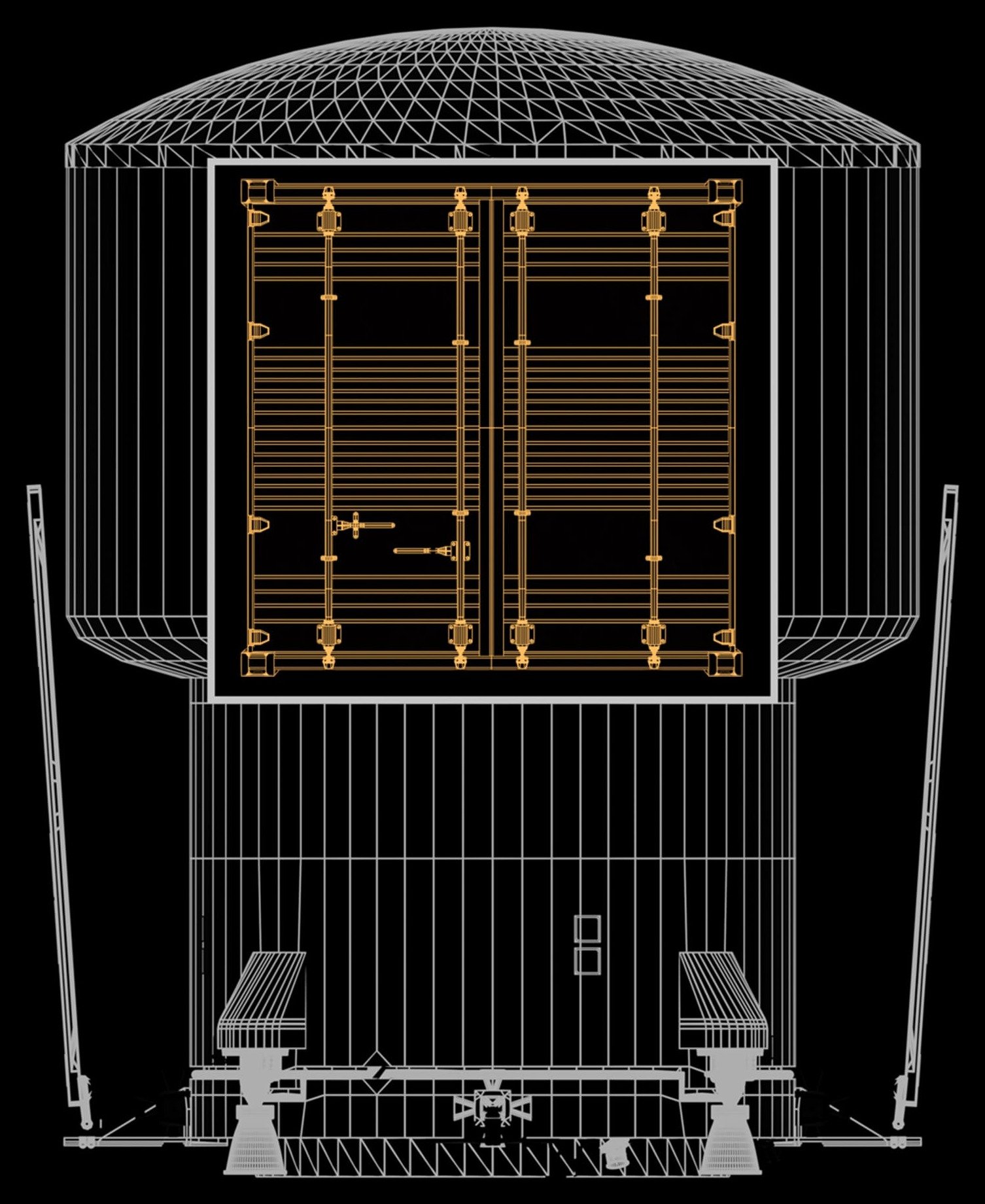
And the scale is what sets ReX apart. The standard rigid-body capsule returns 2,500 kg in 10 cubic metres. ReX-Heavy carries 1,250 kg in 30 cubic metres — a full standard shipping container. ReX-Super Heavy goes further still: 12,000 kg in 60 cubic metres, two shipping containers, in a single flight. The company’s pitch is simple: ReX scales the heat shield, not the price, so returning larger payloads costs less per kilogram.
Tested in the sky, proven in flight
Catalyx has moved fast for a company founded in 2024. It has already launched its first spacecraft with ISRO, demonstrating its satellite separation system and other subsystems while carrying two customer payloads. Within six months of its pre-seed round, it had built and drop-tested its first capsule; in September 2025 it completed a second drop test of the REX capsule from 14,000 feet, validating its parachute recovery system. The company says its team has experience building and launching more than 26 space missions, with over 15 subsystems at the highest technology-readiness level, and it is building a 25,000 sq ft facility in Ahmedabad to bring development, testing and design under one roof.
The mission manifest on the company’s site tells the story of what comes next: ReX-3, an in-orbit technology demonstration, in 2026; ReX-ITD, a 4 kg / 3U commercial mission flying on a Falcon 9, in 2027; ReX-Heavy in 2029; and ReX-Super Heavy after that. The company is also developing Cosmotron, a 50 kg-class satellite bus, as part of the same vertically integrated stack.
More Read

What comes back — and why it matters
The cargo Catalyx wants to bring home is the most valuable kind: products made in microgravity, where crystals grow more evenly and materials behave in ways they never do on Earth — pharmaceuticals, biotech, semiconductors and advanced materials. The same return vehicles can carry time-sensitive research, retrieve components and samples, and serve as a hypersonic testbed for defence sensors and materials. Further out, the company sees its vehicles supplying space stations, recovering orbital assets, and one day carrying cargo from factories on the Moon and Mars.
It is a bet on a simple idea: rockets made getting to space a service, and the next great space business is the journey home. When orbit starts behaving like infrastructure — with scheduled upmass and scheduled downmass — a laboratory, a factory or a pharmacy can treat space the way it treats any other place of business: send something up, make something there, and bring the result back.
The teenager who built the world’s lightest satellite
The ambition has a fitting founder. Rifath Shaarook made headlines at 18 when he designed KalamSat, then the world’s lightest satellite — a 64-gram, 3D-printed marvel — and later ran an academic research lab in India that built and launched eight satellites into orbit. Catalyx has raised about $7.2 million so far: a $1.7 million pre-seed round in January 2025 led by HF0 Residency, and an oversubscribed $5.4 million seed round in October 2025 led by Outlander VC. The company says it clocked $500,000 in revenue in fiscal 2024, before the seed round landed.
Rockets taught us how to leave Earth. Catalyx Space is teaching us how to come home — with the cargo that makes the trip worth it.
Keep reading: From a Tube in Pune to the Front Line: Inside Artemon Aerospace’s Loitering Munitions · Flying Blind on Purpose: Inside Beijan, the Student-Built Module That Lets Army Drones Navigate Without GPS · More Aerospace & Defense stories
Like stories like this? Add Exceptional Technology as a preferred source on Google to see more of our reporting in your search results and Discover feed.