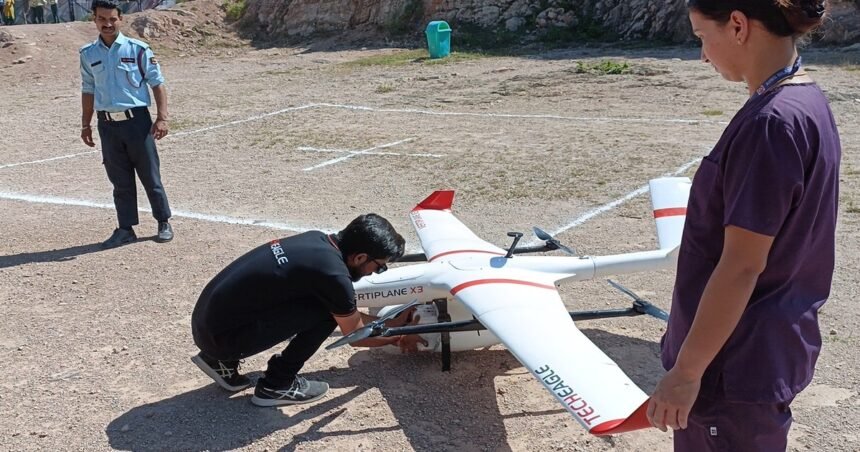
A small white aircraft lifts off from the helipad at AIIMS Rishikesh, climbs two kilometres into the Himalayan foothills and, 29 minutes later, sets down at a district hospital 36 kilometres away — carrying tuberculosis medicines that would have taken two and a half to three hours by road. That flight, in February 2023, was the first of its kind in Uttarakhand. Today, it is routine.
The aircraft is the Vertiplane X3, built by TechEagle, a Gurugram-based startup founded in 2017 by IIT Kanpur alumnus Vikram Singh Meena with co-founder Anshu Abhishek. TechEagle builds the whole stack in-house: the aircraft, swappable cold-chain CargoPods, the EagleOS and FleetOS software that plans and flies every mission, and the droneports the aircraft operate from. The company calls it a sovereign stack, and it is already flying daily in some of the hardest terrain in the country.
A helicopter’s takeoff, an aeroplane’s cruise
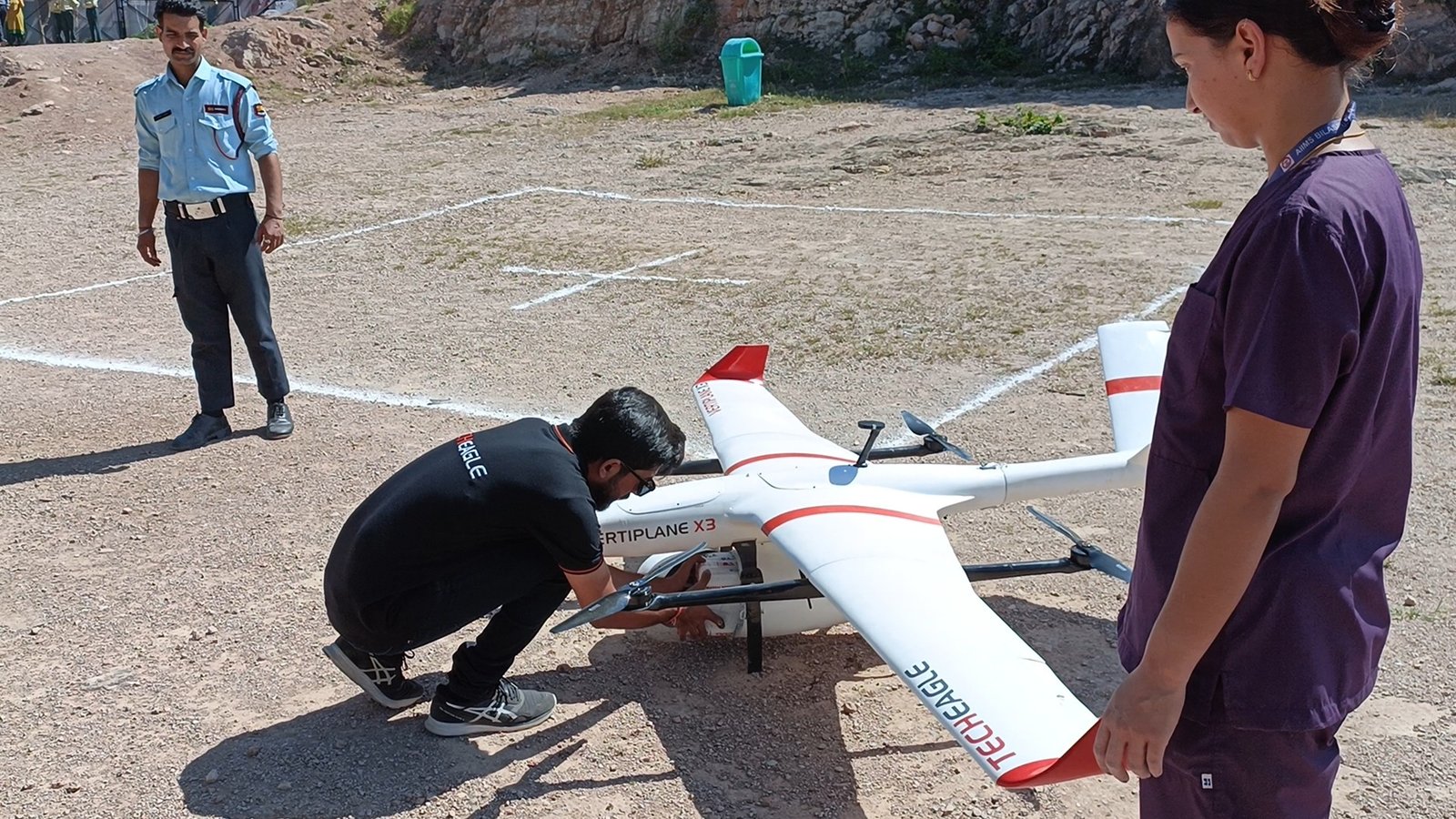
The Vertiplane X3 is a hybrid fixed-wing eVTOL: it lifts off and lands vertically like a helicopter from a patch of ground as small as five by five metres, then transitions to winged cruise like an aeroplane. The company lists a range of 100 kilometres, a top speed of 120 km/h, a payload of 3 to 5 kilograms and a service ceiling of 4,500 metres — high enough for Himalayan valleys, and fast enough to turn a half-day road journey into a half-hour flight.
What it carries matters as much as how far it flies. The swappable CargoPods hold medicines, blood and organs at 2 to 8°C, minus 20°C or minus 70°C, so vaccines and insulin travel cold from hub to clinic. FleetOS handles mission planning, live control, predictive maintenance and analytics, and integrates with hospital order systems and air-traffic management. A second aircraft, the Verticopter X5, covers shorter urban and campus hops — 20 kilometres at 60 km/h with a 5 to 8 kilogram payload — so the same network stretches from mountain districts to city campuses.
The flights that proved it
TechEagle’s record is a catalogue of firsts, each one flown in real service rather than on a test range. In February 2023, the Vertiplane X3 made its first delivery in Uttarakhand, carrying 3 kilograms of TB medicines from AIIMS Rishikesh to the district hospital at Baurari in New Tehri — 36 kilometres non-stop with a two-kilometre climb, in 29 minutes, about six times faster than the road — and flew back with diagnostic samples from patients’ families. In January 2024, a longer flight carried TB medicines 47 kilometres to Chamba and Hindolakhal health centres, climbing more than 2.5 kilometres in 34 minutes, eight times faster than the road.
The same aircraft has delivered a parcel for India Post across 46 kilometres of Kutch in under 30 minutes, five times faster than surface transport, and in November 2022 flew animal vaccines 29 kilometres across Arunachal Pradesh in 20 minutes — 12 times faster than the road — which the company says made it the first in the world to transport animal vaccines by drone. With the Government of Meghalaya, TechEagle built Asia’s first drone delivery hub and network: a central hub at Jengjal hospital and 25 spokes within 50 kilometres, with the first flight reaching a primary health centre in about half an hour instead of two and a half hours by road. The company also flew Asia’s first cold-chain vaccine delivery by drone in Telangana, with the World Economic Forum’s Medicine from the Sky programme, and carried Covid-19 vaccines and medicines into hard-to-reach areas of Himachal Pradesh and Meghalaya.
More Read

A network, not just a drone
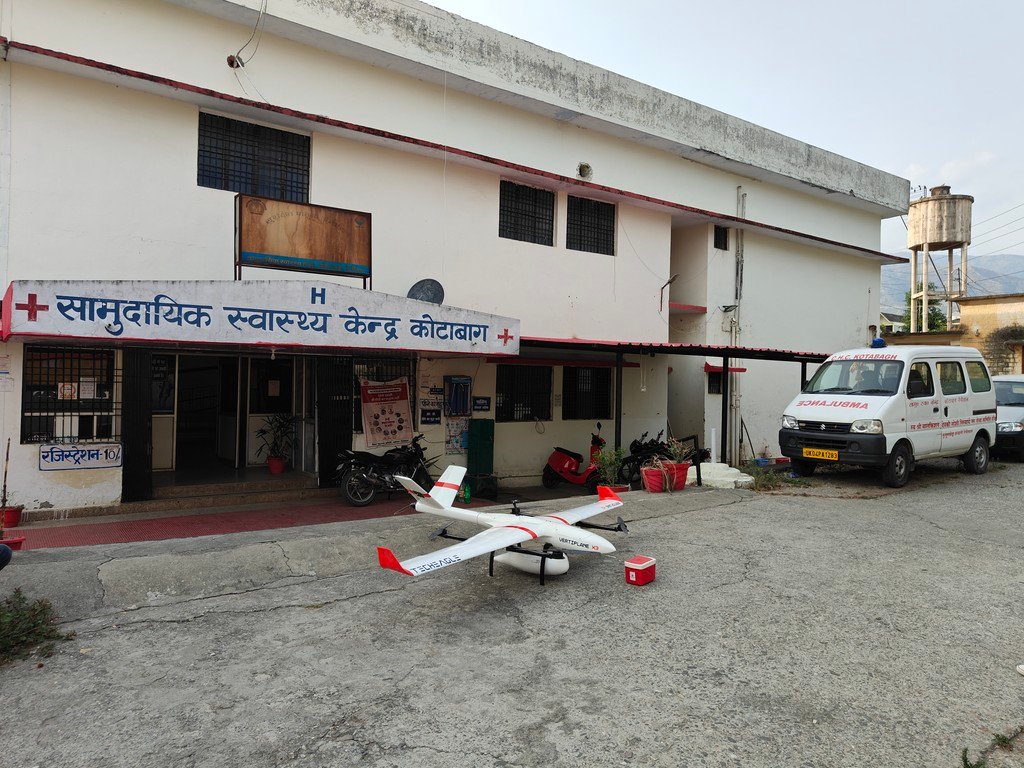
The flights have grown into infrastructure. In November 2024, TechEagle launched eight dedicated drone hubs with premier healthcare institutions across eight states — including AIIMS Guwahati, AIIMS Rishikesh, AIIMS Bilaspur and AIIMS Bhopal — inaugurated virtually by Prime Minister Narendra Modi. The hubs run about 50 flights a day today, with a target of reaching more than 200 locations and scaling toward 5,000 flights a day. Sitics Logistics has ordered 100 of the company’s autonomous BVLOS delivery drones, one of the largest commercial drone-logistics agreements anywhere.
The company says it has now flown more than a million kilometres beyond visual line of sight, delivered more than 100,000 consignments, and completed more than 10,000 cold-chain shipments of vaccines, insulin and other temperature-sensitive products, with zero reported temperature failures. The same aircraft and software serve defence and public-safety missions too, from border logistics to disaster response — the same airframe, a different payload.
The founder who grew up waiting for medicine
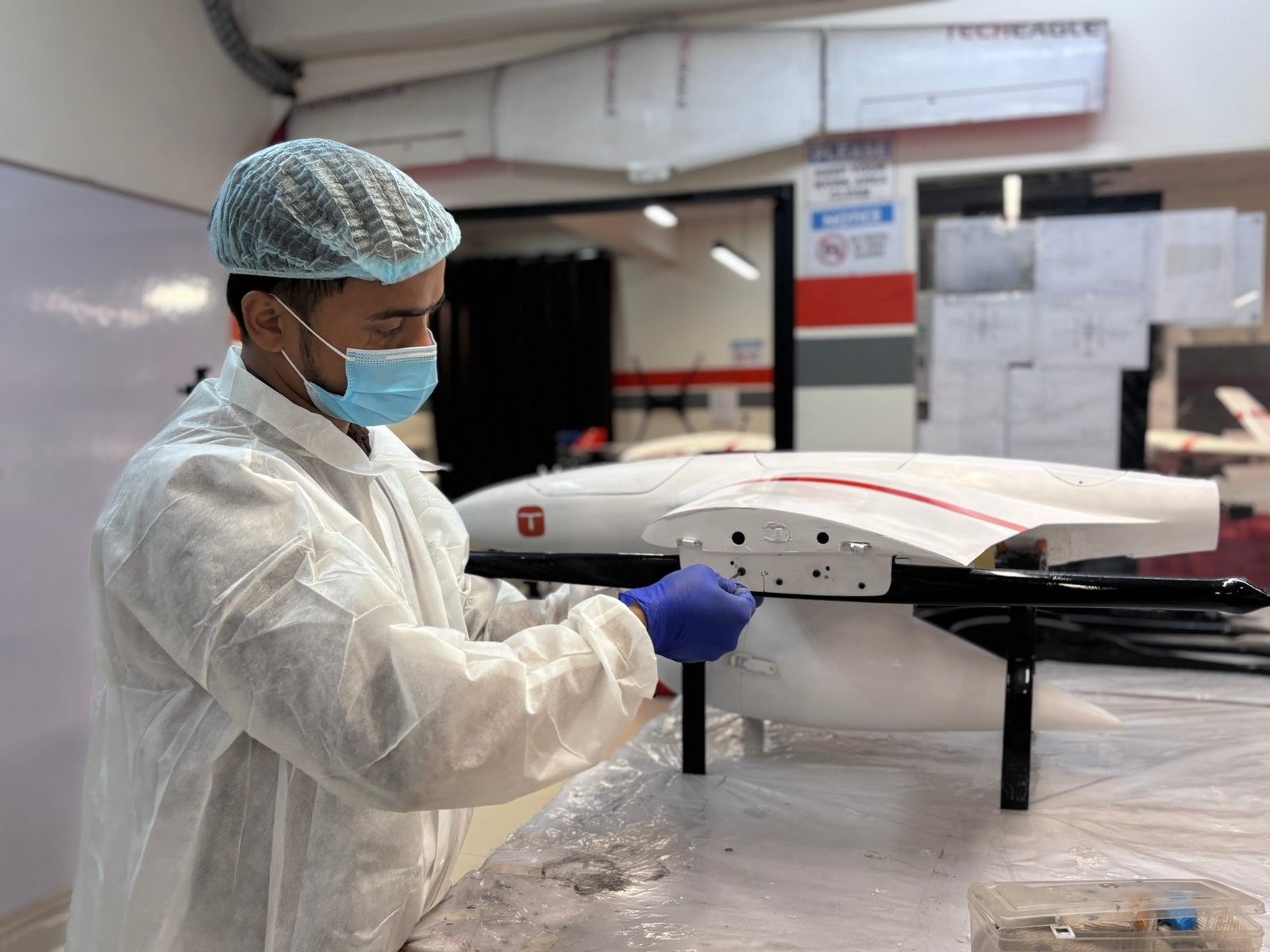
The mission starts with the founder. Vikram Singh Meena grew up in rural Rajasthan, where getting urgent medicine was never certain, and at IIT Kanpur he realised drones could make geography irrelevant — flying over bad roads, broken bridges, floods and mountains. That idea became TechEagle in 2017. The team’s first claim to fame was a lighter one: in 2018, it delivered what the company says was the world’s first cup of tea by drone, in Lucknow. Since then, the company has raised a bridge round in May 2024 co-led by Navam Capital and Inflection Point Ventures, with Paytm founder Vijay Shekhar Sharma participating, and counts AIIMS institutes, state governments and the World Bank among its clients.
The road to a remote clinic in the Himalayas will always be long. TechEagle’s bet is that the sky above it doesn’t have to be.
Keep reading: You Can Now Book a Return From Space: Inside Catalyx Space’s ReX Orbital Return Vehicles · From a Tube in Pune to the Front Line: Inside Artemon Aerospace’s Loitering Munitions · More Aerospace & Defense stories
Like stories like this? Add Exceptional Technology as a preferred source on Google to see more of our reporting in your search results and Discover feed.