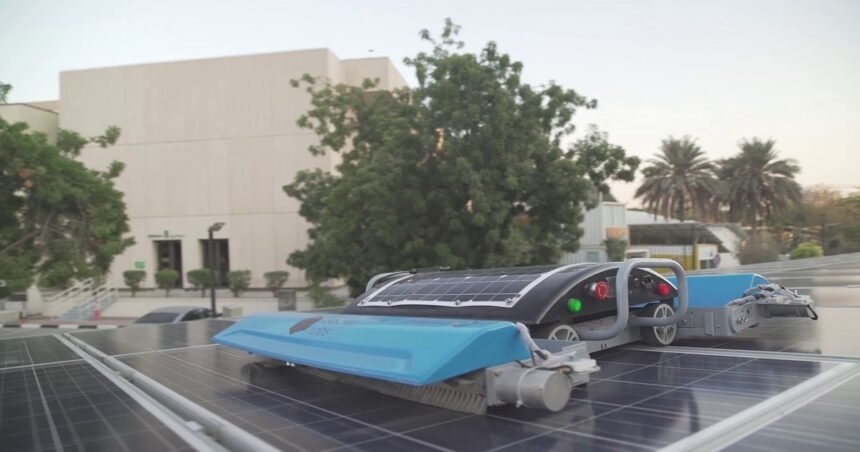
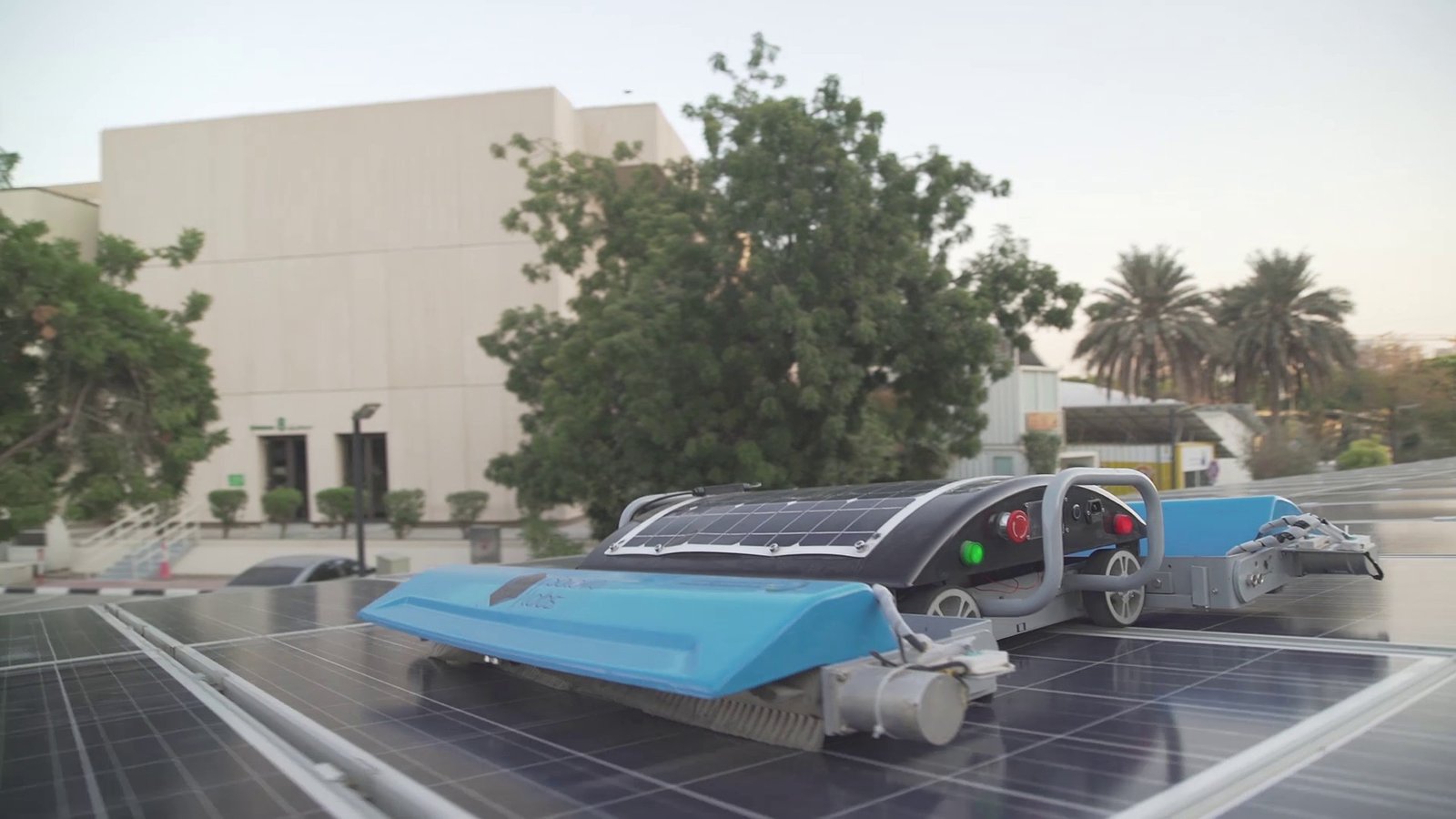
Across a sea of blue glass in the desert heat, a small robot glides along a row of solar panels, its brushes sweeping away the dust as it goes. No tanker follows it. No hose, no crew with buckets. The panels come out clean, the sun pours in, and not a single drop of water is used. That is the quiet revolution Solavio Labs has been building out of Coimbatore — one robot, one row of panels at a time.
Solavio Labs is a Coimbatore cleantech startup founded by engineers Suraj Mohan and Prashant Goel. What began with a simple observation — that India’s solar panels were losing power to dust, and cleaning them was drinking water India could not spare — is now a family of autonomous cleaning robots working on rooftops, carports and giant ground-mounted solar farms across India and the Middle East.
The 4-billion-litre problem
India now has more than 168 gigawatts of installed solar capacity, and every one of those panels needs cleaning. Dust settles fast in India’s dry, windy solar belts, and a dusty panel is a weaker panel. The traditional answer is water — and a lot of it. Washing a single megawatt of panels can take up to 24,000 litres per wash, which means cleaning the country’s entire installed solar capacity just once would use around 4 billion litres of water, roughly the daily water needs of Delhi and Bengaluru combined.
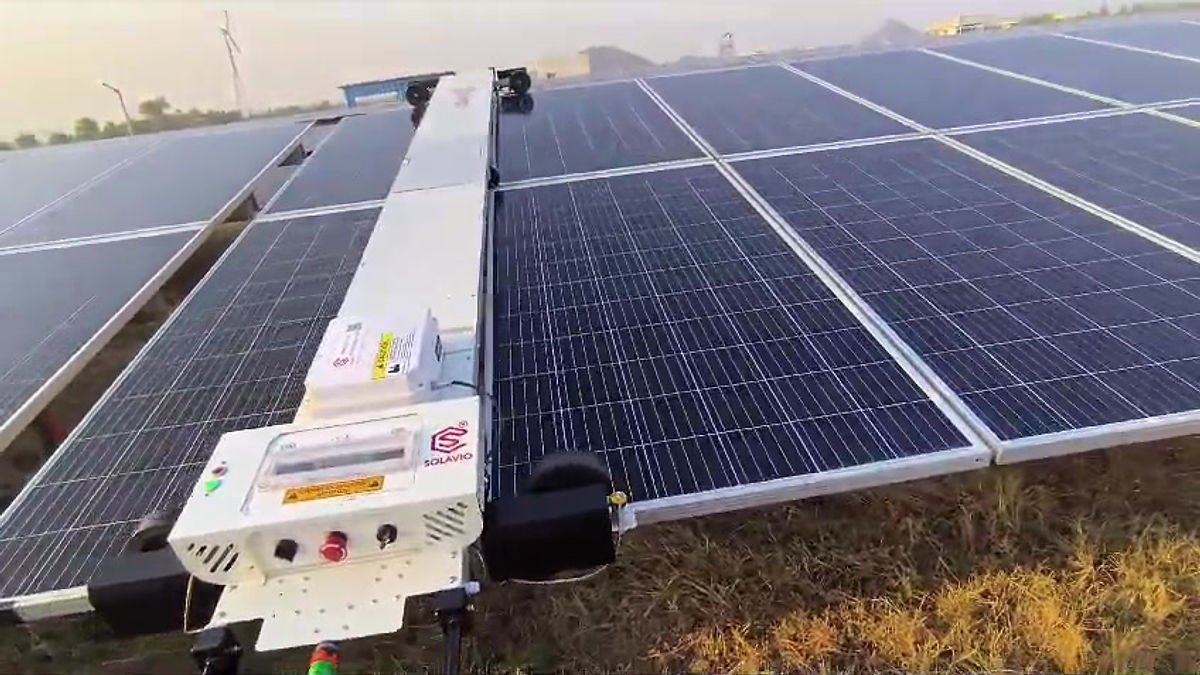
Solavio’s answer is to take water out of the equation entirely. Its EcoBot travels directly across the panels, sweeping dust away with an anti-static microfiber cleaning system powered by friction and targeted airflow. The company says each robot saves more than 2,00,000 litres of water per megawatt every year — water that stays in the ground, in reservoirs, in taps.
How the bots work
The EcoBot moves along a row of panels at up to 0.3 metres per second, speeding up or slowing down depending on how much dust has built up, and runs on its own onboard lithium battery. Cameras fitted to the bot use artificial intelligence to detect the edges of the panels, so it never drives off the side. The brushes use patented DuPont Tynex UV-resistant bristles, chosen so the cleaning leaves zero abrasion on the panel surface — third-party testing across 10,000 cleaning cycles confirmed repeated sweeping causes no damage to the modules.
For rooftops, there is the Independent Bot, a remotely controlled portable unit that goes where the big autonomous machines cannot. The company’s shareable-robot idea — one bot serving multiple rows — cuts the cost of switching to robotic cleaning by more than 60%, the company says. Behind it all sits an IoT dashboard with data analytics and machine learning for predictive cleaning, so operators know when a row needs attention before the dust starts costing them power.
More Read
From Coimbatore to Dubai
Solavio’s robots have travelled a long way from their Coimbatore workshop. The company signed a memorandum of understanding with the Dubai Electricity and Water Authority (DEWA) and commissioned its first set of autonomous cleaning bots for a pilot at the 1.8 MW solar carport at DEWA’s head office campus — the first Indian startup to be incubated and supported by DEWA. Its clients include Tata Power Solar, Welspun Renewable Energy, Adani Solar and Refex in India, and Siraj Power and CleanMax Solar across the Middle East.
Today the company manufactures its robots at a 12,000-square-foot facility in Coimbatore and has sold close to 1,000 of them across India and the Middle East. Along the way it has been incubated at AIC RAISE in Coimbatore, selected for Canada’s Energia Ventures accelerator, and backed by the Dubai Future Foundation — a Coimbatore startup that set out to save water and ended up exporting Indian robotics to the world.
India’s solar boom runs on sunlight, but it is kept alive by clean glass. Solavio’s bet is that the robots keeping those panels clean should sip nothing at all — just sunlight, smart sensors and a brush that never needs a drop.
Keep reading: Salt, Not Lithium: Inside VoltAsun Technologies’ Sodium-Ion Battery Mission · From Crop Stubble to Clean Power: Inside IndiEnergy’s Farm-Waste Sodium-Ion Batteries · More Energy & Power stories
Like stories like this? Add Exceptional Technology as a preferred source on Google to see more of our reporting in your search results and Discover feed.