


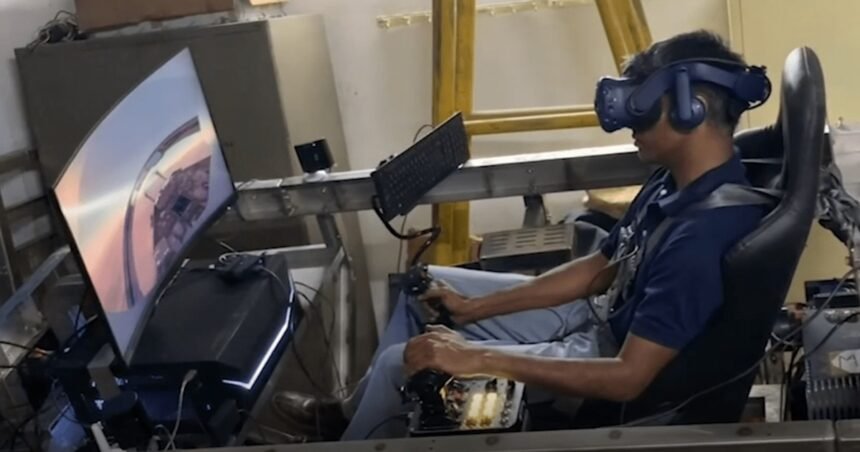
Most flight simulators can tilt. Axial Aero’s can roll all the way over — and keep going. The Hyderabad startup has built a full-flight simulator that spins a pilot through a complete 360 degrees on every axis, so a trainee can practise the rolls, loops and recoveries of real combat flying without ever leaving the ground.
The machine is called the Axial Aero 360° 6-DOF Full Flight Simulator, and it is the centrepiece of a young deep-tech company founded by former Indian Air Force pilots. In September 2025 the company, incubated at Telangana’s T-Works prototyping centre, announced it was ready for commercial production — and this week it closed a ₹51 crore Series A round to take the simulator to India’s military and commercial aviation markets.
A simulator that never has to stop turning
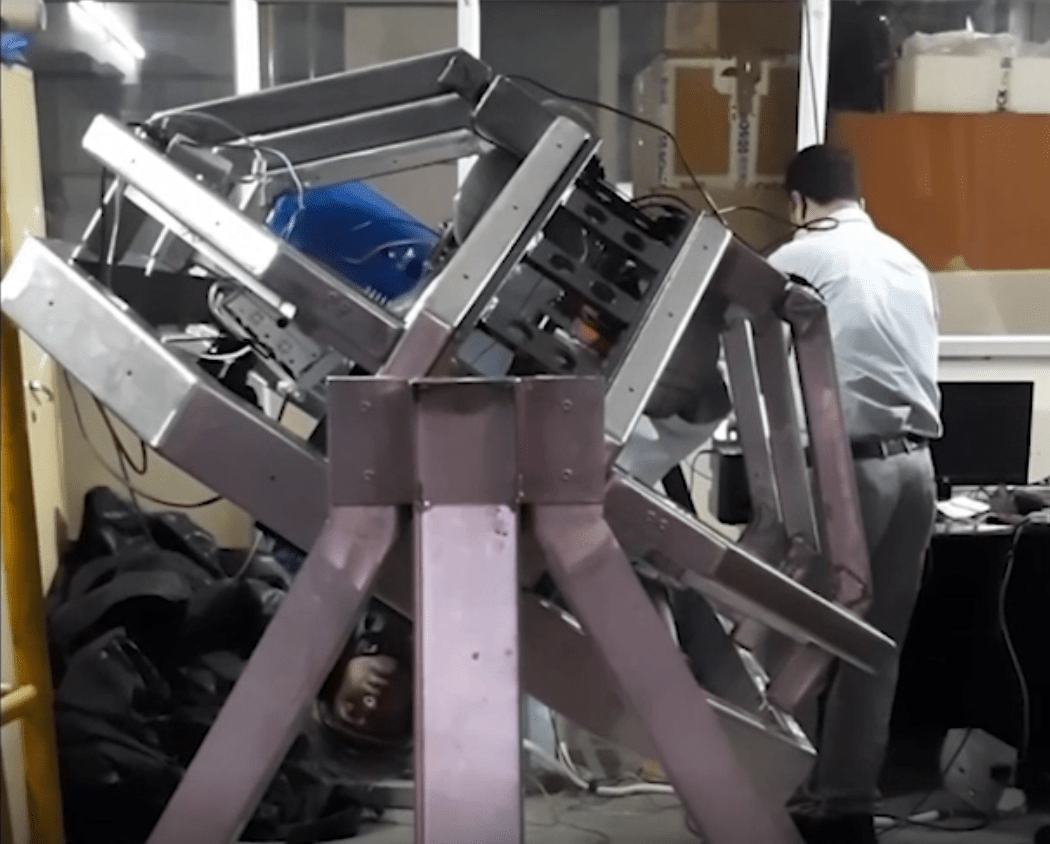
Conventional full-flight simulators sit on Stewart platforms — six hydraulic legs that tilt the cockpit a limited amount in each direction, typically around 30 degrees from level. Axial Aero threw that limit away. Its simulator mounts the cockpit on a gimbal frame that rotates a full 360 degrees around the roll, pitch and yaw axes, so the pilot feels the real rates of a fighter in a turn: the company says the platform rolls at a minimum of 120 degrees a second, with pitch and yaw at 60 degrees a second.
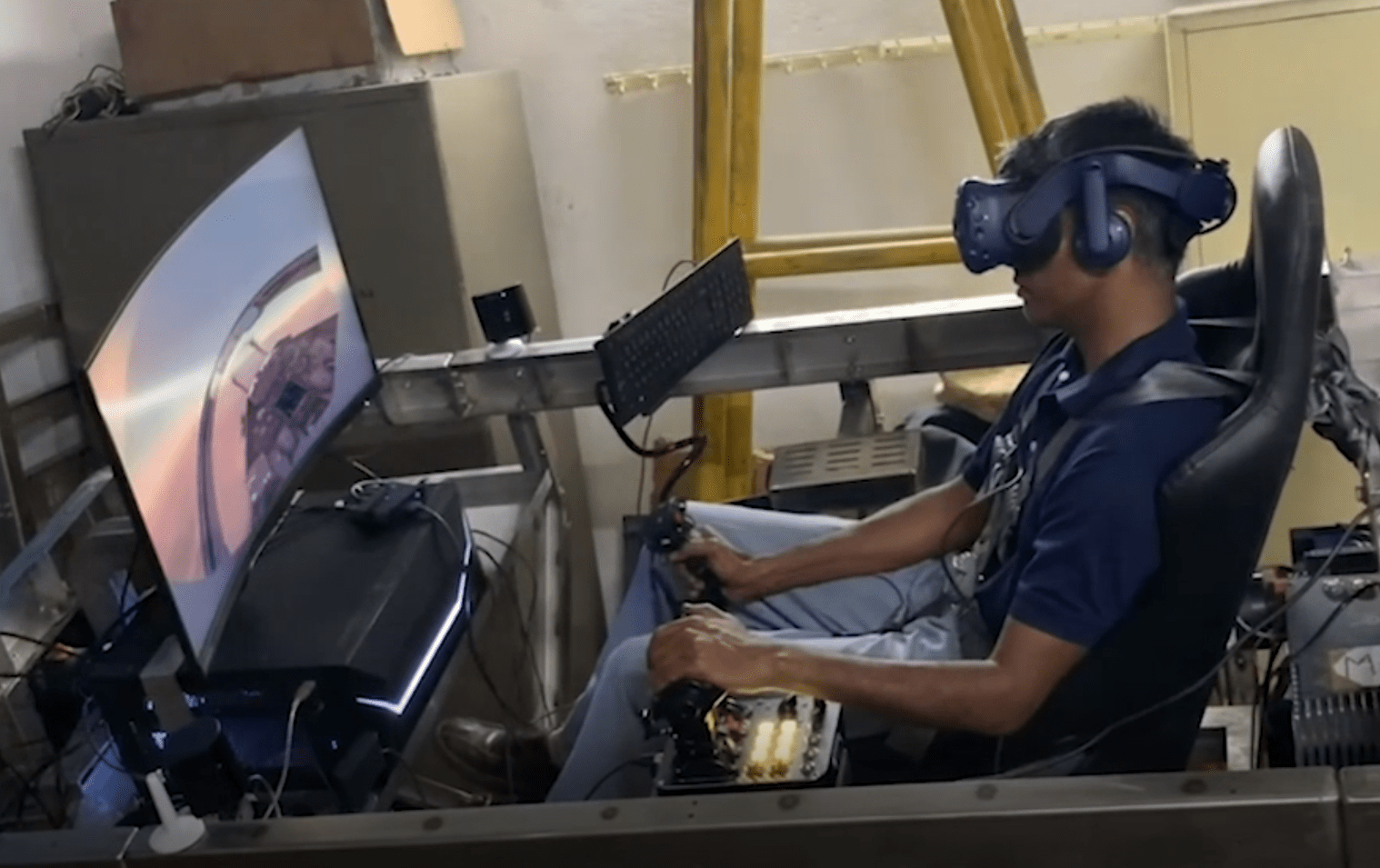
The motion is driven by the company’s own mechanical design and motion-cueing algorithms, paired with a high-fidelity flight model and a VR headset that gives the pilot a 3D, 360-degree view of the simulated sky. The simulator also feeds back G-forces, works across fighter jets, helicopters, drones and eVTOL aircraft, and can link several simulators together for networked, multi-player training missions. The same machine doubles as a spatial-disorientation and upset-recovery trainer — the kind of flying where knowing which way is up can save a life.
Built by pilots, for pilots
Axial Aero was founded in Hyderabad in 2020. Its founders include former Indian Air Force pilots Flt Lt (Retd) Ramesh Krishnan and Flt (Retd) Praveen Bala, who flew the real thing before deciding to build a better way to train for it, alongside co-founder Srikanth Reddy Tiyyagura. The company is an iDEX winner, and its prototype has been undergoing testing at its Hyderabad facility, where a crash-test dummy named Ed has taken the hot seat for the riskiest manoeuvres.
The team has been collecting recognition along the way: a fifth-place finish among 1,700 applicants at the TiE Global Summit 2022, and the Most Innovative Startup award at IIT Kharagpur’s Global Entrepreneurship Summit 2023. Beyond simulators, the company also works on propulsion systems, hybrid-electric aircraft and advanced control systems — and builds its own digital terrain technology, the detailed 3D landscape databases that make the world outside the canopy look real.
More Read
Half the price of an import
India imports every Level-D full flight simulator its airlines use for passenger aircraft — the highest-fidelity training devices in civil aviation. Axial Aero’s answer is a made-in-India machine at roughly half the imported price: the company says its simulators will cost ₹25–30 crore against around ₹50 crore for an imported equivalent, with no compromise on sophistication. It has already received a minimum purchase quantity to deliver five flight simulators over the next three years, spanning passenger aircraft, fighter jets and helicopters. The single-seater version weighs about 1.8 tonnes and runs on around 12 KVA of power, fitting inside a 5-by-5-metre room.
The first prototype is built for commercial narrow-body jets, with fighter and helicopter variants in the works.
Fresh fuel for the runway ahead
The company has just closed a ₹51 crore Series A round, announced on 2 November 2026, with Lucky Investment Managers — the fund founded by investor Ashish Kacholia — and Zerodha’s Rainmatter participating alongside existing investors. The round gives the Hyderabad team the capital to move from prototype to production, and to put Indian-built simulators in front of the pilots who need them most.
For a country that trains more pilots every year and flies more fighter sorties than ever, a simulator that can roll all the way over is more than a clever machine. It is a piece of training infrastructure India has always had to buy from abroad — now being built at home, by the pilots who once trained on the imports.
Keep reading: A Taxi for Satellites: Inside Stardour, the Hyderabad Startup Building India’s First Hydrogen-Oxygen Space Tug · Thinking in Orbit: Inside SkyServe, the Bengaluru Startup Teaching Satellites to See for Themselves · More Aerospace & Defense stories
Like stories like this? Add Exceptional Technology as a preferred source on Google to see more of our reporting in your search results and Discover feed.







