


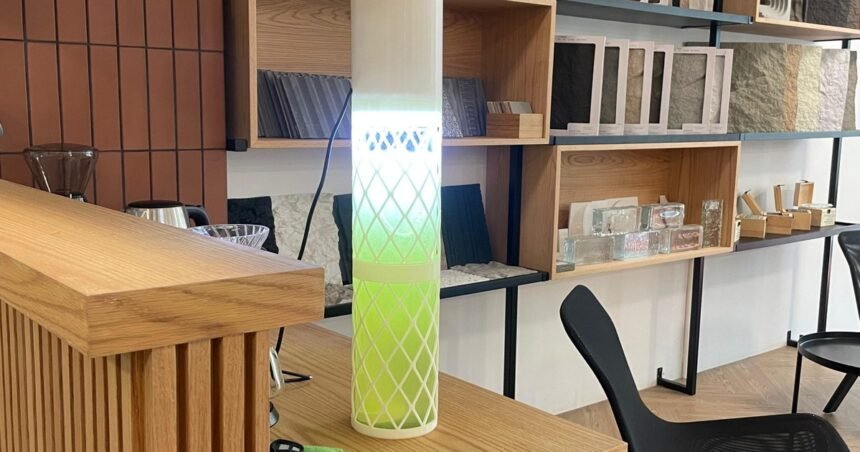
Delhi’s hospitals have a new colleague working the waiting rooms — one that never sleeps, never takes a break, and spends its whole day eating the city’s carbon dioxide. It is a tall, glowing green column filled with living microalgae, and this week two of them went to work at two of the capital’s busiest hospitals.
The machines are called Obelia, and they are built by Zaara Biotech, a Kochi startup that has spent a decade turning microalgae into working technology. The Delhi Pollution Control Committee has commissioned the first two units — one at the Govind Ballabh Pant Institute of Postgraduate Medical Education and Research (GIPMER) and one at Lok Nayak Hospital — placing them where patients and their families spend long hours outdoors, in waiting areas and entrance plazas.
A living machine
Each Obelia unit pairs a sealed microalgae photobioreactor with multi-stage air filtration. Air is drawn through the unit, the filters catch dust and particulates, and the living algae culture absorbs carbon dioxide through photosynthesis, turning it into biomass. A precision pressure motor keeps the air moving, and the whole system runs on a low power draw inside a curved, IP-rated enclosure the company says is built for Delhi’s dust, monsoon and summer heat.
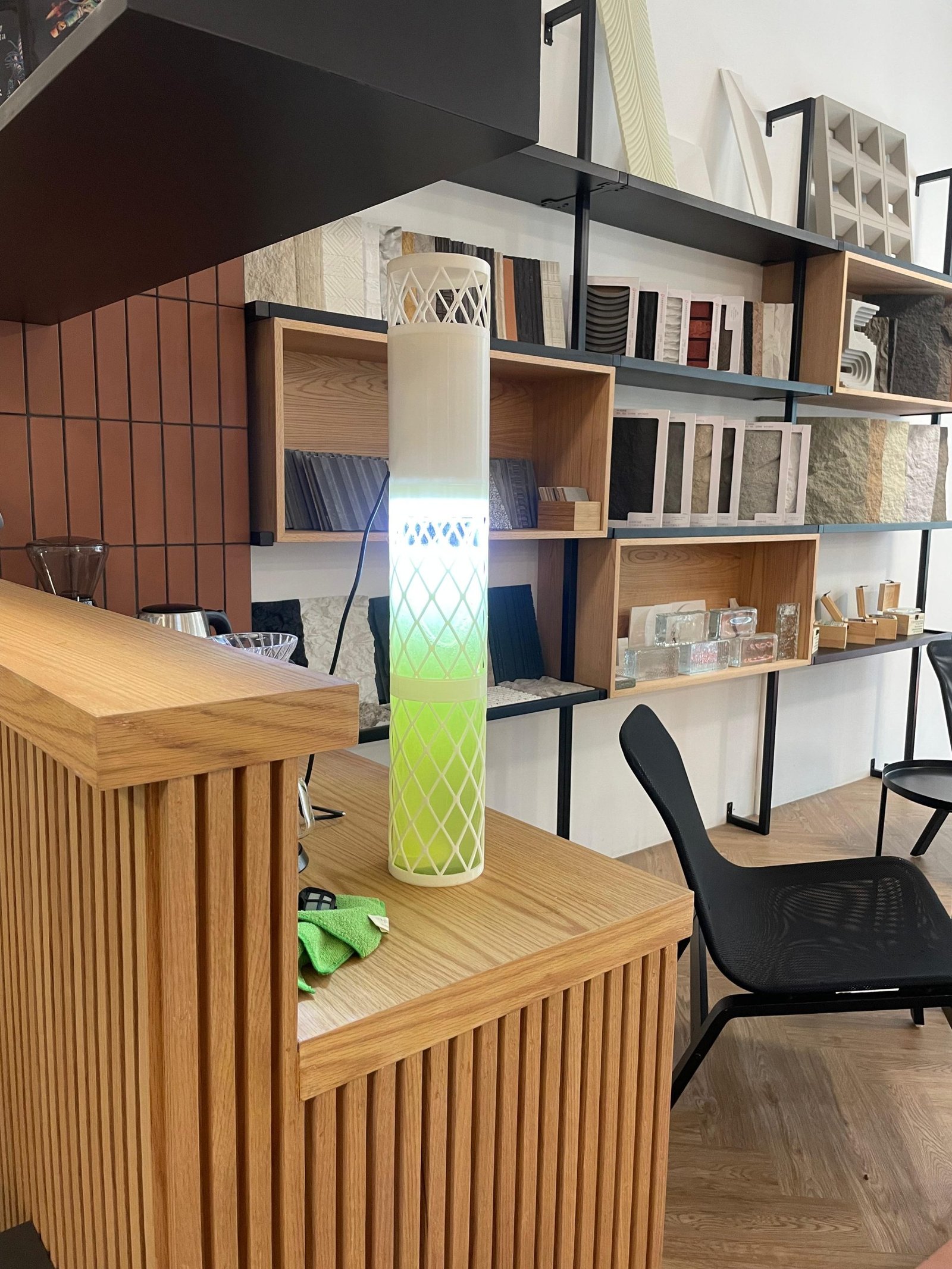 Obelia, Zaara Biotech’s algae-powered air-purification unit, installed indoors.
The company says a 300-litre unit grows about 43 kilograms of dry algal biomass in a year, locking in roughly 75 to 80 kilograms of carbon dioxide — comparable, the company says, to three or four mature trees — on a footprint of under half a square metre. The algae is harvested every 45 days and, after batch quality testing, moves into the company’s circular value chain as feed, bio-fertiliser and other bio-products. Nothing in the loop is wasted: the carbon the unit captures comes back as something useful.
Every unit reports home
Each Obelia is IoT-connected. A live API feeds an online portal where hospital administrators and the pollution control committee can see the unit’s operating status, PM2.5 and PM10 readings at the unit, and a running ledger of the carbon dioxide absorbed and biomass produced. Monthly reports can be downloaded for audit and ESG disclosure, so the clean air comes with its own paperwork.
More Read

The units also carry integrated display panels, which open a neat funding model: ESG-committed companies sponsor clean-air infrastructure and carry their message on it, giving public agencies a recurring non-tax revenue stream to fund upkeep while brands get visible, verifiable climate action. The same platform is built into everyday public amenities — smart bus shelters, carbon poles along traffic corridors, public seating and digital information boards — for smart-city corridors, transit hubs and institutional campuses. The hospital installations are the first Delhi showcase of this amenity-led approach.
From a student project to COP28
Zaara Biotech began as a student project in 2016, when founder Najeeb Bin Haneef and his friends started working with microalgae while he was studying biotechnology engineering at Sahrdaya College of Engineering and Technology in Thrissur. The company was incorporated in 2019, incubated under the Kerala Startup Mission, and developed its food products with the Indian Council of Agricultural Research’s Central Institute of Fisheries Technology (ICAR-CIFT) in Kochi.
Before Obelia, the company’s flagship was food: Spirulina-based B-lite cookies, which it describes as India’s first algal-seaweed food products, exported to eight countries. The oxygen bar branded Obelia won appreciation at the United Nations Climate Change Conference (COP28) in Dubai, where Zaara Biotech was the only startup among 22 participants to give a presentation. The company lists 21 commercial Obelia installations across India and one in the UAE, and has held talks with the Dubai administration on taking the units to the Gulf.
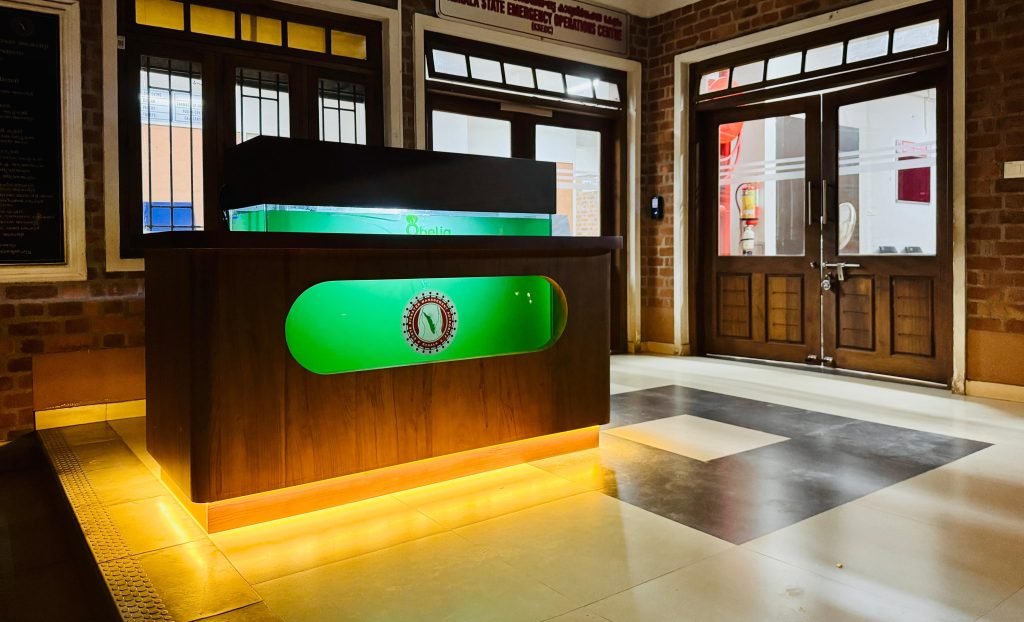 An Obelia unit built into the reception desk at the Kerala State Emergency Operations Centre.
Watch Obelia in action
Delhi’s hospitals are where the idea meets its hardest test: some of the most polluted air in the country, and some of the people who need clean air most. Two glowing columns of algae are now on duty there, quietly turning a waiting room’s carbon dioxide into biomass — and showing what a decade of patient biotechnology can do when it finally steps out of the lab and into the street.
Keep reading: An Eye Clinic That Fits in a Suitcase: Inside Forus Health’s FH eyepal, the Portable Digital Eye Clinic From Bengaluru · A Diagnosis in Thirty Seconds: Inside SigTuple, the Bengaluru Startup Automating the Microscope · More Chemicals, Materials & Life Sciences stories
Like stories like this? Add Exceptional Technology as a preferred source on Google to see more of our reporting in your search results and Discover feed.







