For a century, putting up a building has started the same way: dig a hole, pour concrete, and wait. Three weeks of waiting, while the concrete cures and the programme stands still. In Kerala, a small team looked at a tree and asked a different question — what if a foundation worked the way roots do?
The answer is PEN Foundation, the Pre-Engineered Nail Foundation from C-DISC Technologies. It is a patented foundation system inspired by the way tree roots distribute load through soil: one high-strength precast concrete node sits at ground level, and four inclined galvanised steel nails are driven into the surrounding ground and grouted in place. There is no excavation, no formwork and no on-site curing cycle — the completed foundation point is ready to carry its load the same day it is installed.
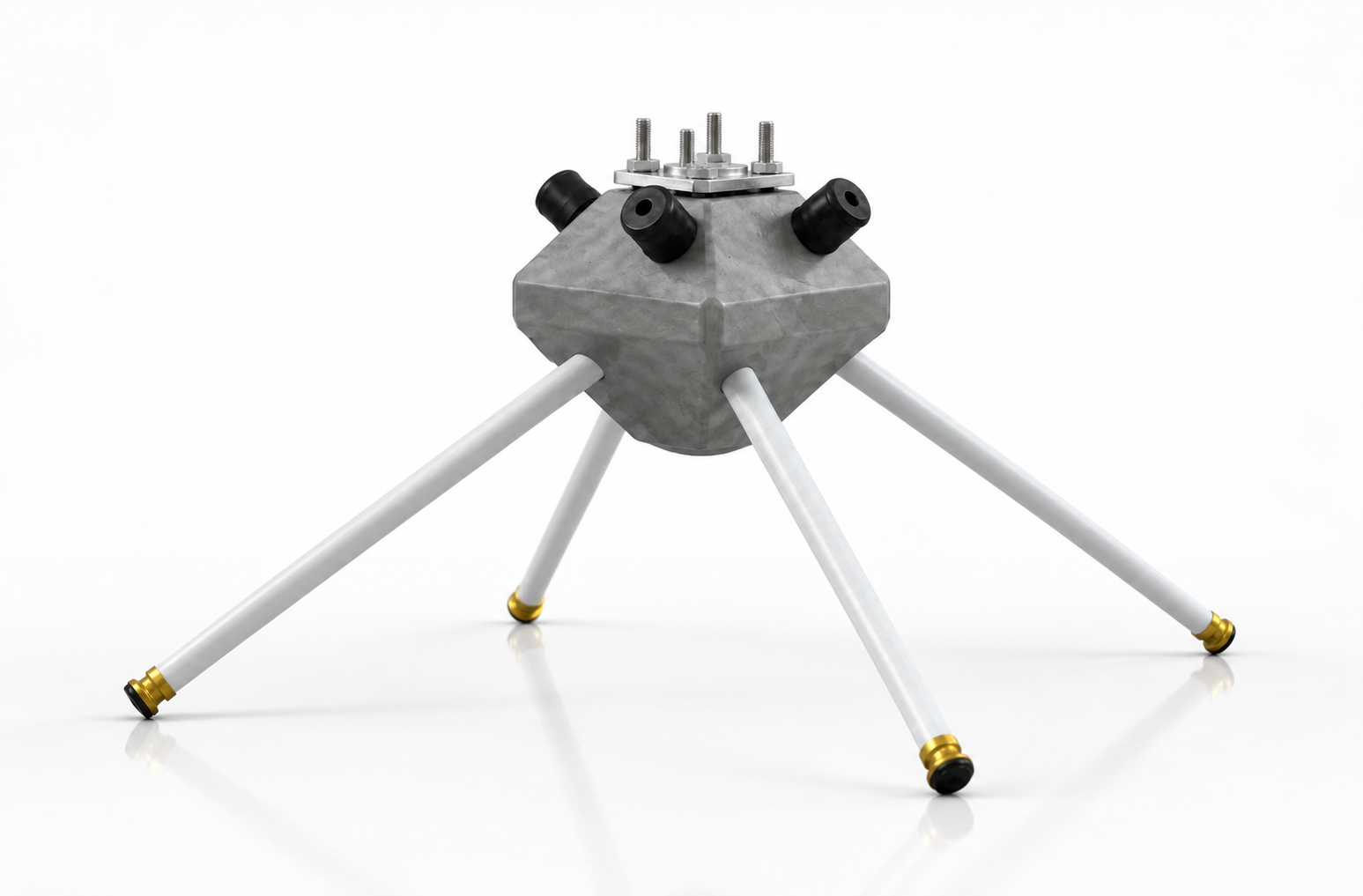
The engineering is deliberately simple, and the numbers behind it are striking. A conventional footing concentrates load beneath a concrete mass; PEN spreads it through four inclined paths that engage a three-dimensional volume of soil far larger than the node’s own footprint. Non-shrink grout pumped down each pipe locks the nails to the ground along their length, and field plate load tests at NIT Calicut confirmed an Enhancement Factor of 2.0–2.6× the soil’s bearing capacity. The node itself is an M50 precast block, 450 × 450 × 200 mm, cast and cured in the factory to a fixed model and dispatched ready to use. The nails are 32 mm galvanised steel pipes with recycled tungsten carbide tips, driven at a batter angle of 40° to 51° to suit the ground, and the whole assembly is governed by IS 2911 Part 4, the Indian Standard for nail and pile systems.
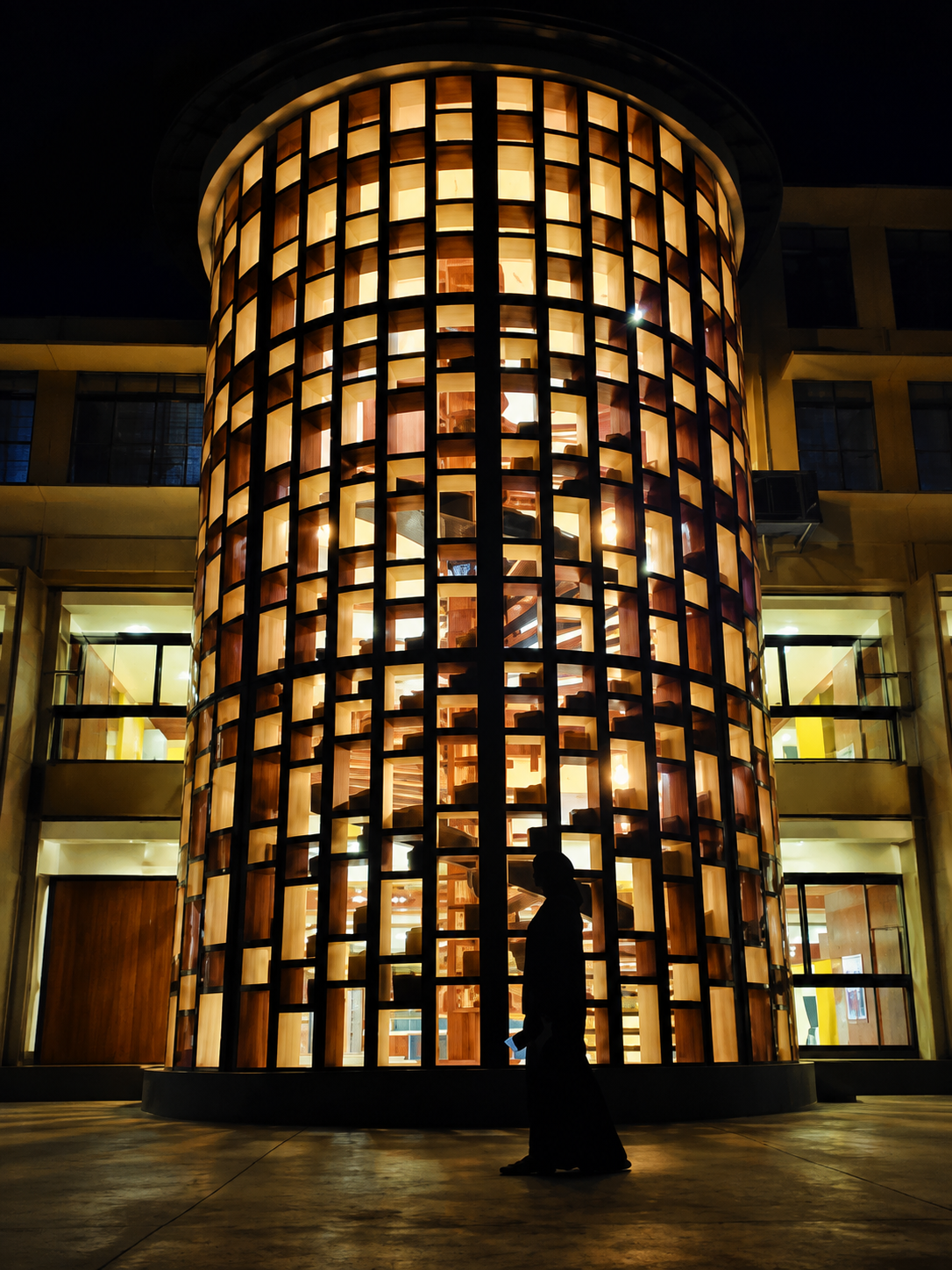
The idea was tested the way a foundation should be: in the ground, at national institutes, and on real buildings. Development and evaluation included field research at NIT Calicut, numerical analysis at IIT Kanpur and load testing through NABL-accredited facilities, and PEN Foundation holds GRIHA Product Catalogue certification in the Innovation category. The system is already under buildings across India. At the Black Langur Resort in Wayanad, Kerala, PEN foundations went into a forested, sloping eco-resort site without disturbing tree roots or terrain. At Startup Eco-Ashram in Kudal, Maharashtra, the company delivered its first commercial-scale deployment outside Kerala. And at Devagiri College in Kozhikode, the library — a tall cylindrical reading tower in a black steel grid — stands on PEN foundations on a constrained institutional site, a project that received the SSMB 2024 Best Commercial Steel Structure recognition.
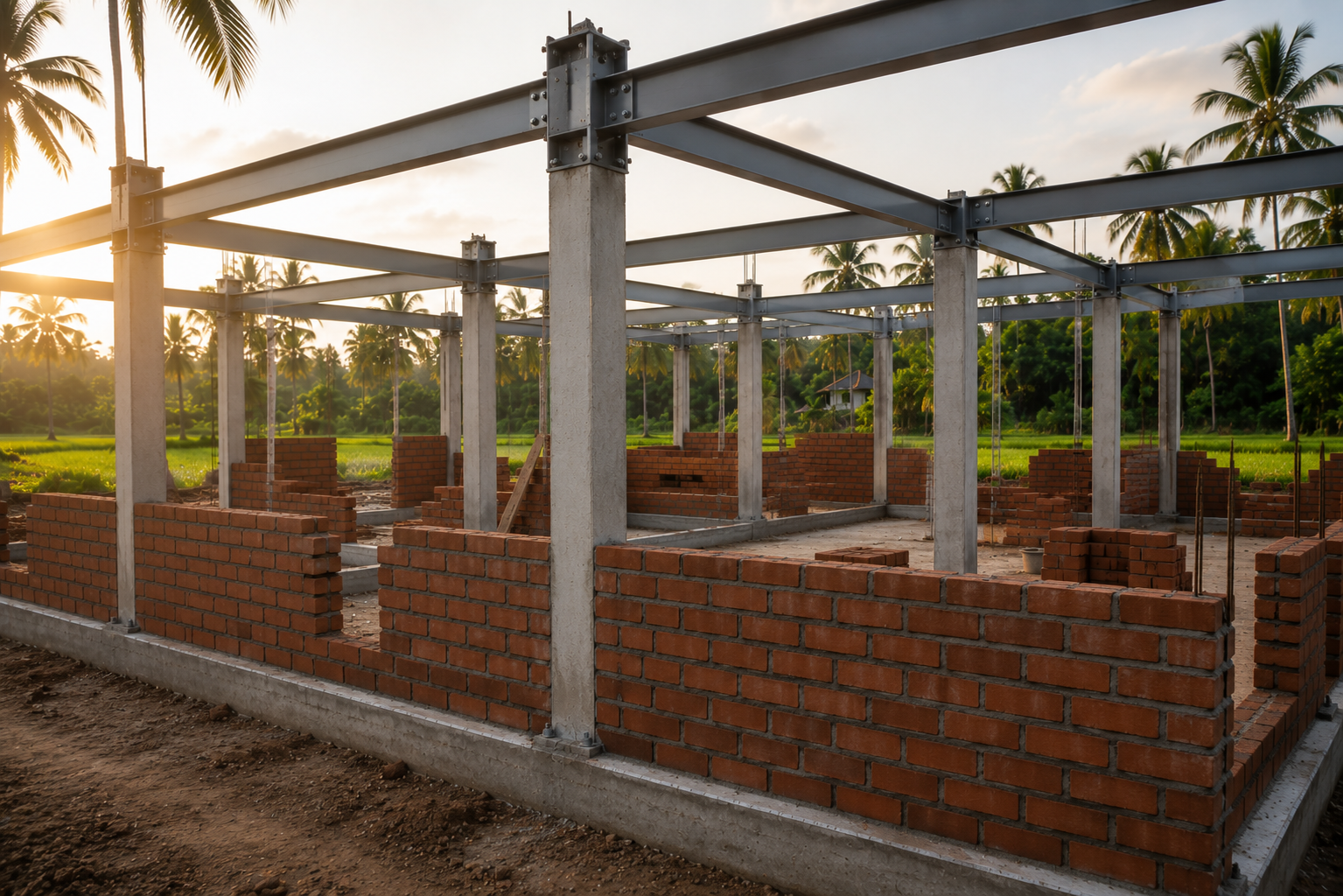
The sustainability case is as strong as the structural one. The company says evaluated PEN configurations use around 80% less concrete and 96% less water than a conventional reference foundation, with over 60% lower global warming potential — because there is no big excavation to fill, no spoil to dispose of, and nothing to cure for weeks. The compact, factory-made components also reach sites with restricted access where a concrete mixer and an excavator simply cannot go, and at the end of a structure’s life the components are recoverable. PEN is designed for low-rise construction — homes, villas, farmhouses, eco-resorts, prefabricated and modular buildings, site offices and light infrastructure — and each project is engineered to its own soil and loads before a single nail is driven.
The company behind it is C-DISC Technologies Pvt. Ltd., led by founder and CEO Jeesh Venmarath. The startup won a &rupee;5 lakh grant at the Kerala Startup Mission’s Women Startup Summit in 2021, and by early 2025 it was reporting revenue of &rupee;2.5 crore with a target of &rupee;4 crore. The next frontier is already on the drawing board: ground-mounted solar, where the same fast, repeatable, low-concrete installation could anchor panels without the usual civil works.
More Read

Foundations are the least glamorous part of any building — buried, forgotten, and measured in weeks of waiting. PEN Foundation makes them fast, precise and light on the land, and it does it by copying a design that trees perfected long before concrete existed. If the buildings now rising on these quiet grey nodes are any indication, the most important part of India’s next homes and resorts may be the part nobody ever sees.
Keep reading: One Factory, 7,000 Suppliers: Inside Zetwerk, the Bengaluru Platform Building the World’s Products · Listening to Concrete: Inside Nirixense, the IIT Bombay Startup Keeping India’s Bridges Standing · More Manufacturing & Engineering stories
Like stories like this? Add Exceptional Technology as a preferred source on Google to see more of our reporting in your search results and Discover feed.