


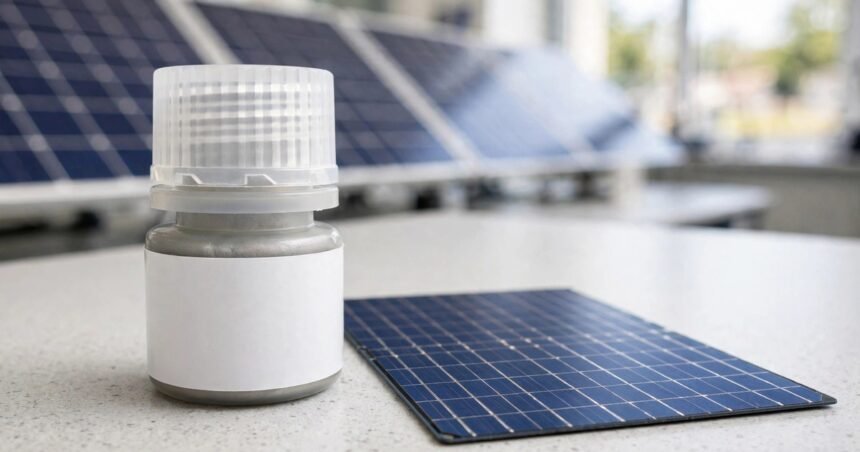
Look closely at any solar panel and you will see a fine silver grid etched across its blue face — hair-thin lines that collect the electricity the sunlight knocks loose and carry it out of the cell. Those lines are printed with silver metallisation paste, and until now, India has imported nearly all of it. A small startup incubated at IIT Bombay has changed that: AnyD Materials has unveiled what reports describe as the country’s first indigenous silver metallisation paste for silicon solar cells.
AnyD Materials was founded in November 2023 by Dr Seema Negi, Dr Shweta Singh and Prof Parag Bhargava, a faculty member at IIT Bombay’s National Centre for Photovoltaic Research and Education (NCPRE). The company grew out of the Particulate Materials Laboratory in the Department of Metallurgical Engineering and Materials Science, where silver paste research has run continuously for more than a decade — including the doctoral work of Dr Shiwani Pareek on screen-printable silver pastes for the front side of silicon solar cells.
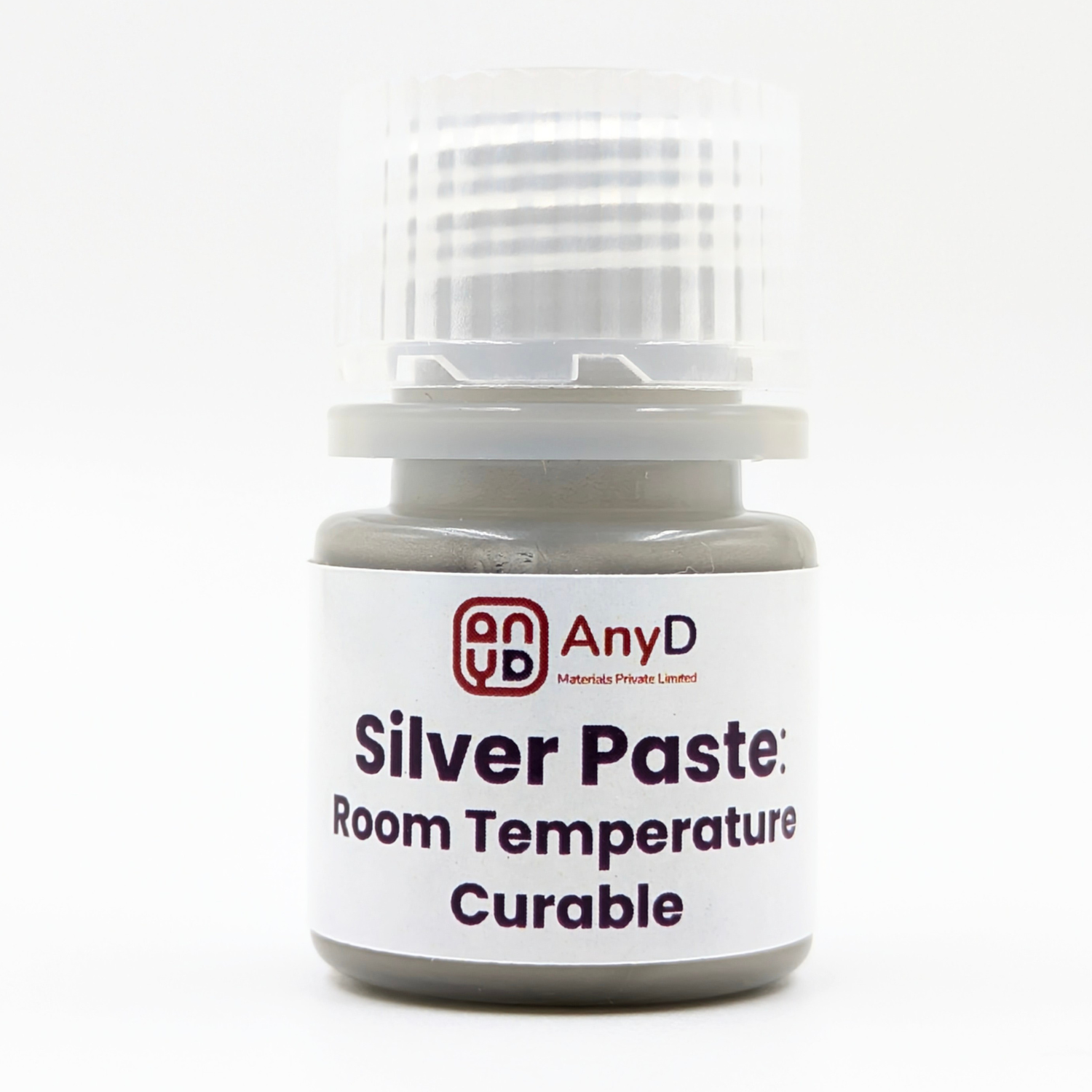
AnyD Materials’ silver paste. (Image: AnyD Materials)
The paste that makes a panel work
A solar cell is only as good as the lines that collect its power. The paste — a careful blend of silver powder, glass powder and organic additives — is screen-printed onto the wafer in a fine grid, then fired at high temperature. The glass in the mix etches through the cell’s anti-reflection coating so the silver makes clean electrical contact with the silicon beneath. Get the recipe wrong and the cell loses power; get it right and every photon counts. It is one of the most demanding materials in all of photovoltaic manufacturing — and one India has had to buy from abroad.
22.47% — and 3% less silver
According to reports, industrial-scale trials of AnyD’s PERC metallisation paste delivered a solar cell efficiency of 22.47%, a figure that puts the indigenous paste squarely in the performance range cell makers demand. The team has also reduced silver content by about 3% against the roughly 90% silver in leading international formulations, without compromising electrical performance — a meaningful saving when silver is the most expensive ingredient in the paste. Reports put India’s annual silver paste imports at around 500 tonnes, with the import bill running past ₹10,000 crore — the market AnyD is now built to serve.
More Read

From a decade in the lab to a pilot plant
AnyD is now setting up a pilot-scale silver metallisation paste facility with technical and research support from NCPRE, moving the technology from laboratory batches to industry-ready production. The next step is already underway: silver-coated copper metallisation paste, designed to cut silver consumption further while keeping electrical performance and long-term reliability intact. It is the same playbook the team has run before — the company also created what it calls India’s first conductive ink pen, a silver-ink pen that draws working circuits on paper and repairs printed circuit boards, and turned it into hands-on learning kits for students.
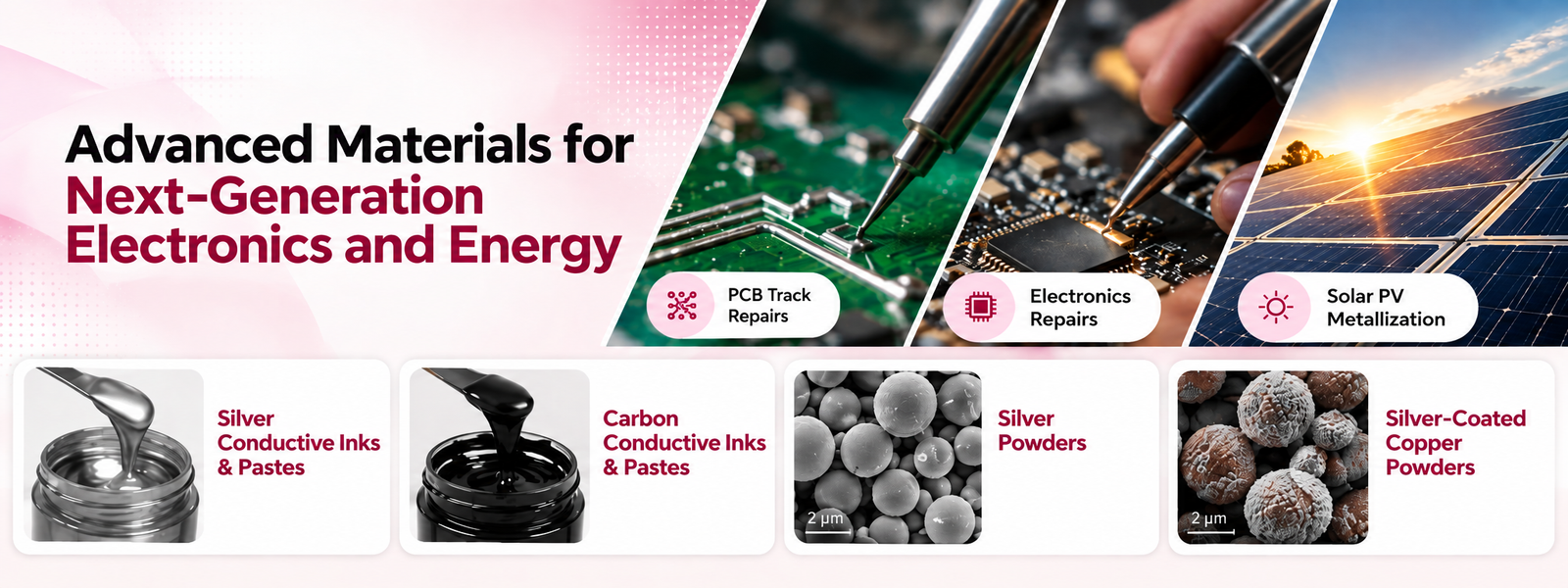
AnyD Materials’ range spans silver and carbon conductive inks and pastes, silver powders and silver-coated copper powders — with solar PV metallisation among its applications. (Image: AnyD Materials)
What AnyD has built is easy to miss and hard to overstate: the unglamorous material at the heart of every solar panel, made in India, from Indian research, for Indian factories. As the country’s solar manufacturing scales up, the silver lines on every new panel could soon be printed with paste that never crossed a border.
Keep reading: The Battery That Grows on a Plant: Inside Aloe E-Cell’s Aloe Vera Revolution · Every Layer of the Panel: Inside Navitas Solar, the Surat Company Building India’s Solar Supply Chain · More Energy & Power stories
Like stories like this? Add Exceptional Technology as a preferred source on Google to see more of our reporting in your search results and Discover feed.







