


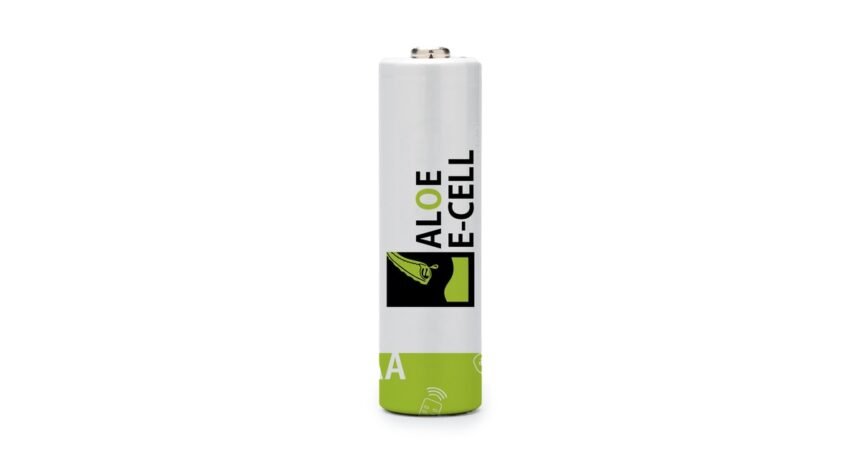
The remote stops working, you pop in a fresh AA battery, and the old one goes into the bin without a second thought. India throws away 2.3 billion dry cell batteries every year, and the company behind a remarkable Lucknow invention says a single discarded battery can pollute 167,000 litres of drinking water. Two young engineers from Lucknow decided the battery itself was the problem — and rebuilt it around a plant.
Aloe E-Cell Pvt. Ltd, founded in 2018 by engineering graduates Nimisha Varma and Naveen Suman, has built what it calls the world’s first 100% eco-friendly battery: a standard 1.5V AA and AAA cell whose electrolyte is made from aloe vera gel extract instead of the toxic chemicals inside a conventional dry cell. The zinc container and graphite rod are familiar, but the chemistry inside is entirely herbal — no lead, no mercury, nothing that leaches poison into soil and groundwater when the battery is thrown away.
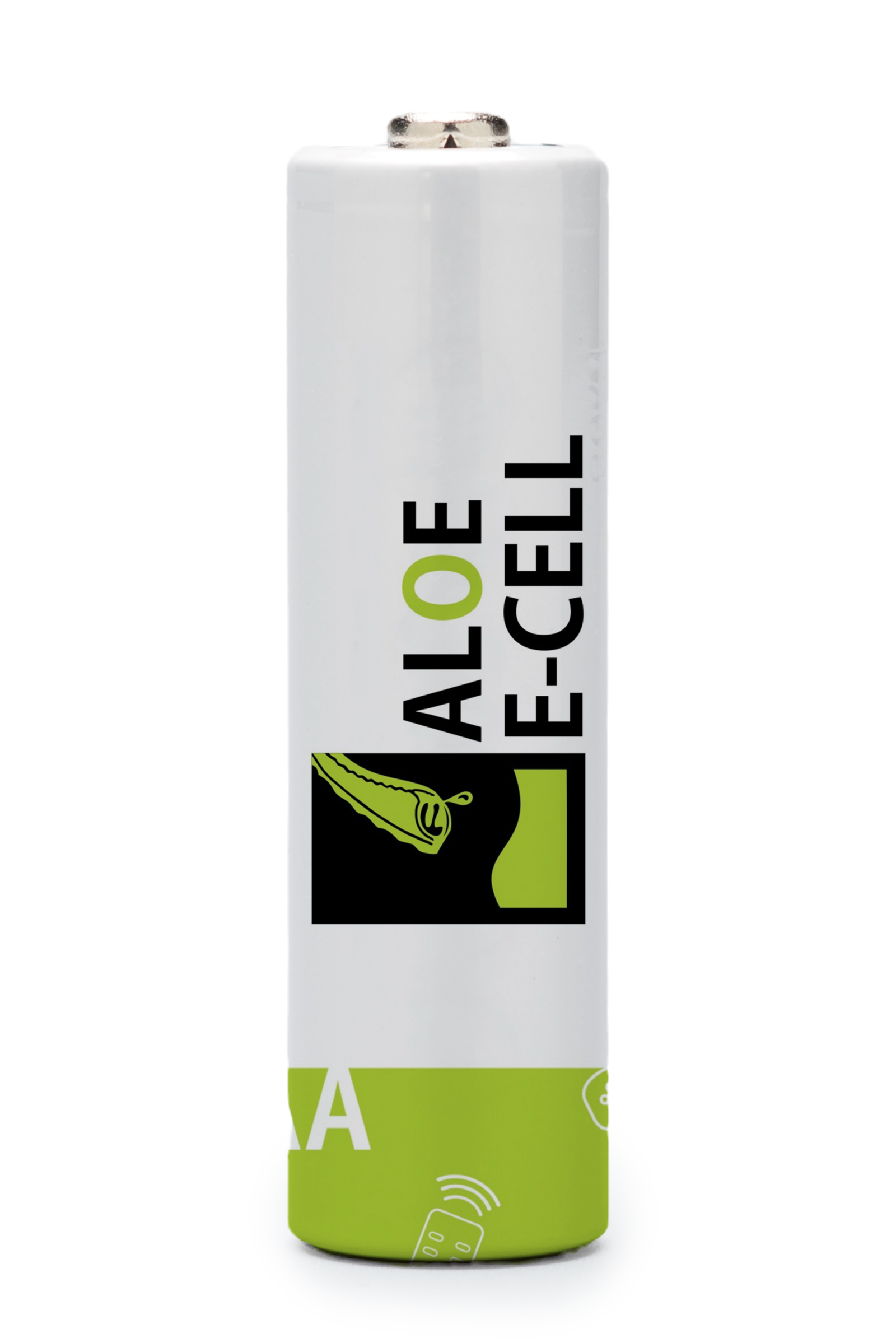
Aloe E-Cell’s AA battery, with its aloe vera based electrolyte. (Image: Aloe E-Cell)
From a student contest to a world stage
The idea began in 2018, when Varma and Suman — then engineering students — started looking for an answer to the e-waste piling up from discarded batteries. Their aloe vera cell went on to win Schneider Electric’s Go Green in the City 2019 competition as global winner, and the startup later won a National Startup Award in 2020. The Technology Development Board backed the company with a soft loan to commercialise the technology, and the invention is protected by an international patent, WO2021181165A1, for the aloe cell and its process.
What is inside the battery
The electrolyte blends aloe vera gel extract and aloe leaf extract with vitamin E gel, clove oil and citric acid, and the company says it replaces almost 60% of the traditional ingredients of a dry cell. Two separator layers give the cell its strength and a uniform charge cycle, and the finished battery delivers the same 1.5V as any AA or AAA — powering remotes, clocks, toys and cameras at a price of around ₹18. The company describes the cells as leak-proof and non-explosive, and because the electrolyte is herbal, a spent battery can be recycled instead of becoming hazardous waste.
More Read

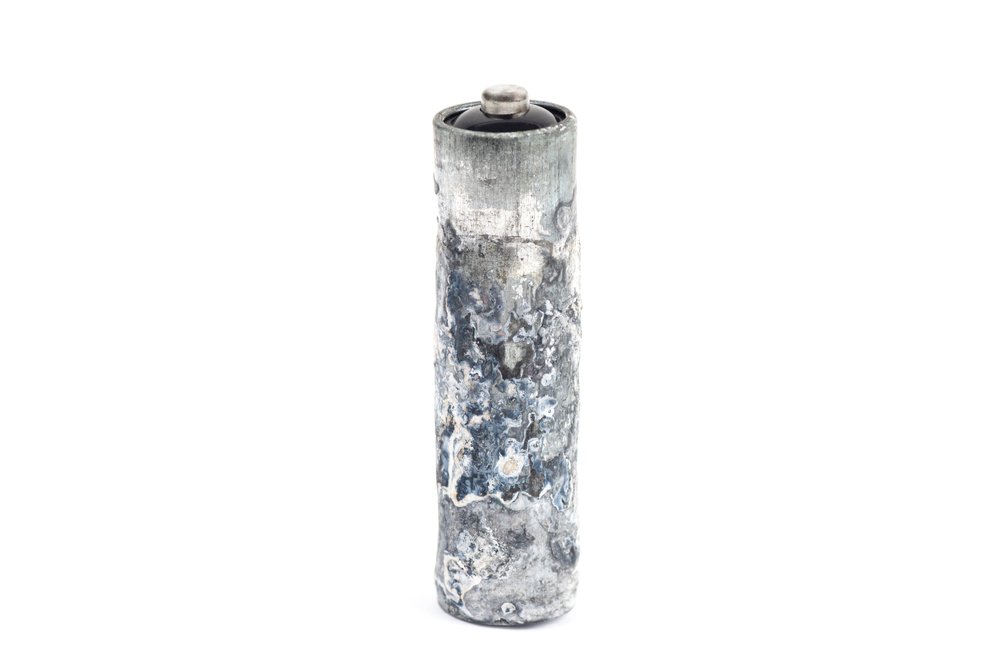
A conventional dry cell, leaking and corroded — the everyday sight Aloe E-Cell wants to end. (Image: Aloe E-Cell)
From dustbin to fertiliser
Aloe E-Cell’s ambition runs past the battery itself. Under its Make, Track, Recycle programme, the company is building a nationwide collection drive for used dry cells with NGOs, schools, institutions and urban local bodies — and turning the spent batteries into what it describes as Asia’s first micronutrient fertiliser made from discharged batteries. The battery that once poisoned a field can end up feeding one.
On shelves across India
What began as a student project is now a real product on real shelves: the company says its batteries are sold through more than 15,000 outlets across 18 states as well as on Amazon, Flipkart and Blinkit, with production running at around 400 batteries a minute. In January 2026, Aloe E-Cell secured a ₹3.5 crore funding commitment on Bharat Ke Super Founders, the founder-focused television series on Amazon MX Player, to scale up further. From a Lucknow lab bench to fifteen thousand shop counters, a plant that usually soothes sunburn is now quietly powering India’s remotes, clocks and toys — and leaving nothing toxic behind.
Keep reading: Every Layer of the Panel: Inside Navitas Solar, the Surat Company Building India’s Solar Supply Chain · Six Months, One Gigawatt: Inside Fujiyama Power Systems, the UTL Solar Maker Building India’s Solar Backbone · More Energy & Power stories
Like stories like this? Add Exceptional Technology as a preferred source on Google to see more of our reporting in your search results and Discover feed.







