


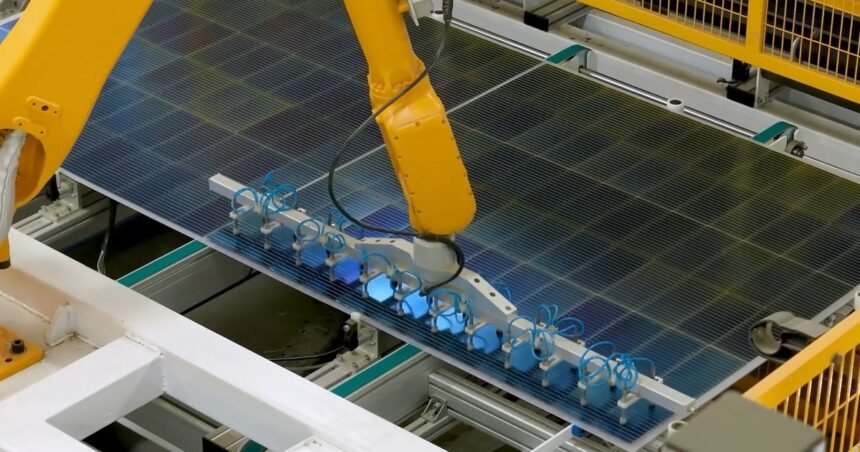
Every solar panel on an Indian rooftop is a sandwich of layers — glass, encapsulant, cell, backsheet — and for years the most valuable layer, the cell that actually turns sunlight into electricity, was the one India mostly bought from abroad. Navitas Solar of Surat has spent thirteen years climbing that value chain from the outside in, and in October 2026 it took its biggest step yet: up to $20 million in growth capital from Swiss impact investor responsAbility to build a 2.2 GW solar cell plant in Gujarat, a roughly ₹1,000 crore project that will take the company from panel maker to cell maker.
Navitas Solar was founded in 2013 by five young entrepreneurs — Vineet Mittal, Sunay Shah, Ankit Singhania, Aditya Singhania and Saurabh Aggarwal — and has grown into one of India’s top ten solar manufacturers, ranked by JMK Research & Analytics. From a 75 MW start, its module capacity now stands at 3 GW a year, making Mono PERC and high-efficiency N-type TOPCon modules from 40 W to 720 W. The company has been carbon neutral since 2021, and its panels carry IEC and ISO certifications.
What sets Navitas apart is how much of the chain it already owns. Its subsidiary Navitas Alpha Renewables makes solar encapsulants — the backward integration — while Navitas Planet, its EPC arm, designs and builds rooftop and open-access solar parks for homes, businesses and industry. The company describes itself as India’s only vertically integrated solar manufacturing platform, and the cell plant closes the one gap left in that chain: soon the cells inside its modules will be made in Surat too.
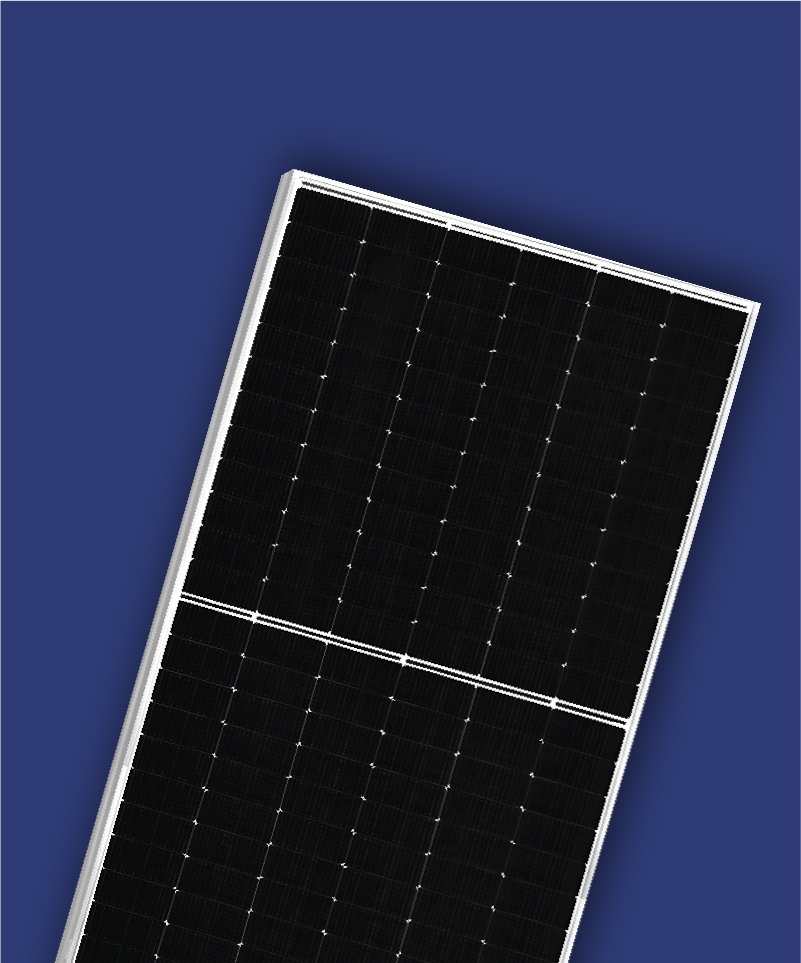
The next layer is the most ambitious. In July 2026 Navitas signed a five-year, 5 GW partnership with Caelux Corporation of California to develop and manufacture perovskite-TOPCon hybrid tandem modules in India — pairing a perovskite top cell with a TOPCon bottom cell to squeeze more power from the same sunlight. The companies are targeting commercial production by 2028, which would put India in a technology race that, until now, has been run almost entirely overseas.
The build-out does not stop at cells. In June the company announced a ₹1,500 crore integrated expansion — a 3.6 GW cell facility in phases plus a pilot wafer-and-ingot line — and in October it teamed up with Mecpower Solutions on a 5 GWh battery storage factory at Karjan in Gujarat, due to start operations in the first quarter of FY2027-28. The responsAbility money, structured as quasi-equity through its Asia Climate Fund, is earmarked entirely for the cell plant’s capital expenditure, and the company says ₹125 crore of the first tranche has already been disbursed. The first cells are expected by July 2027, the company says.
Thirteen years after five founders set out to make solar panels in Surat, Navitas is building the layers underneath the panel, the technology on top of it, and the batteries beside it — the whole solar value chain, under one Indian roof.
More Read
Keep reading: Six Months, One Gigawatt: Inside Fujiyama Power Systems, the UTL Solar Maker Building India’s Solar Backbone · Every Parking Spot a Charge Point: Inside Kazam, the Bengaluru Company Wiring India’s EV Future · More Energy & Power stories
Like stories like this? Add Exceptional Technology as a preferred source on Google to see more of our reporting in your search results and Discover feed.







