


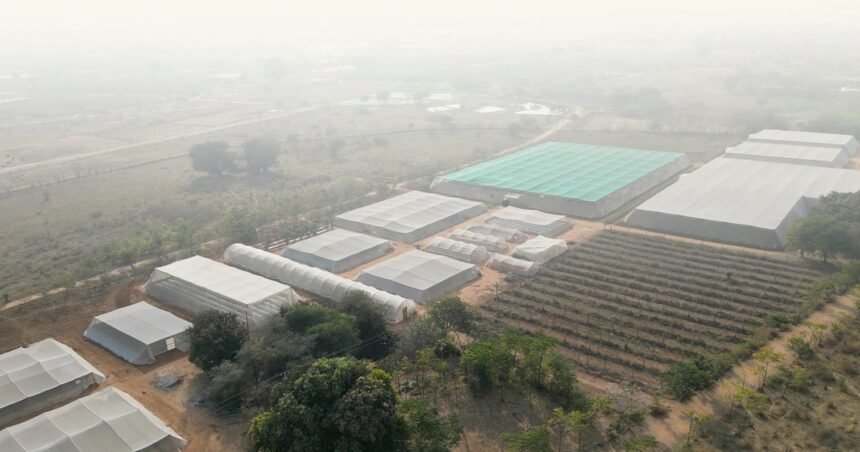
For a farmer with one acre and no savings to fall back on, a single heatwave or a week of unexpected rain can wipe out a whole season’s income. India’s small and marginal farmers — the overwhelming majority of the country’s farming families — have been farming for a climate that no longer exists. Kheyti, a Hyderabad startup founded in 2015, decided the answer was not a bigger, more expensive greenhouse, but a smaller, smarter one: a Greenhouse-in-a-Box, built for a farmer with less than five acres.
The idea began with Kaushik Kappagantulu, an IIT-trained engineer who had never set foot in a village until he was 21. After five years building vocational training centres for rural school dropouts — travelling roughly 25 days a month — he kept meeting young people leaving school because farming itself had stopped paying. He and co-founders Satya Raghu Mokkapati, Saumya Sahay and Ayush Sharma spent time with more than a thousand farmers across several states, and the diagnosis was clear: climate change was moving faster than traditional farming could adapt, and the protective technologies that existed had never been designed for India’s smallest farmers.
The box itself
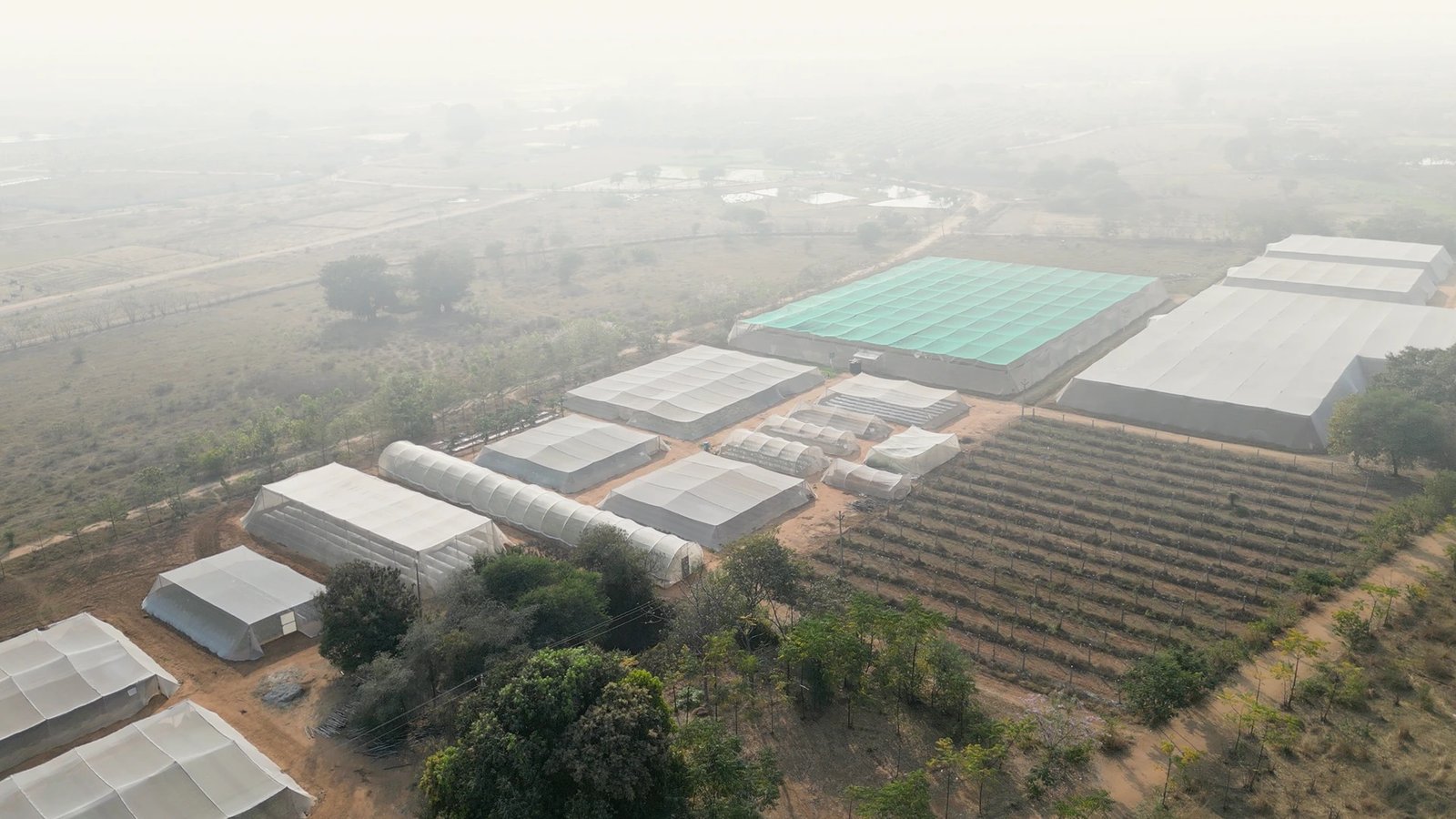
Kheyti’s Greenhouse-in-a-Box — the company calls its net house the Kheyti Rakshak — starts at around 240 square metres, roughly five per cent of an acre, with variants spanning up to 1,600 square metres. Instead of glass or plastic, it is covered in breathable insect netting, with a shade cloth on top that keeps the inside cooler in summer while letting heat escape. The netting cuts pest attacks by up to 90 per cent, and the structure is engineered to stand up to storms with wind speeds of up to around 100 kmph. Because the netting breathes, the structure can be built low — about 10 feet tall instead of the 20 feet a plastic greenhouse needs — which means less steel, and a price roughly 80 per cent lower than a conventional greenhouse.
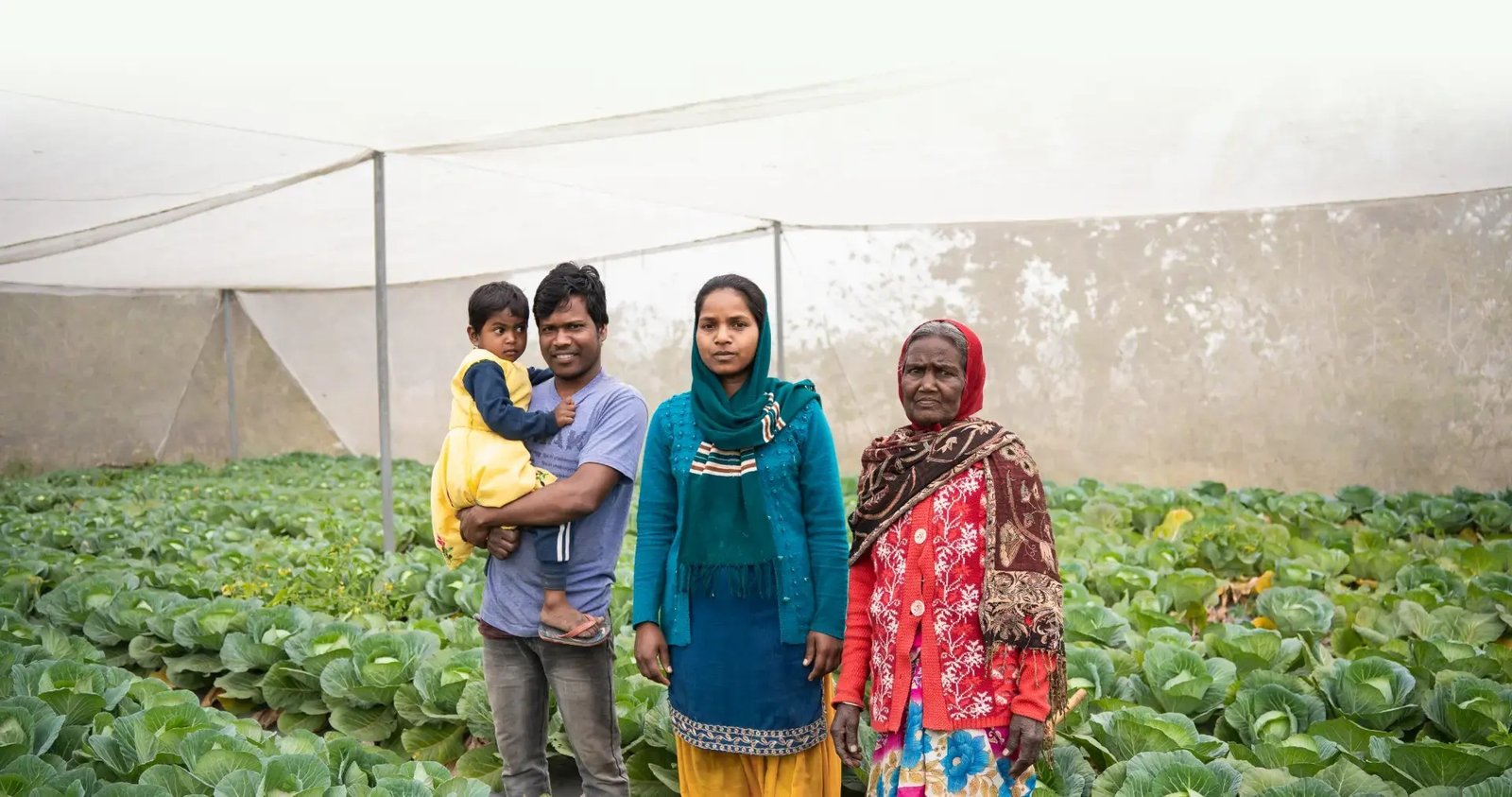
Inside, drip irrigation uses around 90 per cent less water than flood irrigation. The package goes beyond the structure itself: installation, maintenance, seeds, agricultural inputs, training and season-long advisory support all come with it. The design went through around ten iterations, shaped by feedback from more than a thousand farmers, and supports 30 to 40 crops that already have established local markets. A farmer can start small and expand later, up to half an acre. Once installed, a greenhouse is expected to last 15 years.
What the numbers say
An independent study by research firm Sambodhi in 2025 compared 1,698 farmers across Telangana, Madhya Pradesh, Odisha and Jharkhand. It found farmers using Kheyti greenhouses saw a 73 per cent rise in median income, while crop losses from extreme weather fell by 58 per cent. They used around two-thirds less water and 70 per cent less fertiliser per kilogram of produce — and from the same 240 square metres of land, greenhouse farming generated an average net income of around Rs 32,000 a year, against about Rs 4,500 from open-field farming. Greenhouses let farmers grow high-value vegetables and saplings through much of the year, instead of waiting on one or two monsoon-dependent harvests.
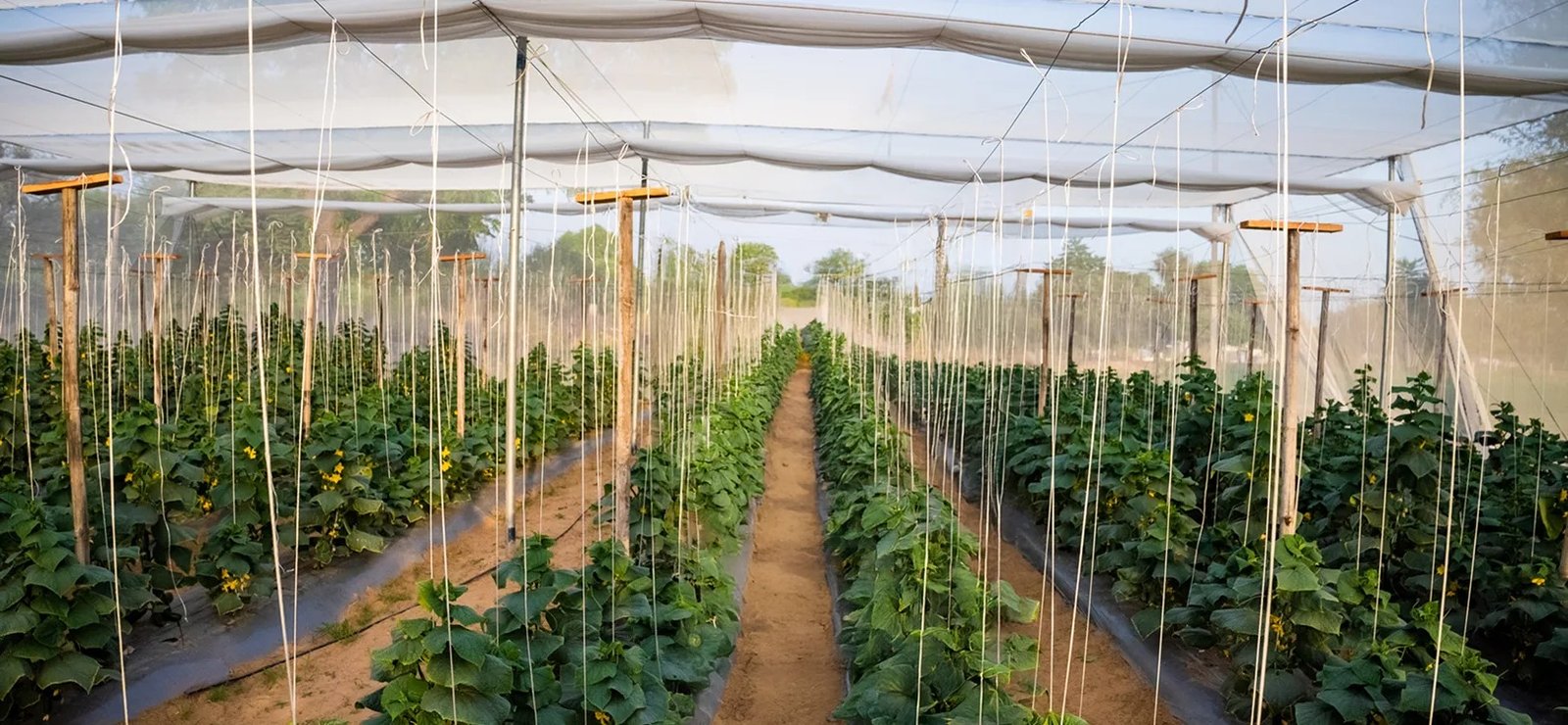
The strongest proof, the company says, is what farmers do next: roughly 20 to 25 per cent of Kheyti’s farmers have invested their own money in a second greenhouse. Today, the company says more than 16,000 farmers are growing with it across five states — Telangana, Andhra Pradesh, Maharashtra, Jharkhand and Madhya Pradesh.
More Read

Farmers behind the numbers
For Shabnam Topno, an indigenous farmer in Jharkhand, farming once meant nearly ten hours a day in the paddy fields of her family’s one-acre plot, for an annual income of around Rs 30,000. With government support she installed a greenhouse on five per cent of the land and began growing cucumbers, marigolds and beans — earning around Rs 70,000 more across three growing cycles. The extra income kept her children in school and paid for medicines, and she has since started a sapling nursery.
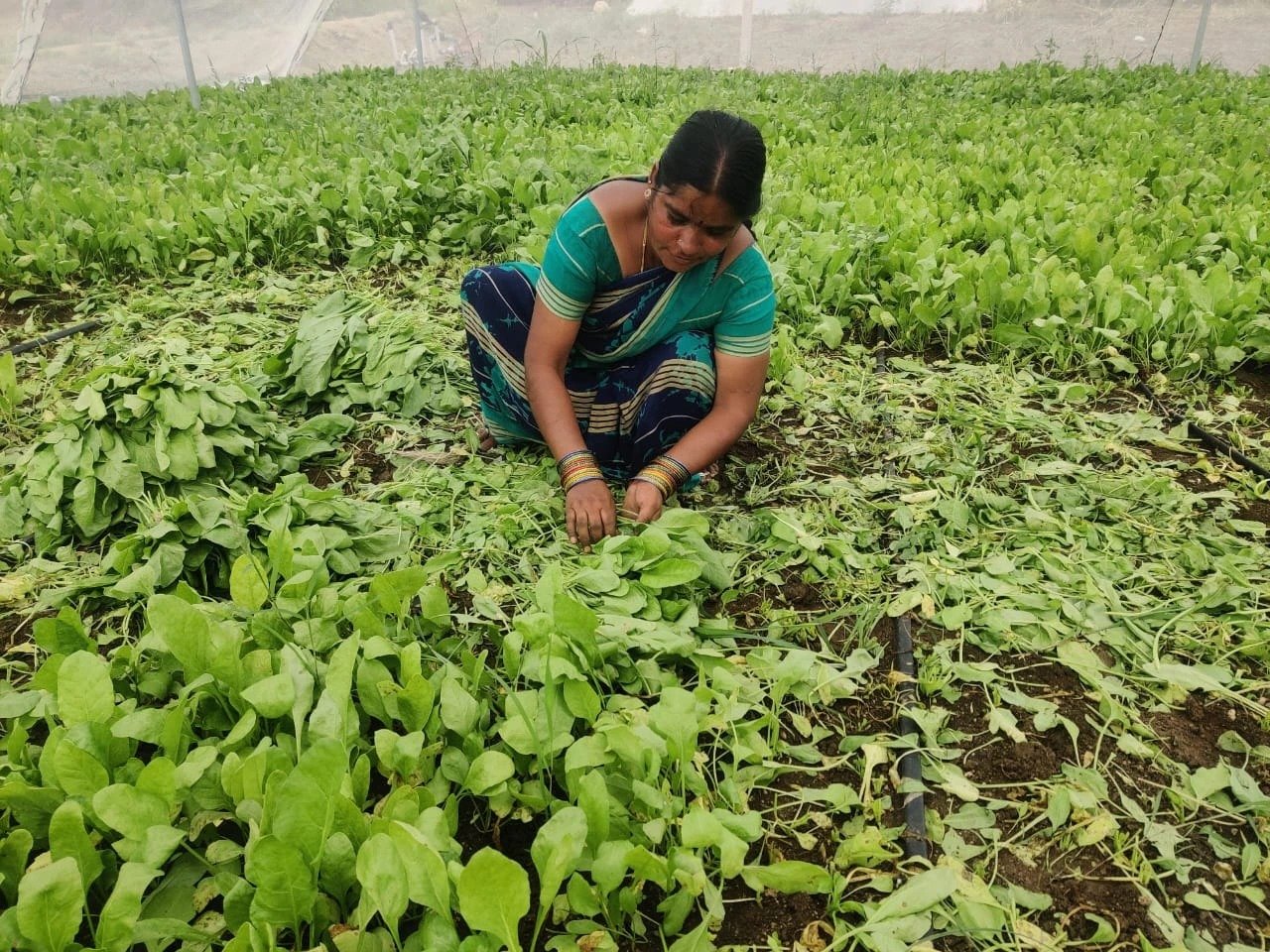
In Rajasthan, Aanchi Devi once depended entirely on rainfall, growing a single millet crop a year on three acres. She repaid her greenhouse loan within two crop cycles and earned around Rs 2.2 lakh over four cycles — enough to buy two buffaloes and two cows, dig the family’s first rainwater-harvesting pond, and bring barren land back under cultivation.
In Odisha, Sumitra Mahanta earned around Rs 1.5 lakh over two years growing saplings in her greenhouse, in a forested village where wild animals and heavy rain regularly destroyed open-field crops. Her earnings helped enrol her daughter in a postgraduate programme — the first girl in the family to study at that level.
From prize to partnership
In 2022, Kheyti won the Earthshot Prize — founded by Britain’s Prince William — in the Protect and Restore Nature category, along with £1 million in prize money. At the time, around 1,000 farms had a Kheyti greenhouse. The recognition opened doors to investors, NGOs, corporate partners and government contacts, and the team doubled in size. In 2026, Kaushik Kappagantulu was named to TIME’s inaugural Trailblazers list.
Scale, the company says, will come through government. Kheyti now partners with five state governments, including Telangana, to deliver greenhouses through existing subsidy and loan channels. The Indian Council of Agricultural Research has validated the approach, and the central government has begun the process of including small-farmer greenhouses under the Mission for Integrated Development of Horticulture.
The data behind the advice
Technology runs through almost every part of the operation. Over the last five years, Kheyti’s field team has documented around 20,000 crop seasons, and that data now powers its AI tools. Farmers can send voice notes on WhatsApp and receive advice in their own language, while AI-powered call centres and low-cost greenhouse sensors help with decisions on irrigation, temperature and pest risks.
The company’s stated goal is to reach one million farmers. For the families already growing inside a Kheyti greenhouse, the change is simpler and closer to home: a crop that survives the heat, water that stretches further, and an income that arrives through the year instead of once a season.
Keep reading: From Kerala’s Flooded Fields to the Navy’s Docks: Inside Fuselage Innovations, the Siblings Building India’s Farm Drones · The Solar Box That Hears Elephants Coming: Inside InnoBox, the Ranchi Teenager Guarding Jharkhand’s Farms · More Food Processing & Agri-Tech stories
Like stories like this? Add Exceptional Technology as a preferred source on Google to see more of our reporting in your search results and Discover feed.







