


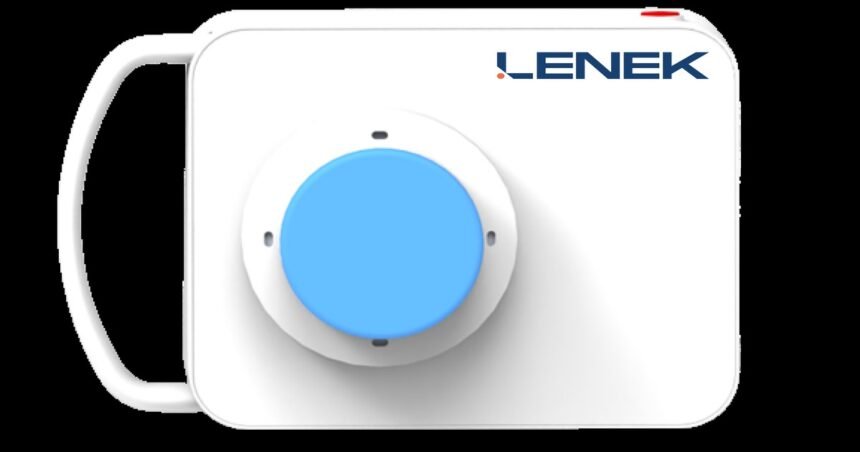
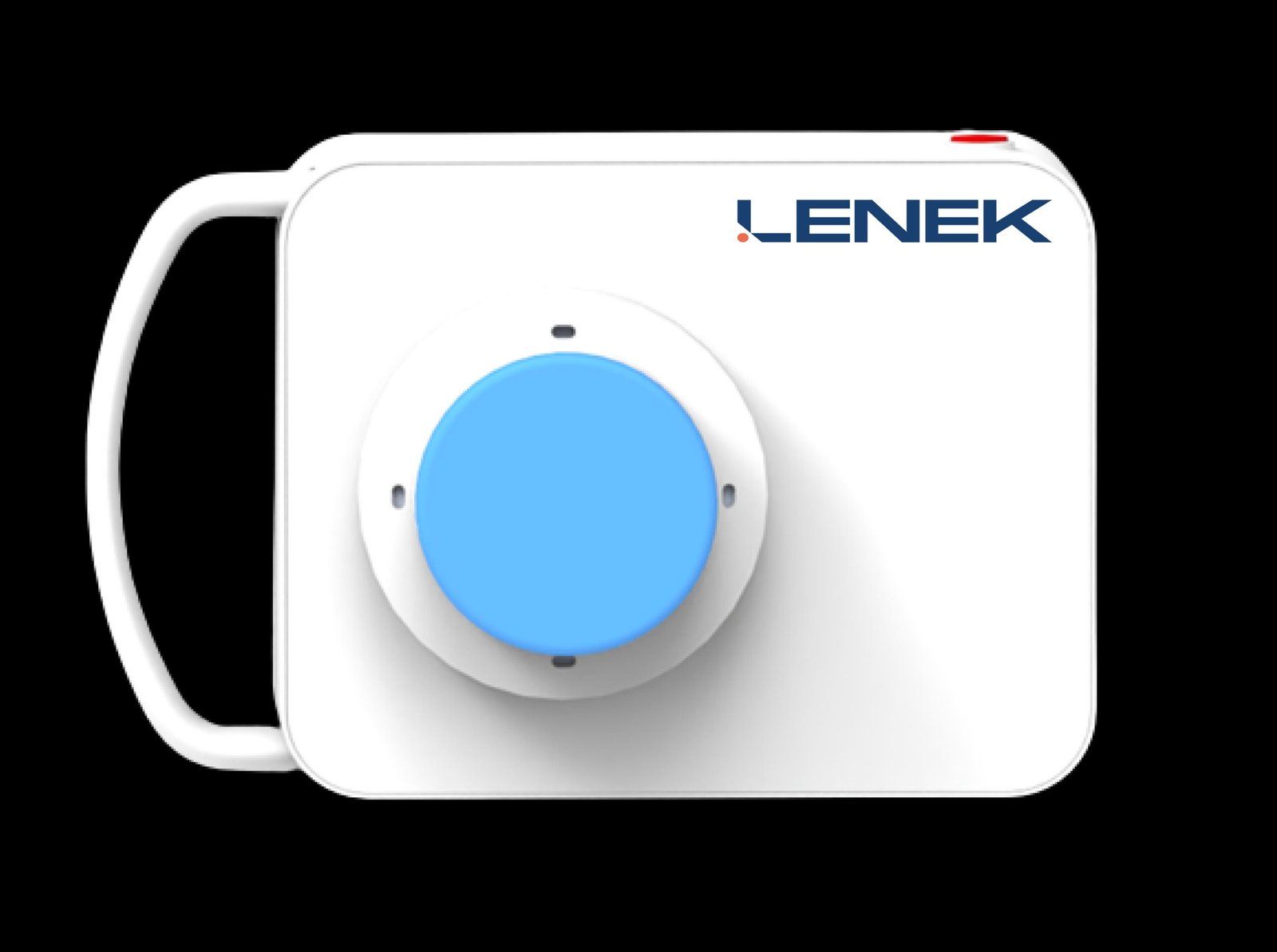
For most of India, getting an X-ray still means a journey. The nearest machine sits in a hospital with a dedicated X-ray room, a heavy generator, special earthing and a diesel generator for backup power — infrastructure that small clinics, primary health centres and screening camps simply do not have. Patients travel, wait, and sometimes never get the scan at all. Lenek Technologies, a startup incubated at IIT Kanpur, looked at that journey and decided to shrink the machine instead: its LeXIS system is a battery-powered handheld X-ray generator that weighs just 3.5 kg, and it brings the scan to the patient, wherever the patient is.
No room, no generator, no waiting
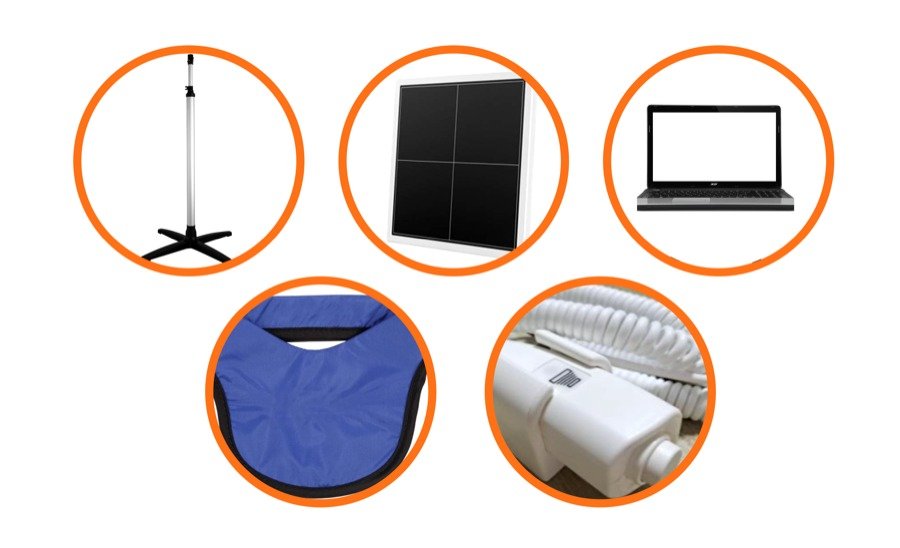
LeXIS is built for the places conventional X-ray machines cannot reach. It runs on battery power, so a clinic using it needs no dedicated X-ray room, no specialised electrical earthing, no inverter and no diesel generator. A licensed radiographer operates it at the point of care — in a rural clinic, a primary health centre, a screening camp, or a centre that sees more than 50 patients a day. As co-founder Chirag Agrawal puts it, the team now demonstrates the handheld generator to doctors working in places a car cannot even reach, and those centres no longer need the room, the earthing, the inverter or the generator.
The idea is simple and quietly radical: if the machine can travel in a bag, the diagnosis can happen on the spot, and the patient does not have to travel for it.
The AI that reads the image
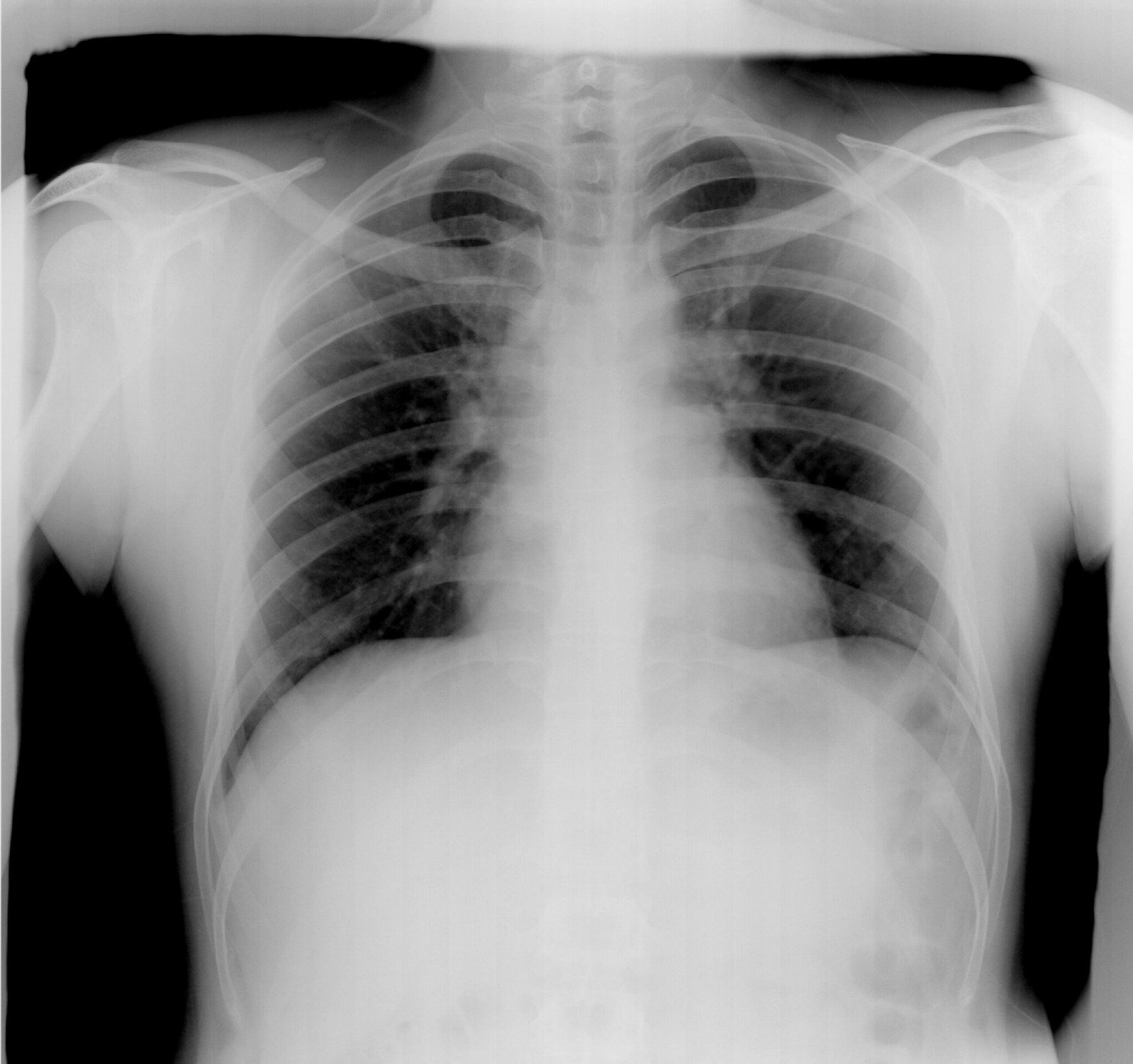
Capturing the image is only half the story. Lenek’s second product, LIRA — the Lenek Intelligent Radiology Assistant — is an AI-powered software platform that works with X-ray modalities to analyse chest radiographs, help generate reports, and share images with doctors remotely. A scan taken in a village clinic can be reviewed by a radiologist who is nowhere near the village, which matters enormously in a country where specialists are concentrated in cities and small clinics often have none at all.
From TB screening to lung cancer
Lenek’s work began with tuberculosis. The company set out to improve TB screening in resource-limited areas by pairing handheld imaging with AI-based detection, and the mission drew serious backing: on World Tuberculosis Day in March 2023, Boehringer Ingelheim India signed an agreement with IIT Kanpur’s Startup Incubation and Innovation Centre to support Lenek’s work. India reported 20 lakh TB cases in 2021, around 27 per cent of the global burden, according to the Ministry of Health and Family Welfare’s annual TB report — and every one of those cases starts with someone getting screened.
The same portable, AI-assisted approach is now reaching beyond TB. Kamala Nehru Memorial Hospital in Prayagraj has partnered with Lenek to develop a portable AI-enabled screening device for the early detection of lung cancer, with trial runs already conducted by doctors at the hospital. The project received a certificate of achievement under the India AI–National Cancer Grid CATCH Grant Challenge 2026 and was showcased at the AI Impact Summit in New Delhi, bringing early lung-cancer assessment closer to communities that have traditionally faced long delays in diagnosis.
More Read
Built where the need is
The Lenek team — Sidesh Dhakar, Himani Dhariwal, Siddharth Suhane and Chirag Agrawal — built the system inside IIT Kanpur’s Technopark, and the work has been validated by the country’s top medical research body: the company counts ICMR validation among its credentials, alongside more than six clinical studies and publications, seven national media features and eight awards. In June 2023, Dr Rajiv Bahl, Director General of the Indian Council of Medical Research, visited Lenek’s lab at IIT Kanpur to watch the prototype handheld X-ray system in operation.
The coverage has followed the same arc as the technology. Moneycontrol featured Lenek in October 2024 for bringing AI-powered diagnostics to rural India, and CNBC-TV18’s HealthX Elevate called it India’s first handheld X-ray device in November 2025. Each feature lands on the same point: the most advanced diagnostic in the room is the one that can actually reach the patient.
From a Kanpur lab to a clinic a car cannot reach, Lenek is betting that the future of diagnostics in India is not a bigger machine in a bigger hospital — it is a small one, in a bag, in the hands of a radiographer, wherever the next patient is waiting.
Keep reading: The Bed That Learns How You Sleep: Inside DreamSpan’s Lucid Pro, the Adaptive Sleep System That Cools to 13°C · From Movie Magic to the Operating Theatre: Inside Feraura’s StereoSurge, the 3D System Teaching India’s Surgeons to See in Depth · More Chemicals, Materials & Life Sciences stories
Like stories like this? Add Exceptional Technology as a preferred source on Google to see more of our reporting in your search results and Discover feed.







