
During Operation Sindoor in May 2025, more than 300 drones crossed into Indian airspace in a single night, at 36 points along the International Border and the Line of Control, from Leh to Sir Creek. The five-day operation rewrote how India thinks about drone warfare — and it carried a lesson that has echoed through every defence briefing since: the systems that stop hostile drones must be built in India. A small Navi Mumbai startup named Stravex Technologies had already set itself exactly that task. Its answer is AgniStrike, a drone built to hunt other drones — and it fits in a backpack.
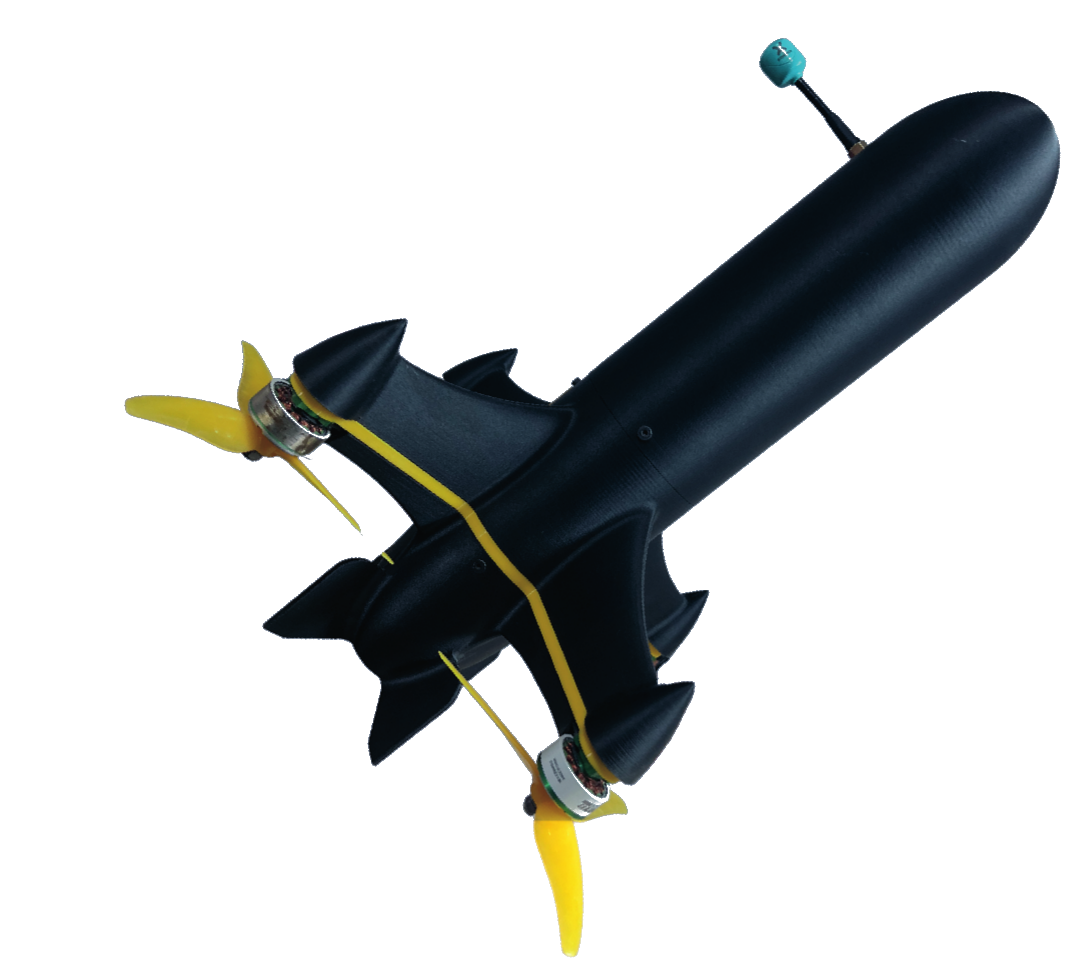
A hard kill, not a jam
Most counter-drone systems work by jamming — flooding the airwaves so the intruding drone loses its link. That approach has a weakness: a drone with an encrypted or frequency-hopping link can fly straight through it. AgniStrike takes a different route. It is a kinetic interceptor, a drone that physically neutralises the threat it is sent after, rather than trying to jam it.
At its core is an AI-driven optical detection system that tracks and identifies an approaching target, studies how it flies, and picks the interception method to match. The operator gives a simple command at the trigger, and the interceptor is away at 200 to 250 kilometres an hour, closing on its target across a tactical range of one kilometre. The company says the whole engagement — detection to interception — is engineered to finish in under three minutes. A human stays in the loop throughout, and the system is built to work at night. Once an engagement is done, the interceptor can be quickly refilled and sent up again, which matters when the threat arrives as a swarm rather than a single drone.
Light enough to carry anywhere
The detail that sets AgniStrike apart is its weight. At under 2.5 kilograms, the whole system rides in an ordinary backpack — no heavy radar, no dedicated vehicle, no fixed installation. That makes it a weapon for frontline troops rather than a base: special forces units, convoy protection, border posts, cities and vital installations that need mobile cover. It is, by the company’s account, one of the lightest drone-interceptor solutions anywhere.
The Army trial
In November 2025, a Stravex team took AgniStrike to the 97 Artillery Regiment’s base at Chhatrapati Sambhajinagar and walked Army officers through the system’s design, dimensions and capabilities in depth. The regiment expressed keen interest in the system for counter-drone defence. Then, in June 2026, Indian Defence Research Wing reported that AgniStrike had passed the Indian Army’s trials — a milestone for a system that has been described as India’s first indigenous drone interceptor.
The company behind it
Stravex Technologies was founded in 2025 by Krishna Mallawat, its founder and CEO, and is based in Navi Mumbai. The company is pre-incubated at SINE, IIT Bombay, and incubated at TBIF, IIT Ropar, and MAGIC. AgniStrike sits at the top of a wider product pyramid: counter-UAS systems that detect and disable enemy drones, battlefield kamikaze drones, and the high-end components underneath them all — proprietary flight controllers and electronic speed controllers, designed and built in-house.
More Read

The timing is no accident. After Operation Sindoor, India’s military leadership has been explicit that counter-drone capability has to be indigenous — foreign dependence would leave the capability itself hostage. Stravex is building exactly the kind of sovereign, portable layer that doctrine now calls for: a system designed in India, for the Indian battlefield, that a single soldier can carry into it.
Keep reading: Beyond the Last Tower: Inside Nibiaa, the Imphal Startup Keeping Assets Visible From Space · Above the Traffic: Inside Sarla Aviation’s Shunya, the Flying Taxi Built for Bengaluru · More Aerospace & Defense stories
Like stories like this? Add Exceptional Technology as a preferred source on Google to see more of our reporting in your search results and Discover feed.