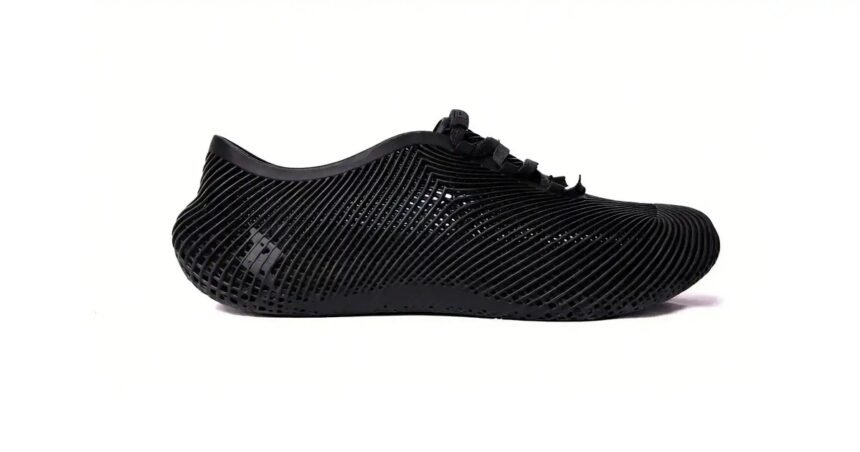
A shoe, as it is made today, is a small assembly line in itself: an upper stitched to a lining, a foam midsole glued to an outsole, dozens of parts cut, sewn and stuck together in a factory, then shipped, warehoused and sold from ready stock. Drifbolt, a Delhi startup that launched on 10 November 2026, looked at that whole chain and asked what happens if you simply print the shoe instead. Its answer is a shoe that comes out of a printer in a single piece — no stitching, no gluing, no foam sole, no warehouse full of finished pairs waiting for a buyer.
One piece, no stitching
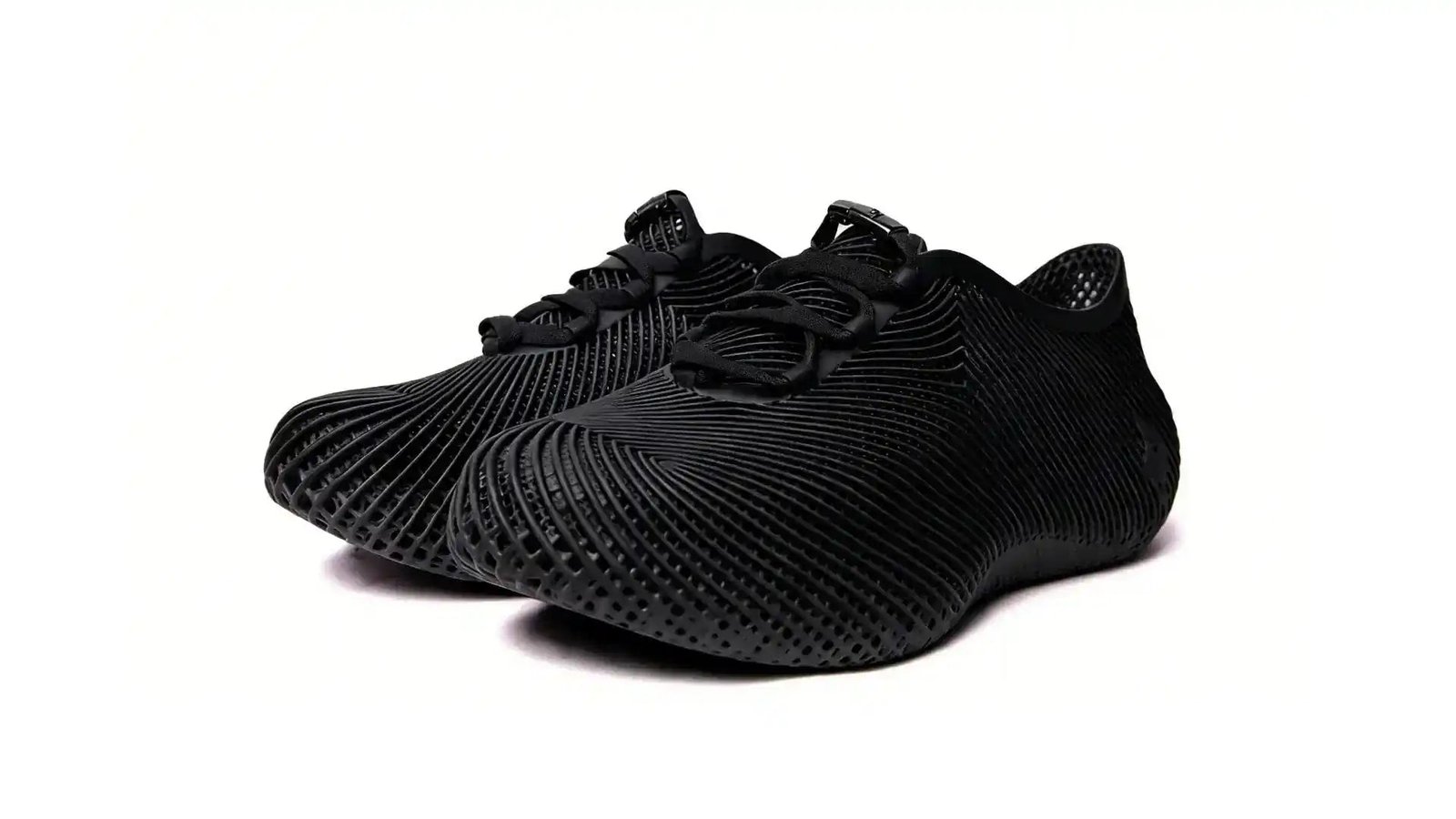
The heart of a Drifbolt shoe is its lattice. Instead of a solid foam sole and a stitched fabric upper, the shoe is a single seamless structure of fine printed struts, built up layer by layer on the company’s liquid photopolymer 3D printing platform with an AI-assisted printing process. The lattice does the work that foam, fabric and glue used to do: it holds the shape of the shoe, it flexes where the foot needs to bend, and it carries the load where the foot presses down. Because the whole shoe is one printed piece, there are no seams to split and no glued joints to come apart.
The material is a bio-based thermoplastic polyurethane, or TPU — the company says its shoes are made with 53 per cent bio-based materials. It is the same family of flexible, hard-wearing polymer that performance footwear has relied on for years, here printed into a geometry that no mould could produce.
A sole that breathes
The most visible difference is the open lattice where a foam sole would normally sit. The gaps in the lattice let air move through the shoe in every direction, which the company describes as 360-degree breathability, and the struts compress on impact to cushion each step, then spring back. It is a neat piece of engineering logic: the cushioning is not a slab of foam added to the shoe, it is the structure of the shoe itself, tuned strut by strut.
Printed when you order
Drifbolt prints each pair only after a customer places an order, and the company says a pair takes about three hours to print. That flips the usual footwear model on its head: instead of guessing demand months ahead, cutting thousands of pairs and hoping they sell, the factory makes exactly what has been ordered, in the size that was ordered. Nothing sits in a warehouse, and nothing is made to be marked down later.
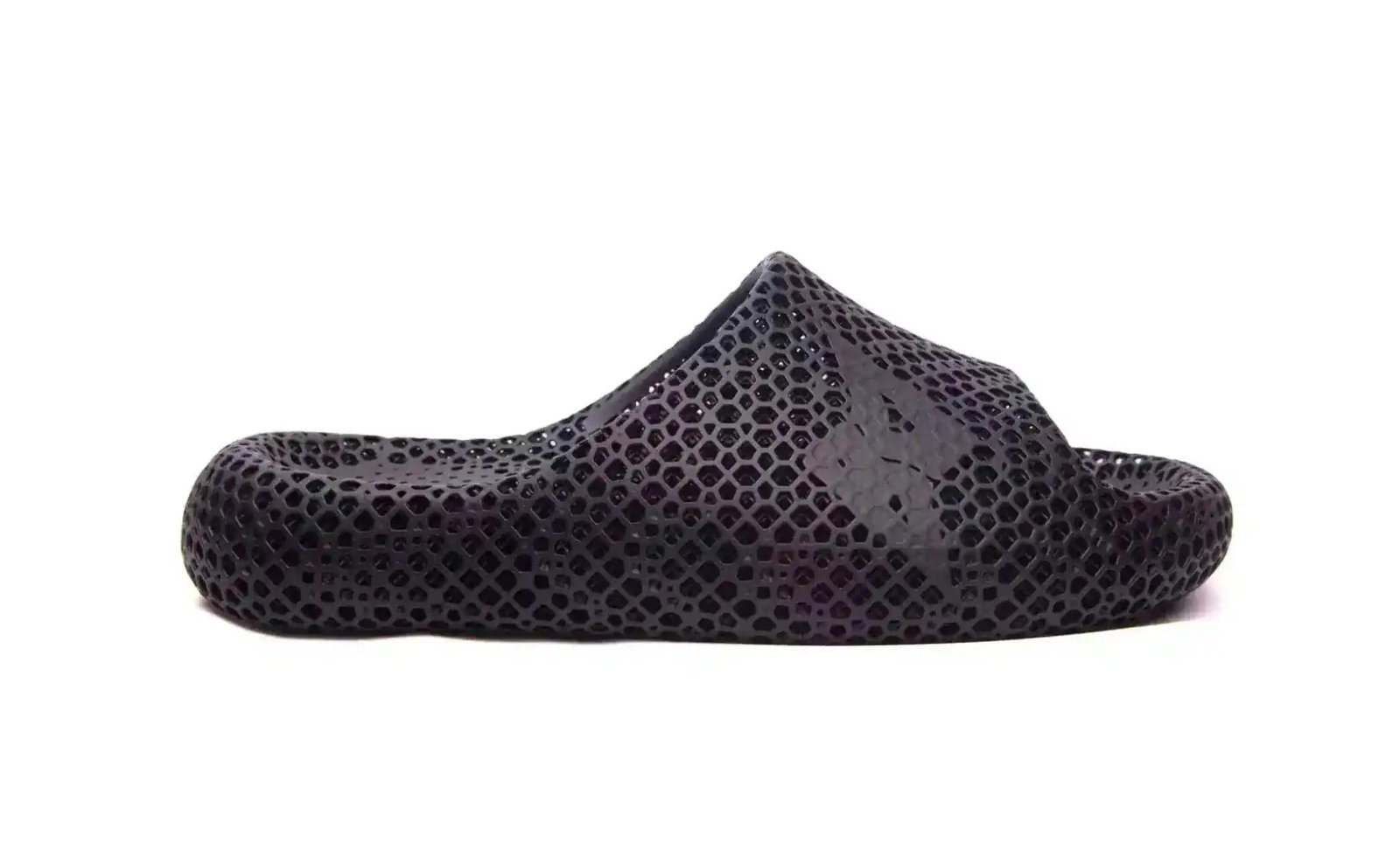
The launch collection has three models, all on sale through the company’s website: Wave, the flagship lace-up at ₹9,990, Breeze at ₹7,990, and Koral, a lattice slide, at ₹6,490. Co-founder Kartik Khatri comes from a family with long experience in footwear manufacturing, and the venture is built on that grounding — the printing is new, but the understanding of what a shoe has to survive is not.
More Read

The longer game
The bigger idea behind Drifbolt is mass personalisation. The company’s longer-term plan is to fit shoes to custom foot scans, so a pair is printed to the shape of its owner’s feet rather than to a standard size run. That is still ahead, but the pieces are already in place: a printer that builds a shoe in hours, a design that is software, and a factory that makes one pair at a time without retooling.
Footwear is one of the oldest manufactured products in the world, and one of the least changed. Drifbolt’s bet is that the next version of it will not be stitched or glued at all — it will be printed, one pair at a time, to order.
Keep reading: From Five Months to 45 Days: Inside STCH, the Bengaluru Startup Teaching India’s Factories to Make Fashion on Demand · Seventy Percent Old Road: Inside Kaushik Engineering’s Plant That Turns Old Highways Into New Ones · More Manufacturing & Engineering stories
Like stories like this? Add Exceptional Technology as a preferred source on Google to see more of our reporting in your search results and Discover feed.