


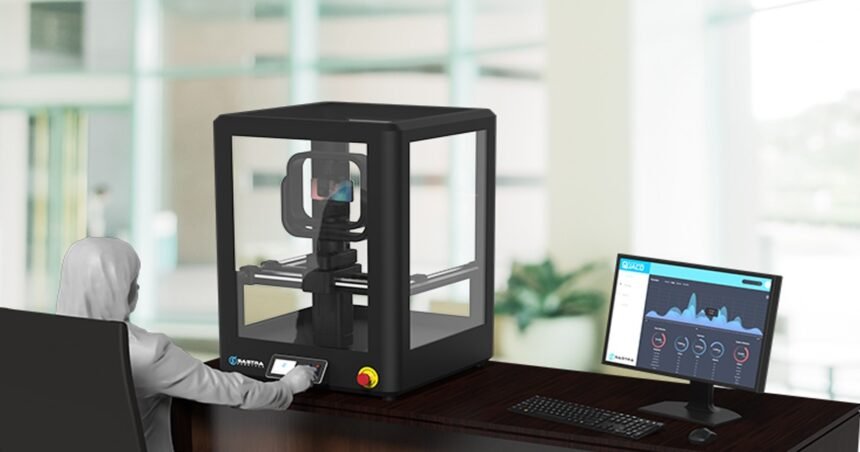
Every screen you have ever touched was tested by a human hand before it reached you. Someone tapped it, swiped it, pinched it, pressed its buttons and knobs, and did it all again — hundreds of times, in exactly the same way — to make sure it worked. In a carmaker’s R&D centre or an avionics lab, that work can swallow 250 days and 2,500 hours before a single product is ready to launch. Sastra Robotics, a Kochi company founded in 2013, builds the robot that does that job instead — a machine hand that taps, swipes and tests touchscreens exactly like a person would, only faster, tirelessly, and without ever losing concentration.
A hand that never gets tired
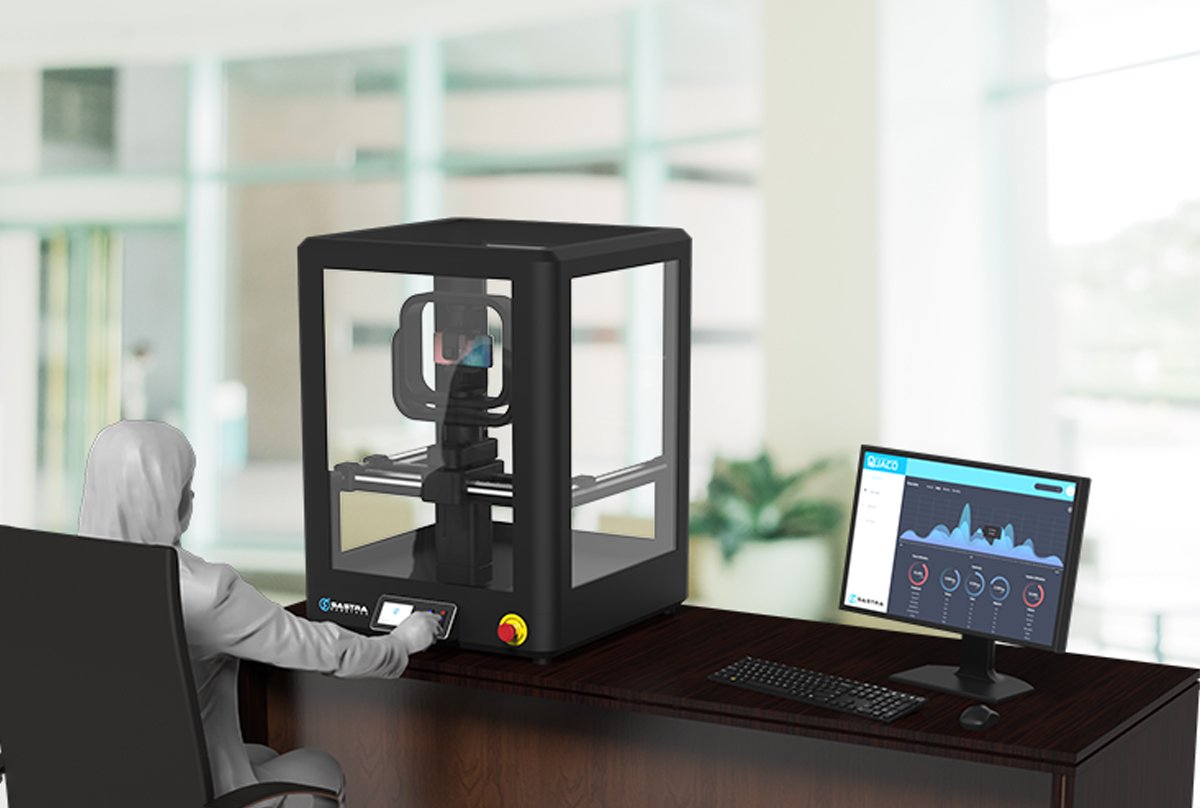
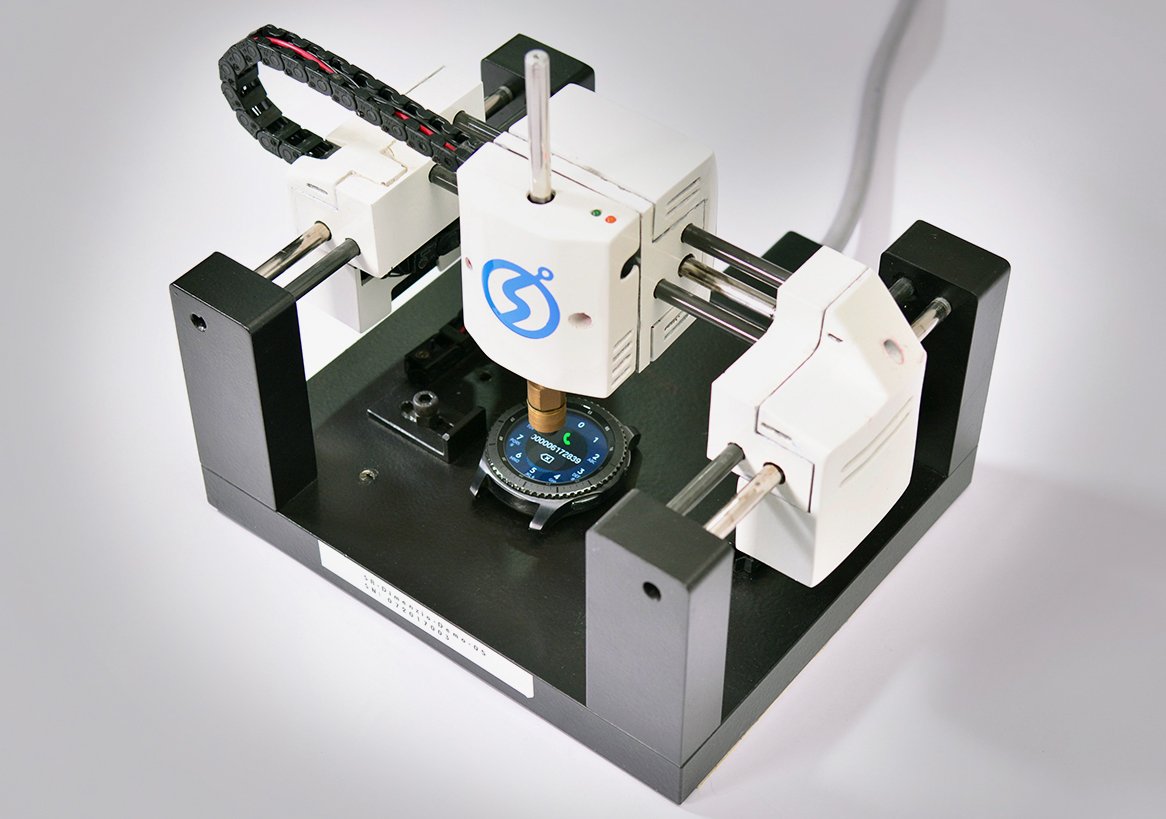
The company’s flagship platform is called QUACO, short for Quality Assurance Companion. It is a complete, off-the-shelf test automation system: a robotic manipulator with force-controlled fingers sits over the device under test and performs the same gestures a human tester would — tap, double-tap, swipe, pinch, zoom, scroll, drag and long-press — while cameras watch the screen and check that every action produced the right result. The company says the system replicates real-life user scenarios precisely, and in some cases better than a human can, because it never drifts, never gets bored and never takes a break.
QUACO comes in two models built on the same architecture. The Pro S is a high-speed system with a sixth-generation SCARA robot for screens up to 16.9 inches, with force-controlled fingers and haptic testing capability. The Pro D uses a Cartesian robot for bigger screens up to 24 inches, with a multi-finger touch module that handles multi-touch gestures like pinch and zoom. Both carry integrated computer vision and run on the company’s QUACO Test Suite, which plans, scripts, executes and reports test sequences, with built-in OCR and icon detection so test cases can be written from what is actually on the screen. The system can be operated remotely from anywhere in the world, and the company says a tester can train the robot with one-click teachability — no dedicated computer, and no code.
The arithmetic of testing
The numbers explain why the world’s biggest manufacturers have taken notice. The company says a manual test engineer manages about 60 moderately complex test cases a day — roughly 14,400 in a working year. A single QUACO system, running 24 hours a day, 365 days a year, can execute at least 365,000 test cases in the same period. The company puts the gains at up to 70 percent less testing time and a 45 percent cut in regression testing cost, with test benches that cost up to 70 percent less to set up. Across its history the company says its systems have executed more than 5 million test cases across six industries, for more than 20 multinational customers and over 50 projects in five countries.
More Read
Trusted where failure is not an option
The customer list reads like a roll call of companies that cannot afford a touchscreen to misbehave. Robert Bosch was an early believer: the German giant bought 21 of Sastra’s robotic hands to test car infotainment systems, and Bosch Engineering’s vice-president Sreejith Radhakrishnapillai says the company was initially apprehensive about a startup’s build quality — then became an avid user, praising the build quality, customer service and fast learning of the Kochi team. Honeywell, HCL, Qualcomm, Tech Mahindra and ABB are among the other names on the company’s client roster. In 2019 Sastra signed a memorandum of understanding with Lockheed Martin, opening the way for its robots to test avionics displays for tactical fighter platforms — the F-21 among them, according to the Kerala Startup Mission. And in 2023 the company signed an agreement to export 150 robots to a leading IT company in the United Kingdom, with exports to the United States alongside.
From a one-lakh start to a global test bench
The story starts with three engineering graduates from Government Engineering College, Palakkad — Aronin Ponnappan, Achu Wilson and Akhil A — who finished college in 2012, decided working for a corporate was not for them, and incorporated Sastra Robotics in 2013 with one lakh rupees from their parents. The company grew up inside Kochi’s Startup Village and Maker Village, with grants from the Kerala Startup Mission, and its first big break came in 2016, when a global automobile giant in Bengaluru ordered a robot that could touch a screen 1,000 times a minute — more than three times what a human hand can manage. In 2021 the business was taken over by SGBI Inc. of the United States to spearhead its global expansion, with headquarters in the US and subsidiaries in the UK and India, while Kochi stayed on as the home of its robotics development. Today the company sells its robots outright and as Robot-aided Testing as a Service, with its investor reporting more than 175 service deployments and customers including UST Global, HEB, Costco, QNB, HDFC Bank and Worldline. In September 2026 Sastra was one of 18 Indian deeptech startups showcased by Nasscom at the India DeepTech Confluence in California, as part of the InnoTrek USA programme.
The newest layer is software. QUACO AI Studio, the company’s latest platform, turns test scenarios written in plain English into full test scripts, and the company calls it the world’s first AI Test Engineer — a system that writes test cases, runs them on a real robot, captures bugs automatically and feeds them into the customer’s existing development pipeline. It is the same idea the founders started with in 2013, taken to its logical end: the robot does the repetitive touching, and the engineer does the thinking.
Thirteen years after three fresh graduates built a robot arm with their parents’ one lakh rupees, their machines are testing the screens in cars, cockpits, phones, payment terminals and medical devices around the world — quietly making sure that the thing you tap does exactly what you expect it to do. That is the kind of invisible engineering India does best: nobody notices it when it works, and everything depends on it working.
Keep reading: The Chip That Sees and Thinks: Inside Bharat Semi’s AI Image Sensors for Physical AI · Three Kilometres Ahead: Inside mistEO, the Kerala Startup Turning Weather Into Decisions · More Industrial Automation & Technology stories
Like stories like this? Add Exceptional Technology as a preferred source on Google to see more of our reporting in your search results and Discover feed.







