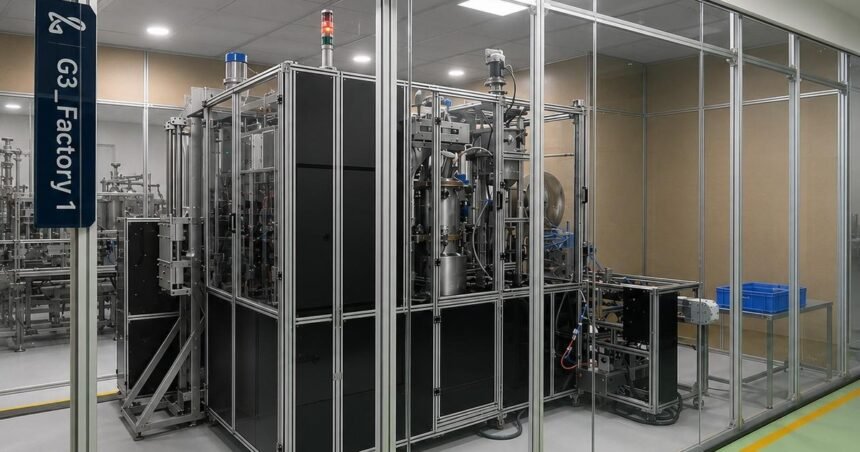
For a wellness or pharma brand with a new product, the factory has always been the hardest part of the idea. Building a plant takes crores, months of construction and validation, and a line designed around one product — change the formulation, the batch size or the pack format, and the whole line has to change with it. Handing production to a contract manufacturer solves the capital problem, but those plants are built for scale and sameness, not for a brand that wants to launch small, learn fast and change often. Leumas, a deeptech startup from Bengaluru, is building a third option: a factory you rent by the hour, where the production line is software.
The Digital Factory
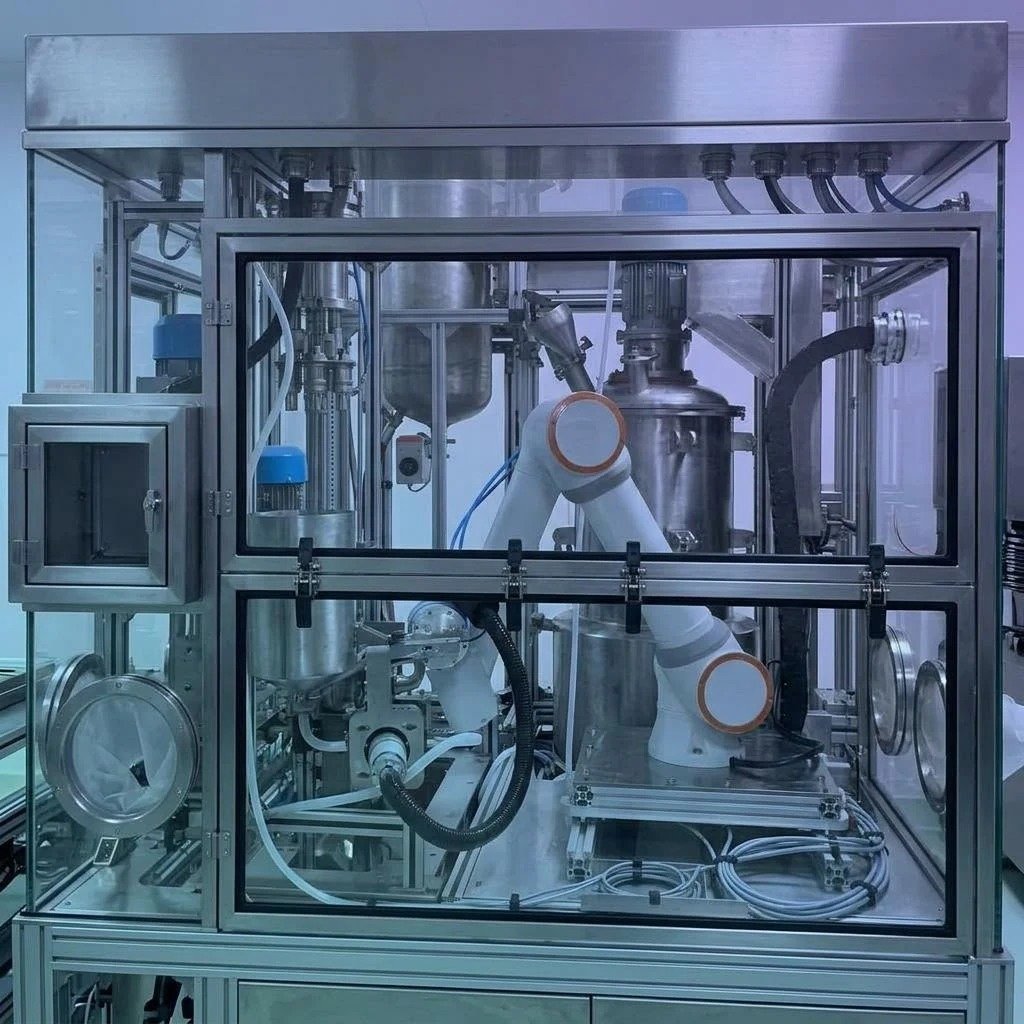
At the heart of Leumas is what the company calls the Digital Factory — a cyber-physical platform of modular, software-controlled robotic production lines. Instead of a line built for one product, Leumas builds lines that reconfigure through software: the same cell can switch between batch sizes, product mixes and pack formats without being rebuilt by hand. AI-led robotics do the making, camera-based vision systems inspect quality as production runs, and the lines operate autonomously, with every step traceable — the combination pharma and wellness manufacturing demands, where a batch record is as important as the batch itself.
The platform has a name, Leumasware, and a unit, the nano-factory: a self-contained, modular production cell that can be deployed on demand or dedicated to a single customer. The company says its robotic preparation technology is patented, and its architecture is designed for contained production of critical drugs — the kind of sealed, contamination-controlled environment where a robot arm inside a stainless-steel enclosure does the precise work, and the software watches everything around it.
Capacity, not concrete
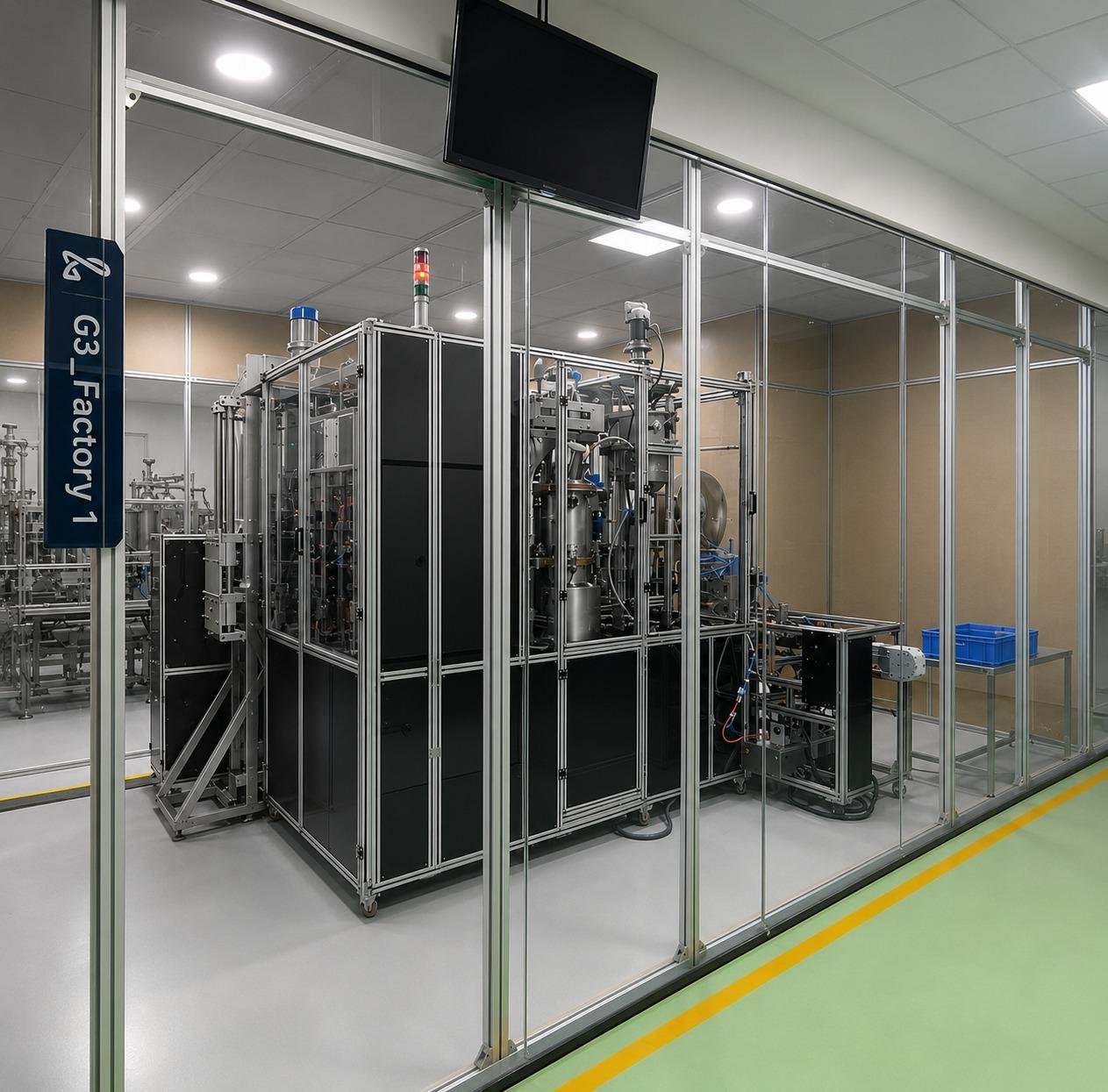
Leumas sells its factories in two ways: on-demand manufacturing, where a brand buys capacity as it needs it, and dedicated production suites, set up for a single customer. The customers are nutrition, cosmetics and pharmaceutical brands — sectors that share heavy regulation and a habit of launching many products in small batches. The company says it has co-developed the technology with wellness brands and helped scale more than 120 products across India, the United States and the Middle East and North Africa, and has signed agreements with pharmaceutical and food research institutions to build dedicated factory capacity with them.
The operation behind the platform is deliberately deep. The company says its team counts 72 specialists, more than 80% of them postgraduates, with leadership across manufacturing, research and development and quality. Its scientific circle includes the Indian Institute of Science for peptide and process science and NIPER Kolkata for pharmaceutical research, and the Government of Karnataka backs its deeptech manufacturing capability through the ELEVATE NxT programme. The facility credentials listed on the company’s site run the full length of the regulated-manufacturing alphabet: FSSAI Central Licence, WHO-GMP, a US FDA-registered facility, ISO 9001:2015, ISO 22000:2018, ISO 22716:2007, HACCP and Halal.
More Read
Inside a Leumas factory. Video: Leumas.
The money behind the machines
Leumas was founded in 2016 by Nitesh Kumar and Subhajit Biswas, who had spent years building Industry 4.0 solutions before deciding the factory itself needed rebuilding. The company raised &rupee;7 crore in a pre-seed round in 2023, then $2.2 million — around &rupee;19 crore — in a seed round in June 2025, led by Capital 2B, the deeptech fund backed by Info Edge and Temasek, with Capital-A and Anicut Capital participating. That takes its total raised to $3.12 million, and the company says the money is going into research and development, expanding its modular manufacturing infrastructure, and launching pilot factories built for wellness and pharmaceutical brands.
The bet is on a simple observation: the outsourced manufacturing market the company is targeting is expected to cross $400 billion globally by 2030, and pharmaceutical contract manufacturing alone was valued at $129.19 billion in 2024 and is projected to reach $224.51 billion by 2030. If factories become programmable — if a brand can rent a robotic line the way it rents cloud servers — then launching a product stops being a construction project and starts being a software decision. That is the factory Leumas is building in Bengaluru: not a building full of machines, but machines that behave like software, ready to make whatever comes next.
Keep reading: The Driverless Robot Hauling a Tonne Across India’s Building Sites: Inside Flo Mobility’s MMR Gen 5 · The Mumbai Company Weaving Parachutes for India’s Astronauts: Inside Kusumgar · More Manufacturing & Engineering stories
Like stories like this? Add Exceptional Technology as a preferred source on Google to see more of our reporting in your search results and Discover feed.