Every robot arm that picks, every CNC machine that cuts, every warehouse shuttle that glides — all of them move because something pushes them in a straight line. For years, the machines that make that straight-line motion happen inside Indian factories mostly arrived on ships from abroad, built by global giants and sold at a premium. In Pune, four young engineers who once built hyperloop pods as students decided that was a problem worth solving at home.
From hyperloop pods to linear motors
Quintrans began as a student hyperloop research team at MIT World Peace University in Pune. The four founders — Pranay Luniya, Kartik Kulkarni, Aniruddha Atigre and Prasanna Kadambi — competed in the SpaceX Hyperloop pod competition and European Hyperloop Week, won around ₹80–85 lakh in grants, and were building a 30-metre pilot hyperloop setup in Pune. They founded Quintrans in 2021 to turn that magnetic-propulsion know-how into something industry could buy: India’s own direct-drive linear motion systems.
The idea, as the founders tell it, was to build “India’s most advanced and indigenously developed linear electromagnetic systems” — hardware designed, built and tested in Pune, sold to factories, robotics companies and equipment makers at home and abroad.
The motor that doesn’t spin
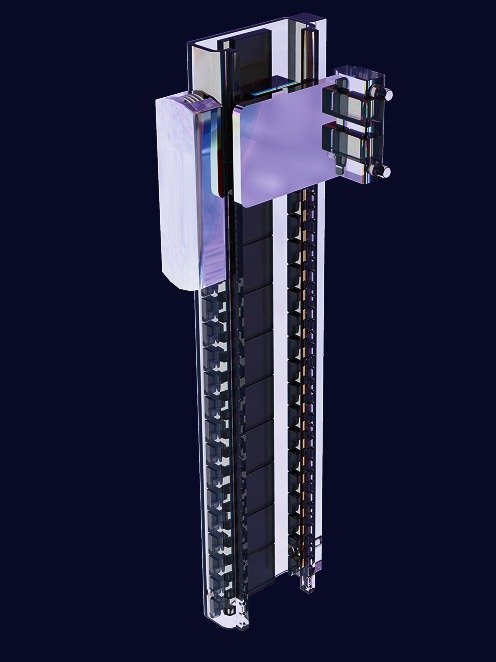
A linear motor works nothing like the motor in a fan. Instead of spinning and then converting rotation into straight-line movement through gears, belts and screws, it pushes a load back and forth along a track using electromagnetism alone. No middleman, no conversion losses — just direct, frictionless motion.
Quintrans describes its direct-drive motors as patented designs, built in cored, coreless and voice-coil variants, with no backlash and lower energy consumption than a rotary motor doing the same job. The catalogue runs from micro-actuators for compact robotics platforms to full linear stages for industrial automation. The company’s own numbers tell the range: the QT-M-EM-001 micro line actuator offers 10–80 mm of stroke with up to 500 N of force, the QT-M-EM-004 mid-line actuator spans 50–350 mm at 1,000–10,000 N with ±30 µm repeatability, and the QT-M-EM-005 linear stage and XY gantry covers 30–1,200 mm at 20–2,000 N with repeatability better than ±1 µm.
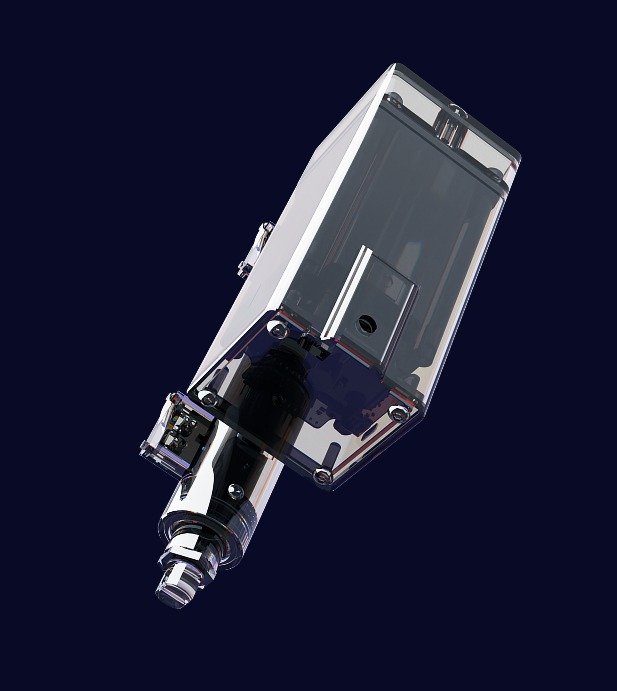
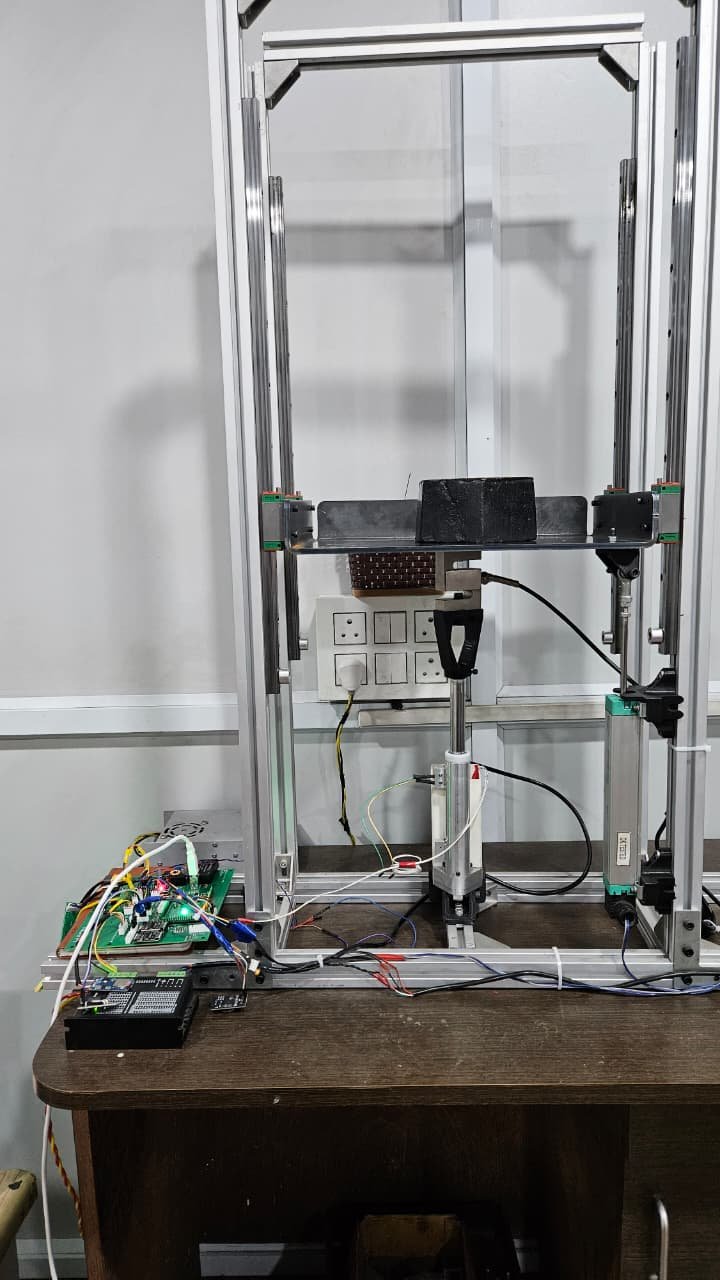
Everything is done in-house. The company says it designs, manufactures and tests every actuator itself — characterising each one across its full performance envelope, and running load-cycle, endurance and environmental testing on its own test rig, which records more than 15 parameters at forces up to 20 kN.
More Read

A hundred metres of track — and a port-sized idea
The same technology scales up far beyond a factory robot. Quintrans has built a 100-metre test track of track-based linear induction motors with its own control system, pitched as a demonstrator for automating container movement inside ports. The track has already moved a 300 kg container, the system is designed for payloads of up to 1,000 kg, and a vehicle-based demonstration has reportedly reached 500 kg — a glimpse of ports where containers glide along guided tracks instead of waiting on diesel cranes and trucks.
The market they are chasing
The prize is large. Founder and CEO Pranay Luniya puts the global linear-motor market at $75 billion, with India at roughly $5 billion and growing at about 10% a year. India manufactured and sold around 6.8 million actuators in FY2022, the company says, with demand expected to cross 10–11 million units by FY2026 — a market long dominated by global OEMs such as SMC, Festo and LinMot. Quintrans’ stated ambition is to manufacture nearly half a million actuators a year by 2030.
The backing is already in place. In December 2025 the company raised a $750,000 pre-seed round led by Capital-A, India’s specialist manufacturing and deep-tech fund, with participation from SanchiConnect, AIC-Pinnacle and IIMA Ventures. The money is going into an in-house manufacturing and advanced testing facility in Pune, faster R&D in electromagnetic actuation, and the engineering team needed for commercial rollout. Quintrans is also part of MaXcel, the hardware and industrial-technology accelerator run by Capital-A and SanchiConnect.
Quintrans’ vision, as the company puts it, is to build a future where motion is never the limit. If the straight line is the most basic movement in every machine India builds, then building that movement at home — precisely, efficiently, and at Indian prices — is exactly the kind of quiet engineering that the country’s factories have been waiting for.
Keep reading: One Machine, a Thousand Chais: Inside Chaiomi, the Hyderabad Robot Brewing Your Perfect Cup · Catching Single Photons: Inside Quanastra, the Delhi Startup Building India’s Quantum Eyes · More Industrial Automation & Technology stories
Like stories like this? Add Exceptional Technology as a preferred source on Google to see more of our reporting in your search results and Discover feed.