A motorcycle that fills up in about two minutes, runs about 180 kilometres on a tank of hydrogen, and leaves nothing behind but water vapour. That is the machine a small Pune startup has put on the road — and it is only one of the things its fuel cells power. Hydrovert Energy, founded in 2021 and incubated at Venture Center on the CSIR-National Chemical Laboratory campus, is building hydrogen fuel-cell powertrains and generators in India, from the membrane up, as zero-emission replacements for the diesel and CNG engines that still run the country’s last-mile deliveries and backup power.
The powertrain that replaces diesel
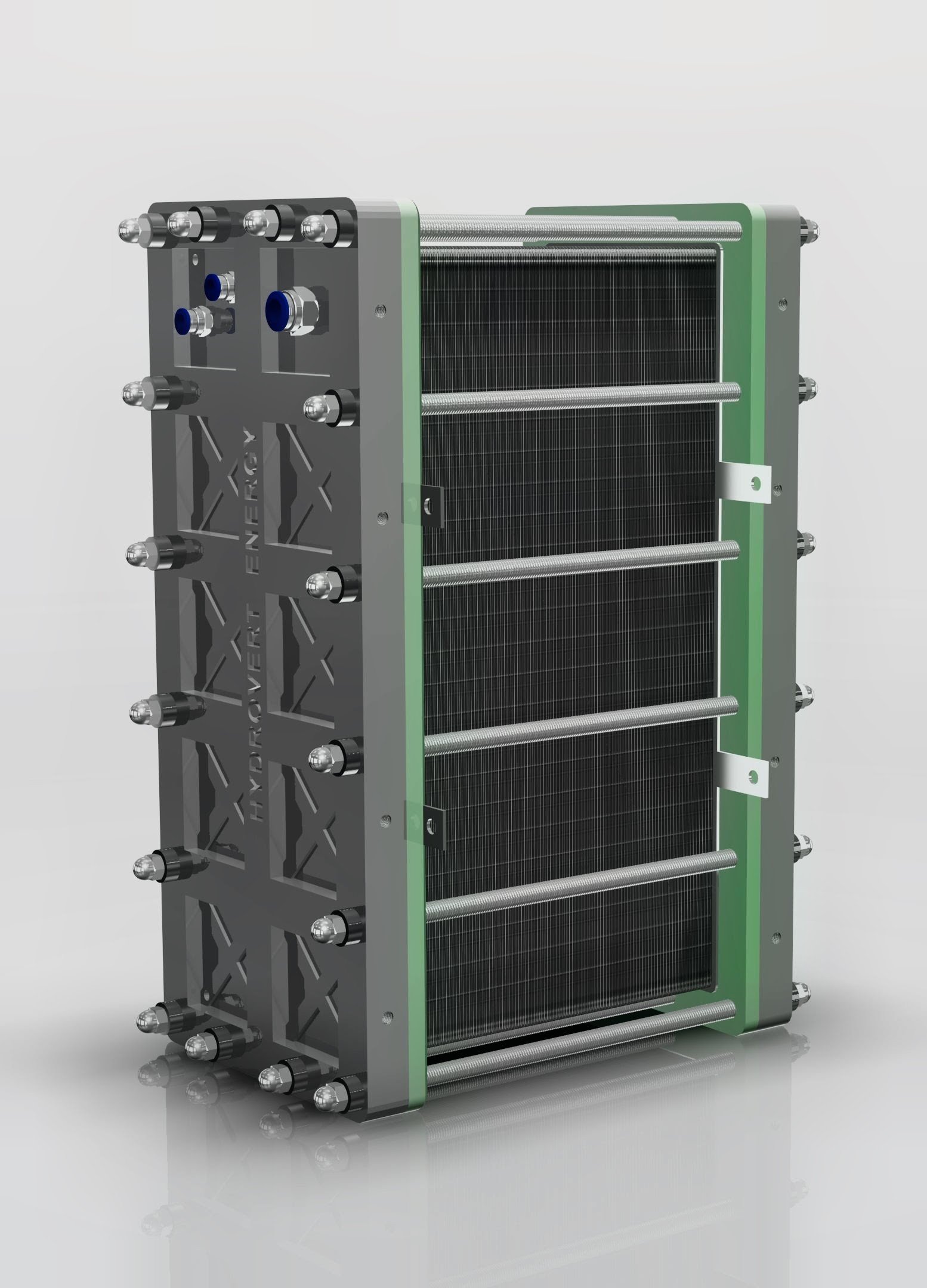
At the heart of everything Hydrovert builds is the proton exchange membrane (PEM) fuel cell: hydrogen and oxygen go in, electricity comes out, and the only thing leaving the tailpipe is pure water. The company has turned that chemistry into powertrains of 5 to 25 kW for mobility, and its first vehicle application is the workhorse of Indian cities — the cargo three-wheeler. Hydrovert has fitted a 10 kW hydrogen powertrain to a cargo three-wheeler prototype, and the vehicle is now undergoing testing and certification. The work runs under a programme sponsored by the Maharashtra Energy Development Agency, with the National Chemical Laboratory and the Central Institute of Road Transport as partners — and CIRT is developing certification standards for hydrogen-powered cargo three-wheelers, the step that lets such vehicles onto Indian roads at scale. The company plans pilot deployments for waste-collection vehicles in Maharashtra, and to scale the same powertrain up to light and medium commercial vehicles.
A motorcycle that fills up in two minutes
The most eye-catching showcase of the technology is the hydrogen motorcycle. The company says the bike runs about 180 km on a tank of hydrogen and refuels in around two minutes — the two numbers that matter most to a rider, and the two where batteries still ask for patience. Behind it is a founder who has spent his career inside this exact problem: chief executive and chief technology officer Dr Satyajit Phadke, a materials engineer from IIT Roorkee, first worked on hydrogen fuel cells during his PhD at the University of Florida, where his research focused on the critical membrane at the heart of the cell, and went on to research at MIT and Princeton before returning to India in 2019. He founded Hydrovert in 2021 with Supriya Patwardhan, who brings an MBA from Mannheim Business School in Germany and more than a decade of experience in sales, operations and strategy across India and Europe. The startup is part of Xynteo’s Energy Leap programme for clean-hydrogen pioneers, and its workshop sits at the NCL Innovation Park in Pune, where the team regularly demonstrates its vehicles running to students and visitors.
The generator that breathes out water
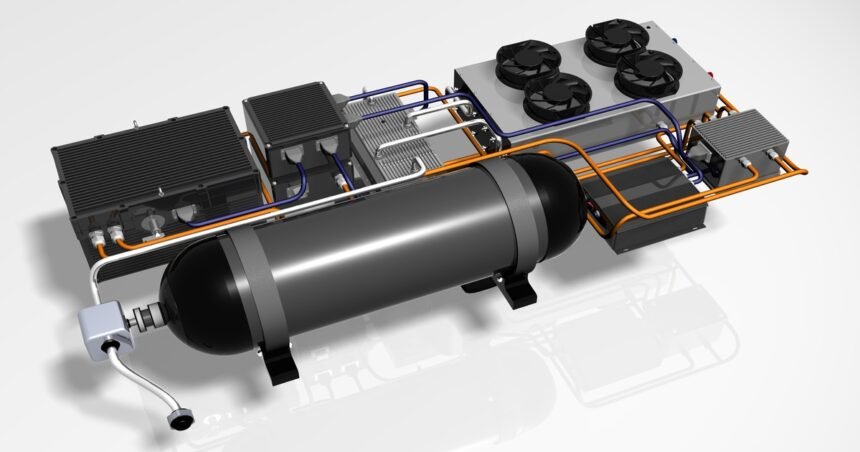
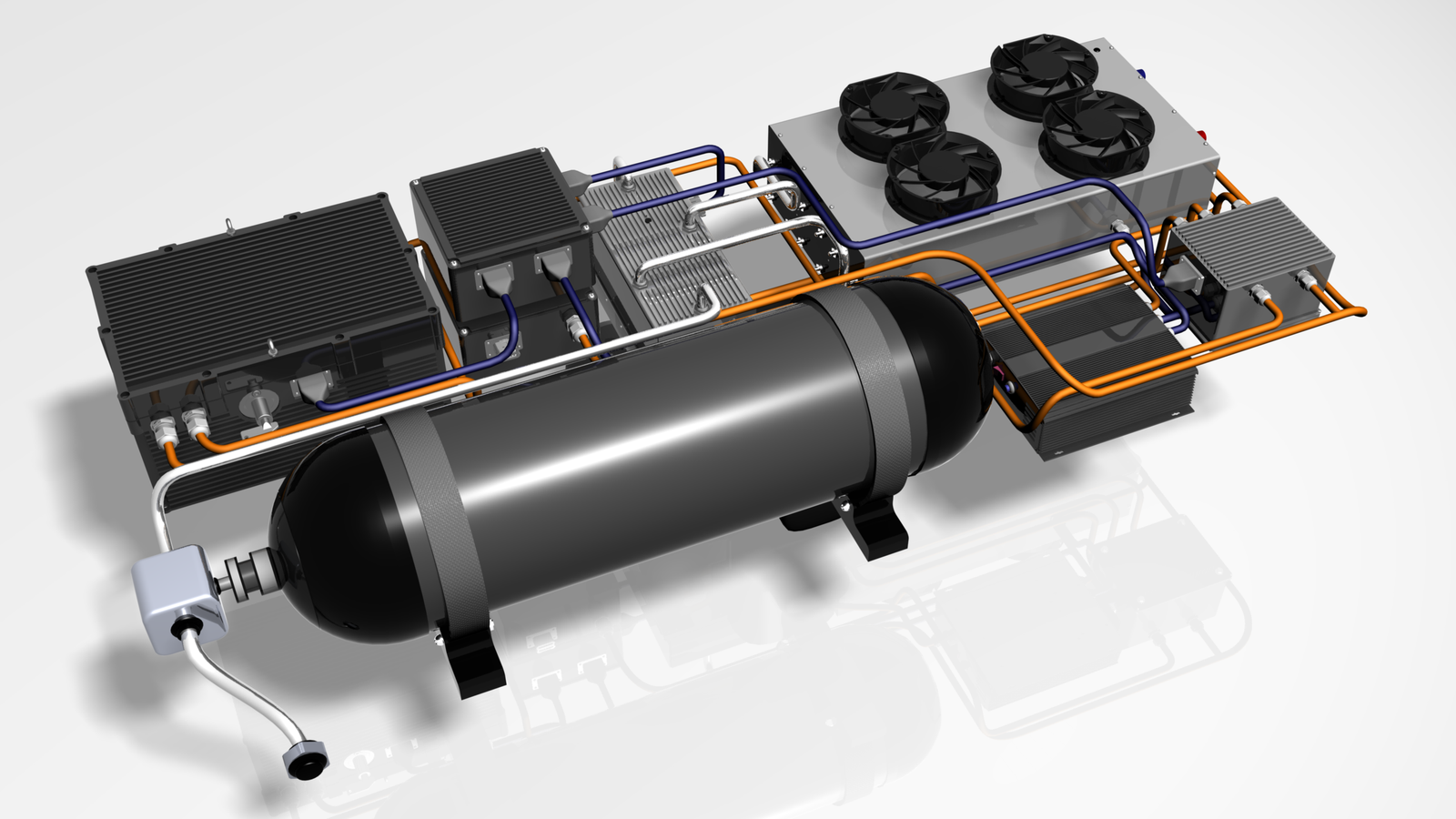
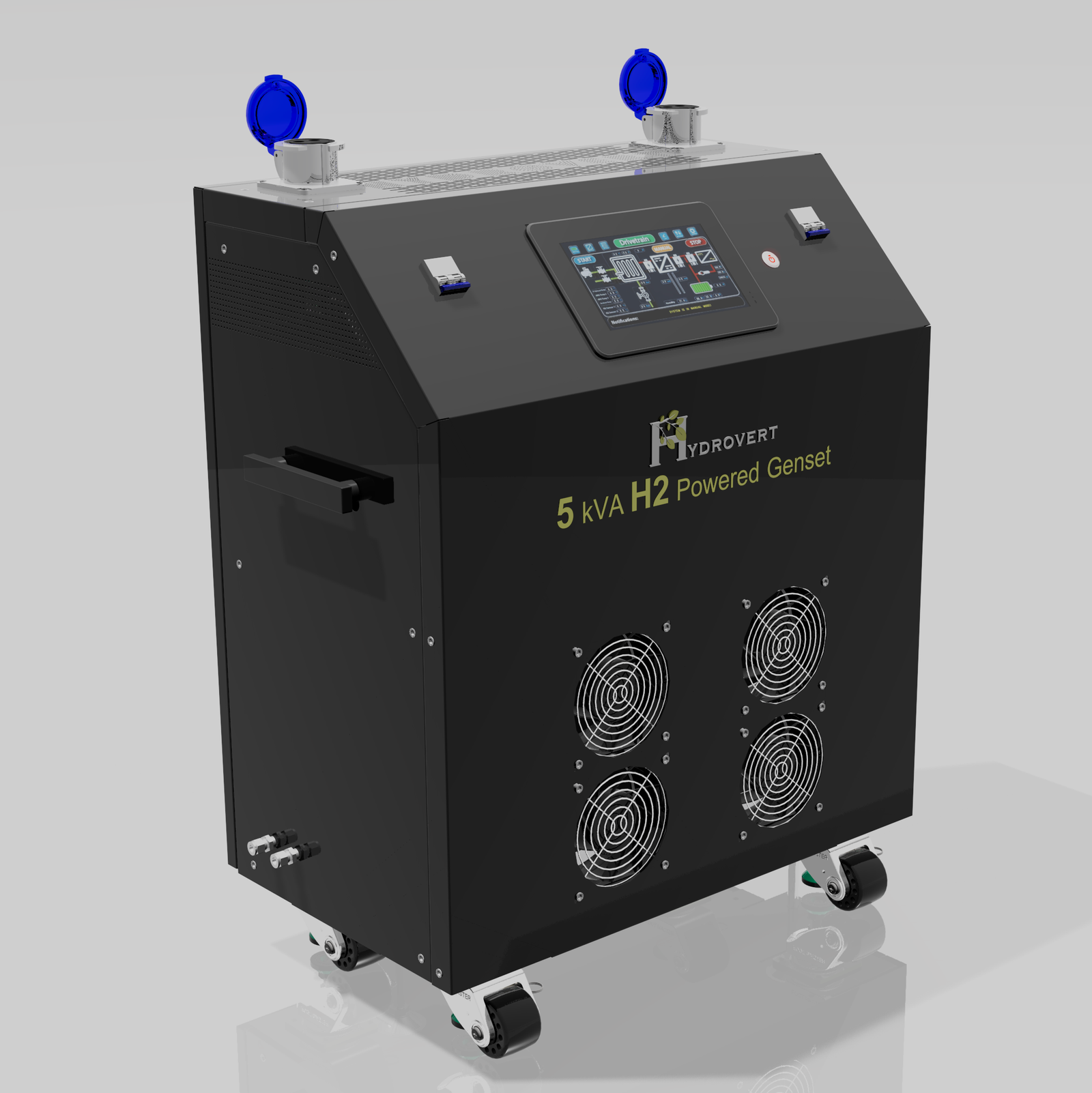
The same fuel cells also power Hydrovert’s stationary generators — hydrogen fuel-cell gensets from 5 to 50 kVA built for long-duration backup power in commercial and industrial settings, as a direct replacement for diesel generators. The systems pair PEM fuel cells with battery storage in a hybrid architecture the company says improves efficiency and fuel-cell durability while cutting capital costs, and Hydrovert manufactures the key components in-house — fuel cells, battery packs, power electronics, fuel-cell controllers and electronic control units — with 95% component indigenisation, according to co-founder Supriya Patwardhan. The gensets run silently with zero emissions, carry hydrogen leak-detection sensors and remote monitoring, and can supply 230 V AC single-phase, 415 V AC three-phase, or 12, 36 or 48 V DC power. Even the waste heat is put to work: the units give off hot exhaust air at around 45°C, which can heat indoor spaces in colder climates. In April 2026 the technology reached its first commercial deployment, when Indian utility NTPC commissioned a Hydrovert genset at a facility in Greater Noida.
Why it matters
India’s clean-energy shift has a stubborn gap: the vehicles and machines that batteries struggle to serve — three-wheelers that run all day, delivery fleets that cannot wait hours to charge, and generators that must keep running through long outages. Hydrovert is building for exactly that gap, with hardware designed and manufactured in Pune, certified for Indian roads, and already running at one of India’s largest utilities. A motorcycle that refuels in two minutes and a generator that breathes out water are two faces of the same idea: hydrogen, made in India, doing the jobs diesel used to do — quietly, and with nothing left behind but water.
Keep reading: The Liquid Battery Built for Decades: Inside Leep Flow Energies, the Hosur Company Betting on Vanadium · The Battery That Never Fades: Inside Arkle Energy’s Vanadium Flow Battery Built for 25 Years · More Energy & Power stories
More Read

Like stories like this? Add Exceptional Technology as a preferred source on Google to see more of our reporting in your search results and Discover feed.