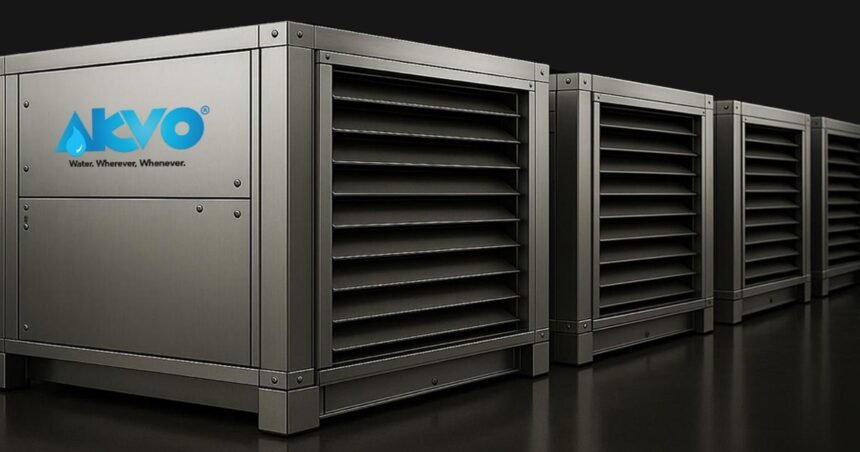
Growing up in Kolkata, Navkaran Singh Bagga watched summer turn into a queue — tankers rolling in, neighbours waiting with buckets, a city wrapped in humidity that still ran short of drinking water. That contradiction became a company. In 2017, Bagga founded Akvo Atmospheric Water Systems with a simple inversion: instead of digging deeper for water, look up. The air above a humid Indian city holds an enormous reservoir, and Akvo’s machines pull drinking water straight out of it.
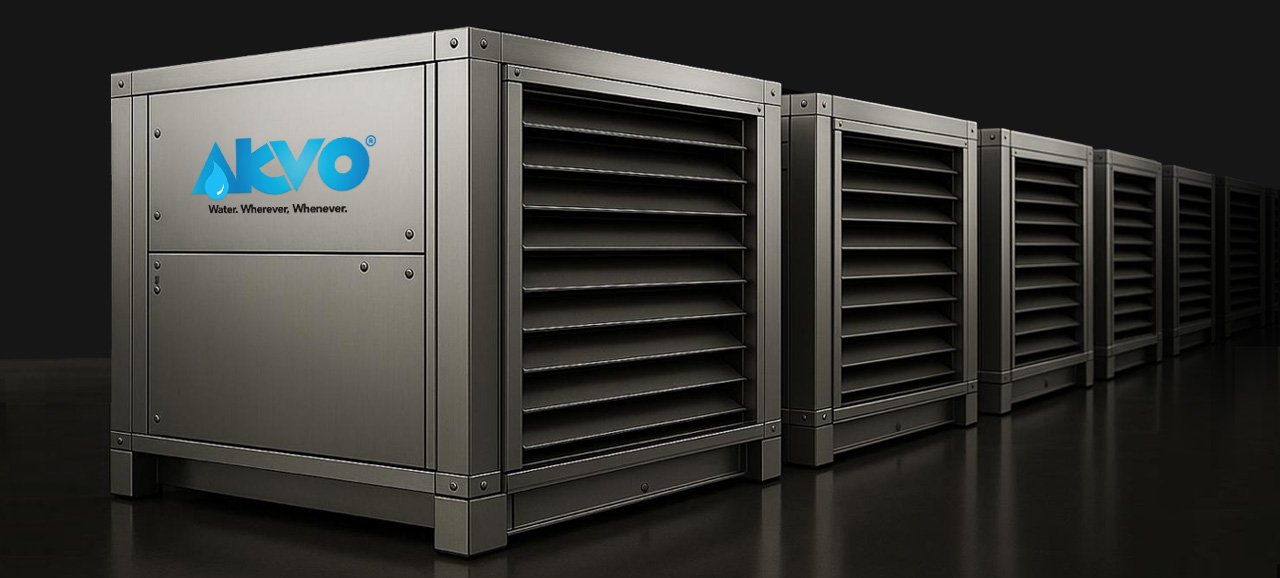
Akvo’s atmospheric water generators need no pipeline, no borewell and no tanker. They draw in ambient air, filter out dust and airborne contaminants, cool the air to its dew point so moisture condenses, then send the collected water through sediment filtration, activated carbon and ultraviolet sterilisation, finishing with calcium and magnesium minerals for taste and balance. Since the first commercial deployment in 2018, the company says it has installed more than 2,000 systems across 15 countries, together producing more than 100 million litres of drinking water — around 300,000 litres every day — without extracting a drop of groundwater.
Where the machines work
Akvo’s systems now run in six Indian cities — Bengaluru, Chennai, Mumbai, Goa, Kolkata and Ahmedabad — and in markets including the UAE, Bahrain, Saudi Arabia, the Philippines, Chile, Ecuador and Colombia. They serve homes, hospitals, schools, factories, airports, Border Security Force posts, remote villages and island communities — the places where a tanker is expensive, a pipeline is impractical, or the groundwater is already stressed.
The deployments tell the story in miniature. At the Tuppadahalli Wind Farm in Karnataka, operated by Acciona, the site now generates both electricity and drinking water on-site, cutting its dependence on bottled-water deliveries. The company says a Mumbai hospital cut its water procurement costs by 22% after shifting part of its drinking-water supply to atmospheric generation, while manufacturers such as PGP Glass and Corewire Surface Technology use Akvo systems to cut packaged-water use across their facilities.
The energy side of water
More Read

What makes Akvo an energy story as much as a water story is how little power each litre takes. The company says its systems produce up to four litres of water per unit of electricity in ideal conditions, and around 2.5 litres per unit even in a drier city like Bengaluru. The machines run on grid electricity, solar panels or generators, so a unit can keep producing where the grid is unreliable or absent entirely.
That flexibility is opening new ground. In September 2026, the company says, two solar-powered Akvo machines were commissioned for a remote island community in the Philippines under government evaluation — drinking water generated on the spot, powered by the sun, with no water infrastructure to build first.
From a home Pod to a 30,000-litre plant
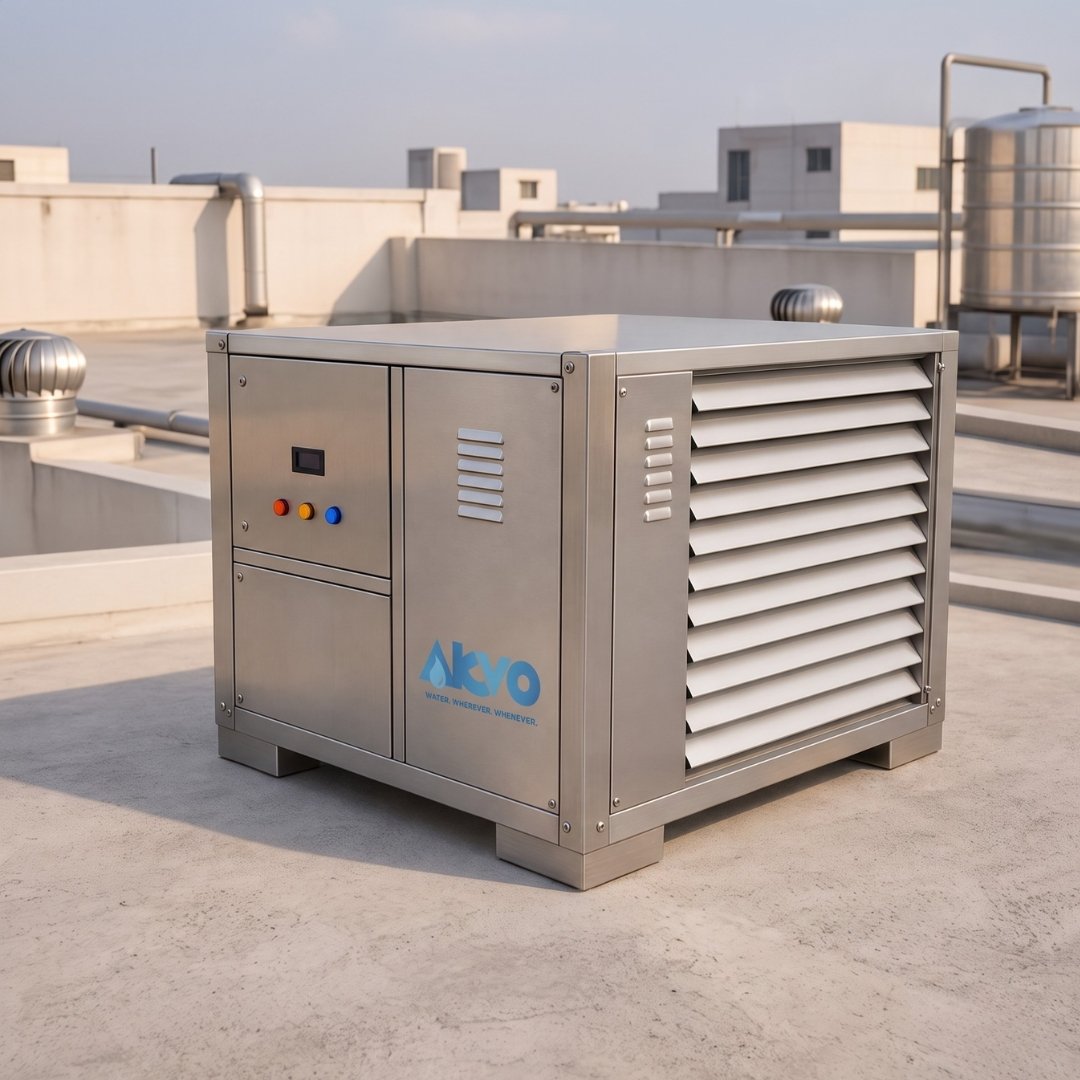
Akvo’s range runs from the compact Akvo Pod, making around 50 litres a day for a home or small office at about Rs 99,000 including GST and installation, through 100-litre and 1,000-litre units, up to industrial installations producing as much as 30,000 litres a day. The company puts the cost of its water at Rs 1.75 to Rs 2 per litre, and says the machines operate from 10 to 60 degrees Celsius and 30 to 80% humidity — built for tropical coasts, hill towns and dry cities alike.
For organisations put off by upfront cost, Akvo offers a BOOT model — Build, Own, Operate, Transfer — under which the company installs and manages the systems and clients simply pay for the water they consume.
Built lean, built in India
Akvo has grown with a lean team of 38 people and without external investors, keeping control of its manufacturing and its roadmap. The company says it was India’s first indigenous manufacturer of atmospheric water generators, designing and building its systems in India for Indian conditions first — and then taking them to 15 countries.
Bagga puts Akvo’s focus plainly: it is the answer for the places the pipe doesn’t reach. As the company looks next at water-stressed yet humid regions of Africa and the Gulf, that focus is becoming a larger idea — decentralised, climate-resilient water that arrives where it is needed, made from the air on the spot. For a country learning to live with water stress, a machine that turns humidity into drinking water is a quiet kind of freedom, and it is being built in Kolkata.
Keep reading: From Sunlight to Storage: Inside VNT’s RAV5, the Indian Converter Built for the Battery Era · From Salt to Storage: Inside Rechargion, the Pune Startup Building India’s Sodium-Ion Batteries · More Energy & Power stories
Like stories like this? Add Exceptional Technology as a preferred source on Google to see more of our reporting in your search results and Discover feed.