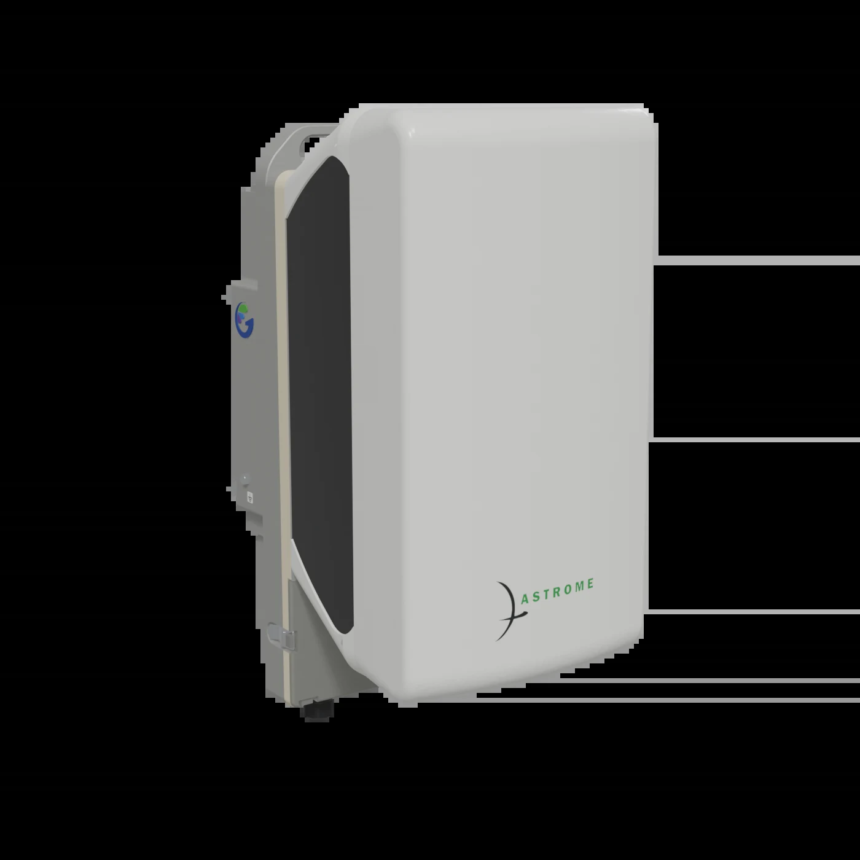
In mid-October, a Bengaluru deep-tech company better known for beaming gigabit internet across rural India won a very different kind of contest. Astrome Technologies has been selected by the Indian Army and the Defence Innovation Organisation as the winner of an iDEX DISC 14 challenge to develop a next-generation, man-portable Electronic Intelligence (ELINT) system with Electronic Support Measures (ESM) capabilities — a packable electronic-warfare sensor designed to help soldiers detect, identify and locate hostile radars and emitters, including in high-altitude and forward-border areas.
The win, announced by the company as another iDEX milestone, shines a light on a startup that has spent a decade turning millimetre-wave physics into working products — and is now carrying that radio expertise directly onto the battlefield.
Hearing the electromagnetic battlefield
ELINT systems gather and analyse electronic emissions, while ESM capabilities help detect, identify and analyse signals that can reveal the presence of hostile radars and other emitters. In an age where radar, communication links and electronic systems decide engagements, equipment that can precisely identify and locate such emissions is a genuine force multiplier.
The iDEX challenge calls for everything traditional ELINT equipment has lacked: expanded frequency coverage, a far lighter and more modular design, and sharper direction-finding accuracy. A man-portable system can go where vehicle-mounted equipment cannot — carried by soldiers into forward and high-altitude positions where mobility decides everything. The proposed platform is expected to integrate precision direction-finding with real-time signal processing, feeding commanders the information they need for fast tactical decisions.
A millimetre-wave company built for this
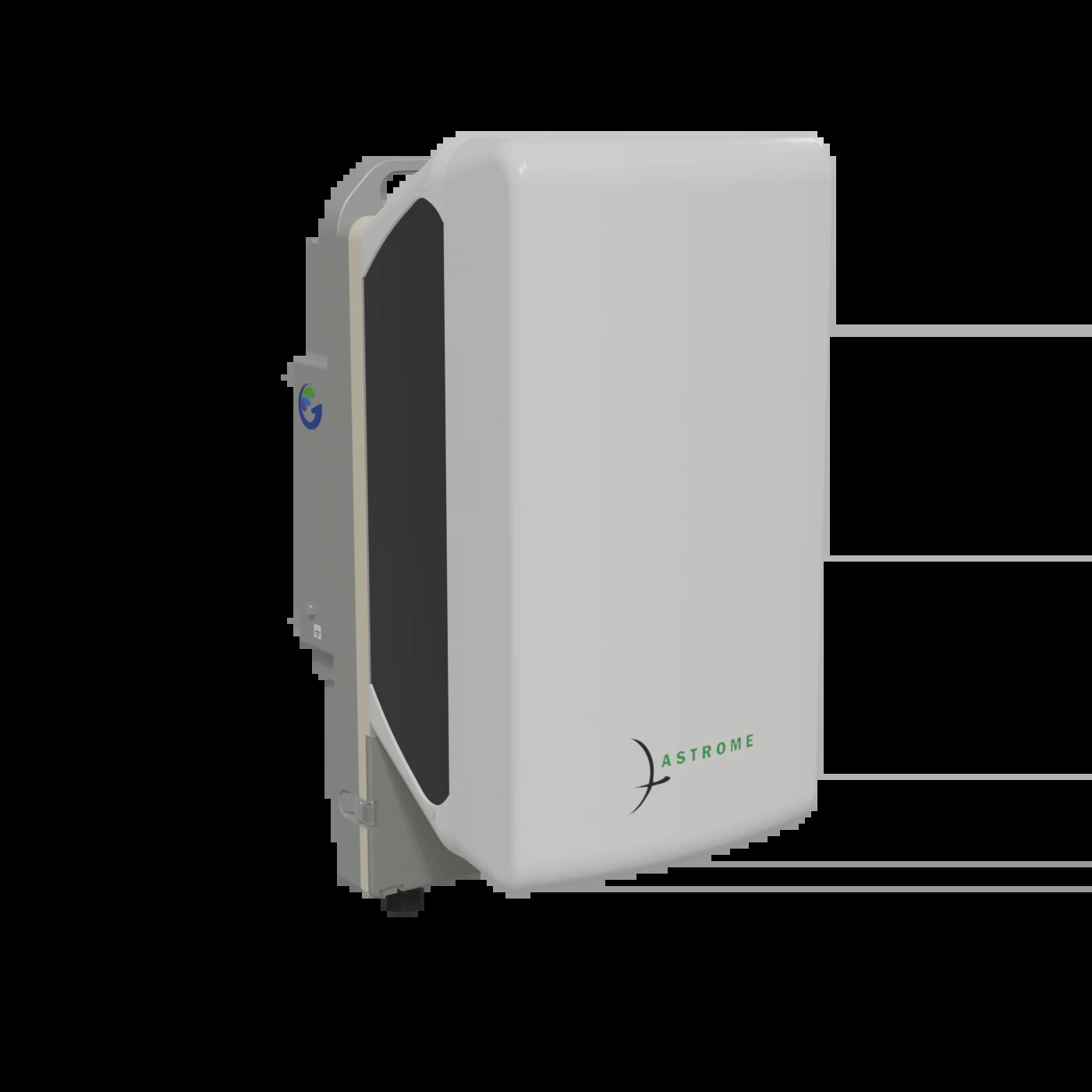
Astrome’s core is high-frequency radio engineering, which makes it a natural fit for the challenge. Its flagship product, GigaMesh, is — the company says — the world’s first multi-beam E-band radio: a single compact unit that can form as many as 40 wireless links, each carrying more than 2 Gbps, over distances up to 10 km. Using advanced digital beamforming, one radio talks to many towers simultaneously, while electronic auto link alignment removes the need for manual antenna alignment and truck roll-outs.
The product has already proved itself far from any lab. Astrome won a Universal Service Obligation Fund contract and deployed India’s first indigenously developed E-band radio — running BharatNet fibre from the Sompura Gram Panchayat to a government school at Nidavanda village in rural Karnataka, so students there could attend online sessions. The company’s impact, noted by NITI Aayog’s frontier-technologies platform, includes 10+ Gbps wireless backhaul and up to 70% lower deployment costs than laying fibre.
More Read

From village schools to the services
Astrome was founded in 2015 by chief executive Neha Satak and Dr Prasad H L Bhat, and incubated at the Indian Institute of Science, Bengaluru. Defence has been part of its story for years: the company’s clients include the Indian Army, the Indian Navy and BSNL, and its ruggedised 4G/LTE Tactical LAN — a mobile, IP-based wireless network for rapid deployment by small teams — has been iDEX-validated and approved for defence procurement.
The ELINT win extends that relationship from communications into sensing and electronic warfare — a domain where the Army is moving fast, with cognitive-EW and real-time spectrum-automation programmes running alongside.
The constellation beyond
Astrome’s ambitions reach past ground networks into space. Its GigaSat flat-panel satellite terminal and SpaceNet software-defined V/W-band payload are the building blocks of a satellite network — the company has described a 198-satellite constellation with 24 terabits per second of total network capacity, aimed at affordable high-speed internet across emerging economies. Backed by a $10 million round led by the Apollo Fund with follow-on investment from the IAN Group, the company is scaling production for both terrestrial and satellite communications.
From connecting a Karnataka village school to building the Army’s next electronic-warfare ears, Astrome’s arc is a compelling one: deep radio science, engineered in Bengaluru, earning its place from the gram panchayat to the forward post.