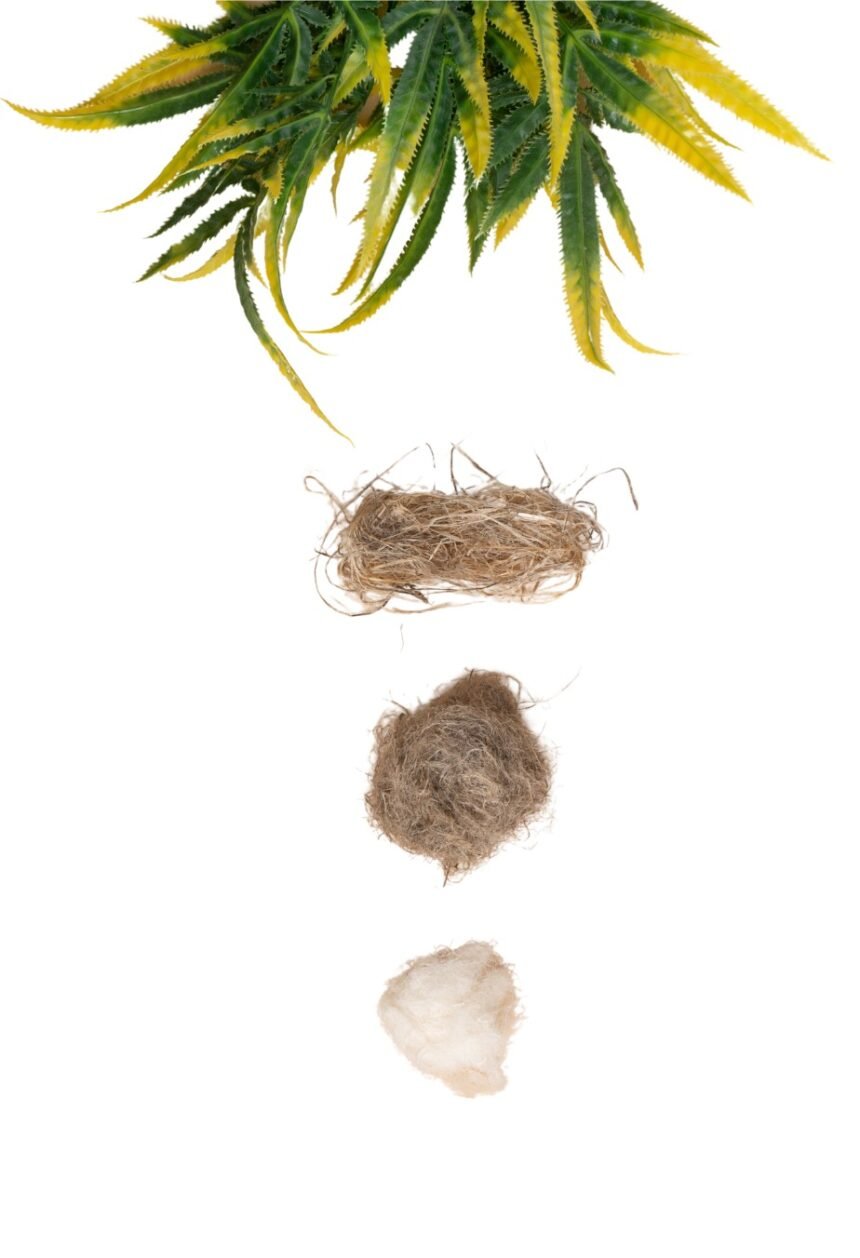
Every harvest season, India burns around 90 million tonnes of crop residue. The smoke hangs over fields and cities, the nutrients go up in flames, and the farmer earns nothing from the waste. In Surat, a materials company called Canvaloop looked at that burning field and saw something else entirely: the raw material for the clothes India wears.
Canvaloop was founded in 2020 by Shreyans Kokra, whose family has spent decades in Surat’s textile trade. The company is a material sciences business with a single, elegant idea: take agricultural waste — hemp, banana stems, pineapple leaves, nettle, flax — and turn it into textile-grade fibres and yarns that ordinary mills can spin, weave and dye without retooling. Its proprietary chemo-mechanical process, the company says, runs as a closed loop: it uses no solvents, heat is produced using bio-waste, all water is recycled back into the system, and processing takes less than 10 litres of water per kilogram of fibre.
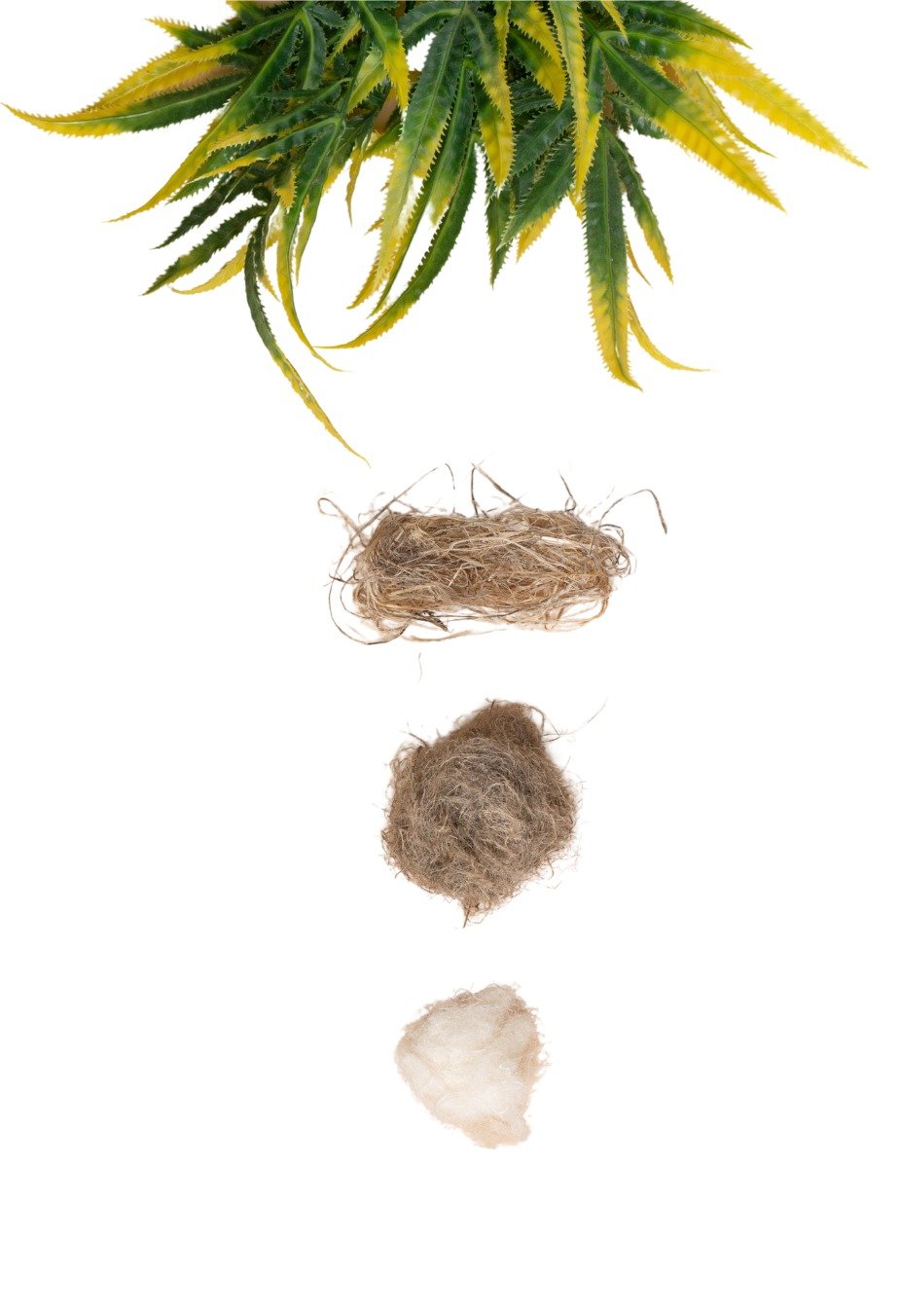
The result is a family of fibres with names that read like a farm inventory. HempLoop is made from hemp grown for medicinal and food purposes. BanLoop comes from banana stems, PineLoop from discarded pineapple leaves, NettleLoop from wild Himalayan stinging nettle, and FlaxLoop is a cottonised flax fibre for dry spinning. The company says the fibres are ready to spin and plug-and-play with existing textile infrastructure, and they already reach real garments: Canvaloop’s own Slow jeans brand is built on Himalayan hemp, and on Shark Tank India the founders showed a pair of jeans that Levi’s had created with 20 per cent Canvaloop fibre.
The business is now scaling fast. In March 2026 the company raised Rs 13.3 crore in a round led by GVFL, with Rockstud Capital participating, and the company says it plans to grow production from 30 tonnes a month to 300 tonnes a month over the following six to twelve months, while advancing research into regenerative cellulose materials. That scale matters because the fibre is designed to be affordable and available, not a boutique curiosity — a mainstream raw material that lets brands cut cotton and wood-pulp dependence without rebuilding their factories.
Canvaloop’s newest leap is Agro-Lyocell, and it is the idea that just put the company on a world stage. Conventional lyocell is made from wood pulp, which puts pressure on forests. Agro-Lyocell instead takes the dense, woody part of agricultural residue that usually goes unused — linseed residue among them — and converts it into dissolving-grade cellulose, the starting point for a new textile fibre. The team has established the process at laboratory scale and validated multiple feedstocks, and is now working on process optimisation and moving towards pilot-scale fibre production. In June 2026 the H&M Foundation named Agro-Lyocell one of the ten winners of its Global Change Award 2026, chosen from thousands of applications, with each winner receiving a €200,000 grant and a place on the year-long Changemaker Programme run with Accenture and KTH Royal Institute of Technology.
What makes the story so satisfying is how many problems one process touches at once. Farmers get a new income from residue that would otherwise be burned. Forests get relief from fibre demand. Mills get a drop-in material that works on their existing machines. And shoppers get fabrics that are breathable, durable and biodegradable, spun from the fields of India rather than felled from a forest or drilled from a well. From burnt fields to new fabric, Canvaloop is turning India’s farm waste into the raw material of a cleaner fashion industry — and, with pilot-scale Agro-Lyocell next, the Surat startup’s biggest chapter may be the one it is about to spin.
More Read
Keep reading: An Operating System for Rural Health: Inside CureBay, the Bhubaneswar Company Bringing the Hospital to India’s Villages · Practice for Real Life: Inside Rewin Health, the Chennai Startup Building an AI Life-Skills Platform for India’s Differently Abled · More Chemicals, Materials & Life Sciences stories
Like stories like this? Add Exceptional Technology as a preferred source on Google to see more of our reporting in your search results and Discover feed.