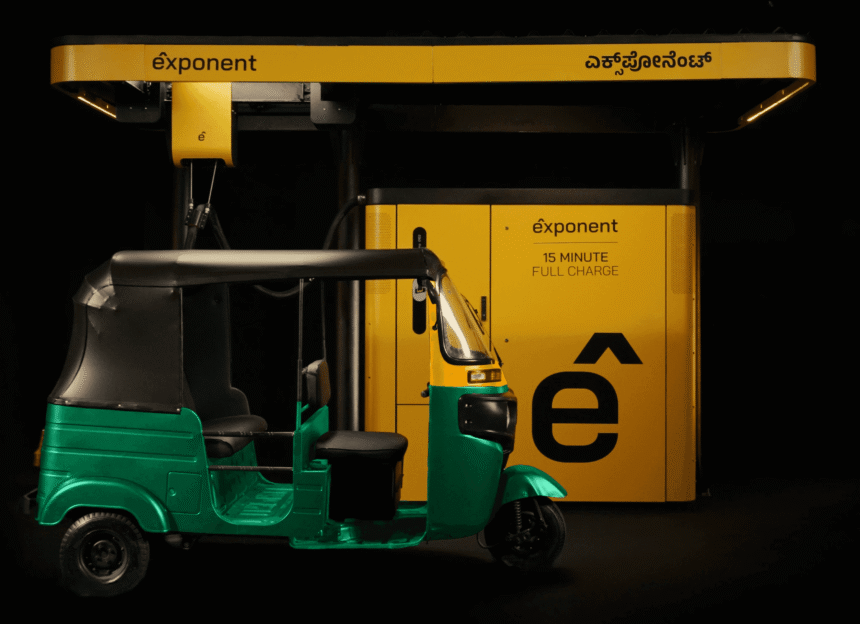
For a commercial EV driver, every minute parked at a charger is money not being earned. Exponent Energy, a Bengaluru energy-tech company, decided that the minute-counting should end — its full-stack charging system fills an electric three-wheeler from empty to full in about fifteen minutes, roughly the time of a roadside chai break.
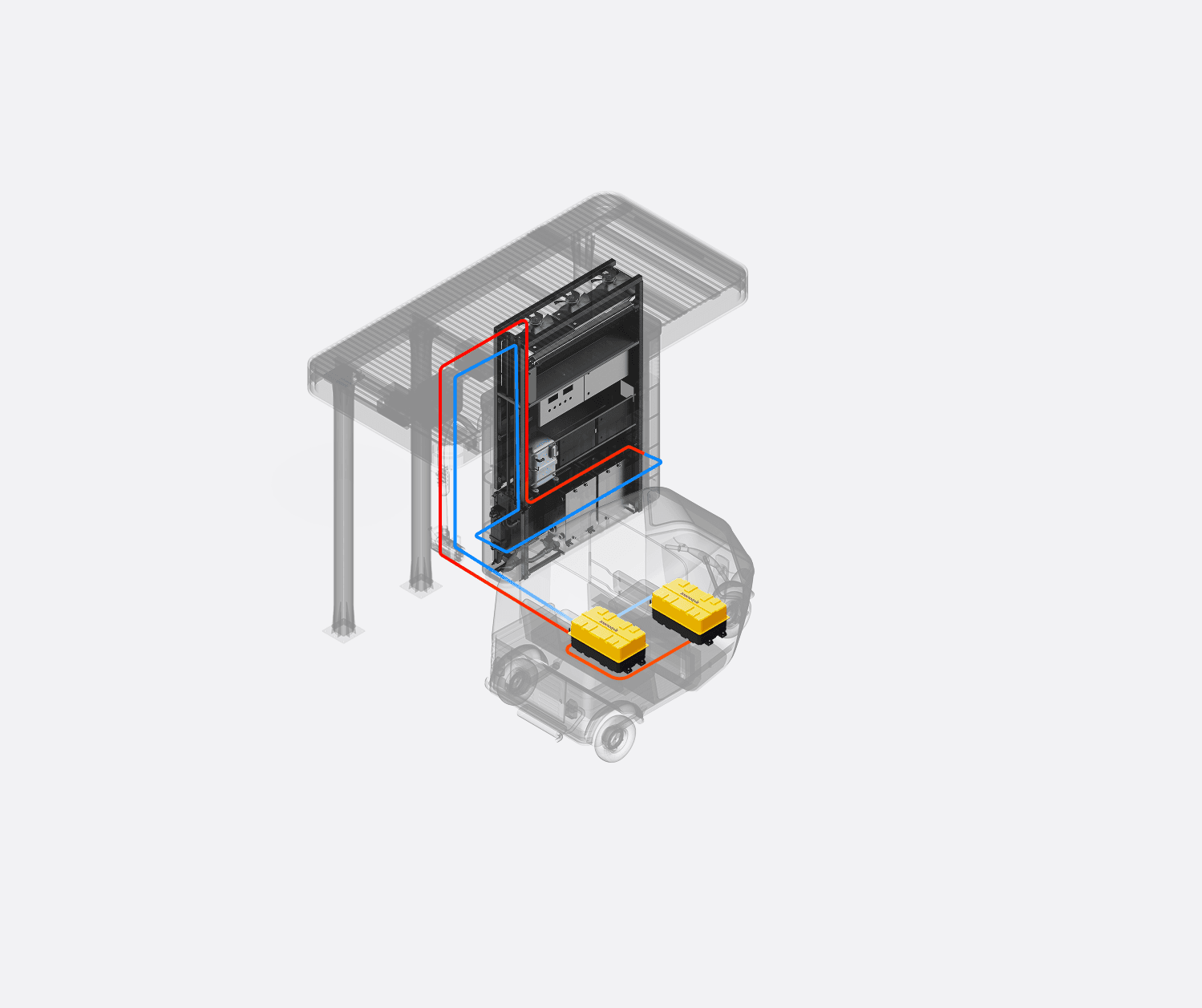
The company was founded in 2020 by Arun Vinayak and Sanjay Byalal, both formerly of Ather Energy, on a conviction the industry kept missing: charging is neither a battery problem nor a charger problem — it is an energy problem, and it has to be solved end to end. So Exponent engineered the entire stack itself: the e^pack battery pack, the e^pump charging station and the e^plug connector, all designed to work as one seamless system.
Making a 15-minute charge survivable for the battery meant re-engineering every link in the chain. The e^pack runs a proprietary battery management system with a virtual cell model that watches every cell, dynamic charging algorithms that shape the current through the charge, and offboard thermal management — the heavy cooling lives in the e^pump, not in the vehicle. The system uses regular lithium-iron-phosphate cells, which keeps it affordable and scalable, and Exponent backs every pack with a 3,000-cycle life warranty. Independent testing by TÜV India found just 13% battery degradation after 3,000 charging cycles.
The network is now running at serious scale. The company says more than 200 e^pump charging stations power over 3,500 commercial EVs, with more than two million rapid charging sessions completed and over 100 million kilometres driven on Exponent energy.
Exponent works with vehicle makers rather than building vehicles itself. Altigreen’s neEV HD three-wheeler charges from 0–100% in 15 minutes on the Exponent stack, Montra Electric’s three-wheelers run on it, and a 320 kWh bus battery pack with 1.5 MW charging brings the same rapid-fill logic to electric buses. In late 2025 the company added Exponent Oto, a retrofit kit that converts a CNG or LPG auto-rickshaw to electric in 24 hours — 200 retrofits were completed in Bengaluru.
Investors have lined up behind the engineering: the company has raised $65.7 million to date, including a $21.1 million round in June 2026 co-led by 360 ONE Asset and TDK Ventures, which marked Hitachi Ventures’ first investment in India’s energy sector.
More Read

Drivers on the Exponent network. Video: Exponent Energy (official company channel).
And on 15 October 2026, Exponent took its most customer-facing step yet: ONE Pass, launched with Montra Electric and its financing arm Exponent One, sells energy as a pay-per-kilometre service — ₹3.20 per kilometre with a lifetime battery warranty — so a driver-owner pays for energy the way they pay for fuel. Fifteen minutes to charge, one rupee figure per kilometre to think about: the tea-break charge is quietly becoming the default.
Keep reading: Intelligence That Tracks the Sun: Inside Premium Motion, the Pune Company Building AI Solar Trackers · The Brain Behind the Battery: Inside Xbattery, the Hyderabad Startup Building an Indigenous BMS · More Energy & Power stories
Like stories like this? Add Exceptional Technology as a preferred source on Google to see more of our reporting in your search results and Discover feed.