Folium Sensing, the Chennai startup incubated at the IIT Madras Research Park, is turning ordinary optical fibre — the same kind of cable that carries India’s internet traffic — into a sensor that can hear a pipeline leak, feel a crack forming in a bridge and spot a fire from kilometres away. Founded in 2024 and named to YourStory’s Tech30 2026 cohort, the company is commercialising more than two decades of photonics research at IIT Madras into distributed fibre-optic sensing systems for oil and gas, railways, defence and infrastructure.
The physics: turning light scatter into a 100-kilometre ear
Folium’s core idea is that a fibre-optic cable is already a sensor — it just needs the right instrument listening to it. The company’s interrogator units send laser pulses down a fibre and analyse the tiny fraction of light that scatters back. Three kinds of backscatter carry three different kinds of information: Rayleigh scattering reveals sound and vibration, Raman scattering measures temperature, and Brillouin scattering captures strain — the stretching and compression of the cable itself.
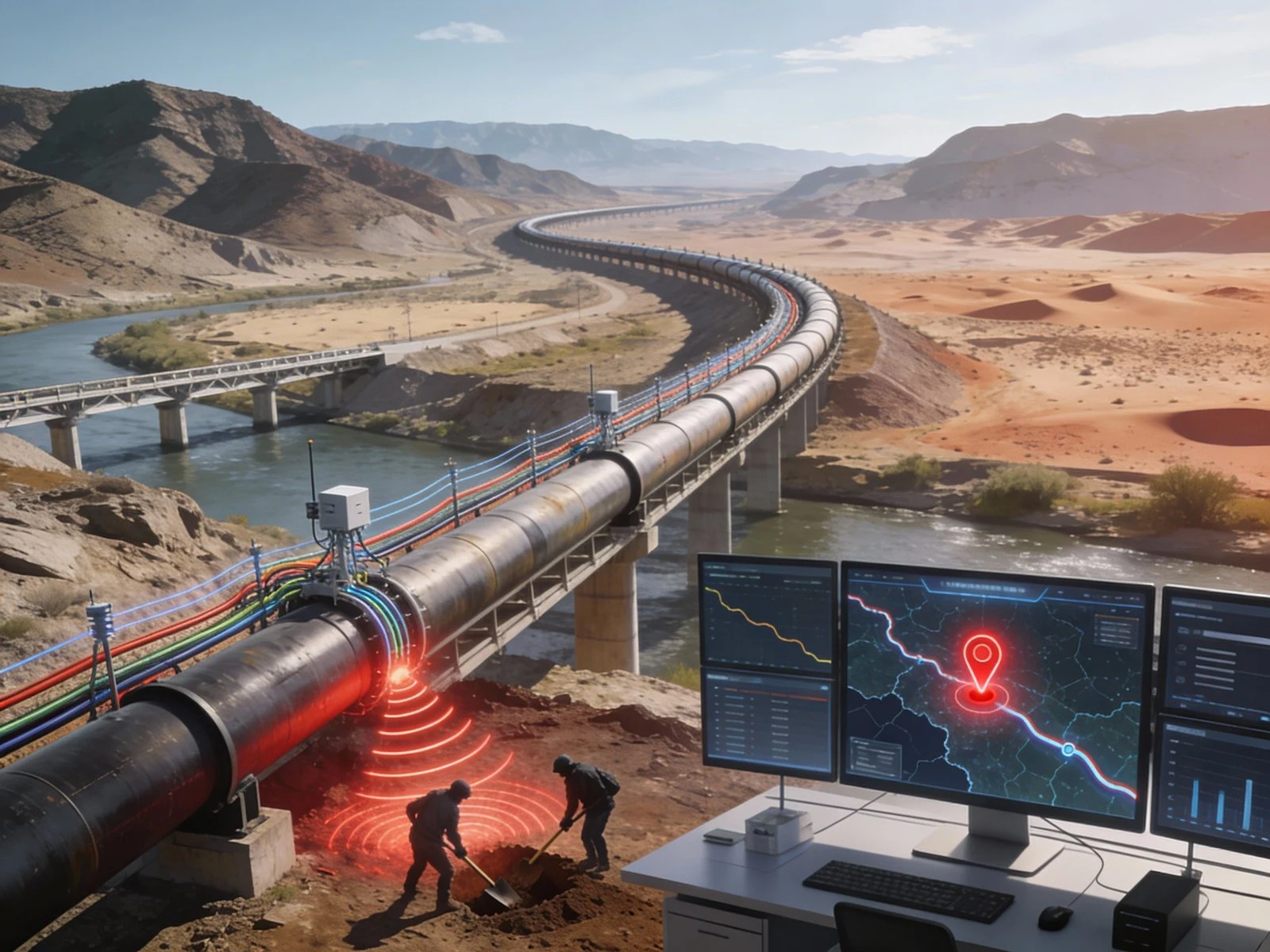
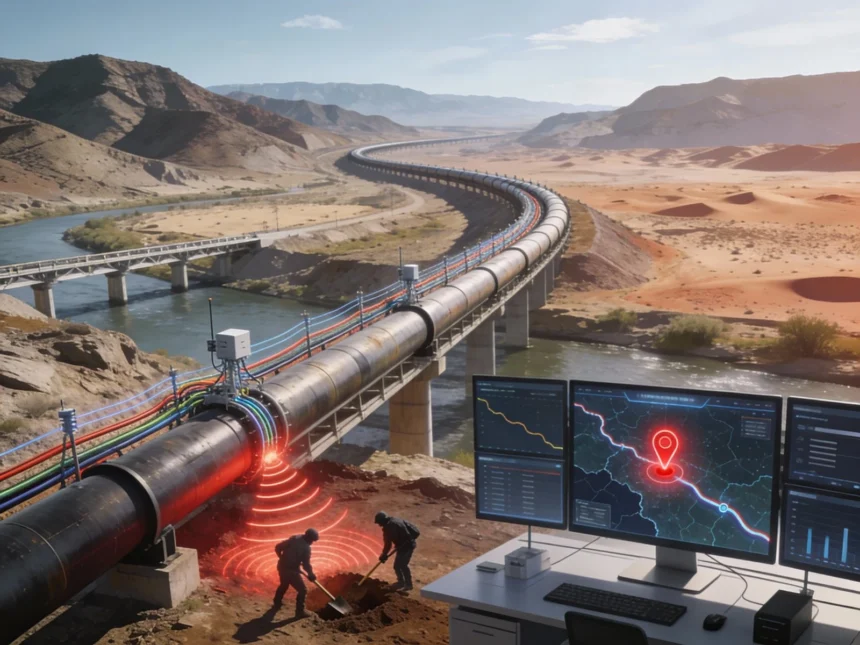
The decisive trick is that this works over huge distances from a single end. According to the company, its systems can detect sound, temperature changes and strain along a cable extending 100 kilometres or more, with equipment connected at just one end of the fibre — no powered sensors installed every few metres along the route. Wherever telecom-grade fibre is already in the ground alongside a pipeline or railway, it can be repurposed as the sensing element.
The returning light generates enormous amounts of data, which the company’s machine-learning models process on edge hardware and in the cloud. Filters strip out background noise while pattern-recognition models, trained on test beds at IIT Madras for pipelines, underwater assets, railway tracks and bridges, classify what happened — CEO and co-founder Sanidhya Chaturvedi told YourStory the system can tell a person walking from a bike engine, an excavator at work or a leak, with about 96–97% accuracy, and raise an alert with the location marked on a map.
The product line: five ways to listen
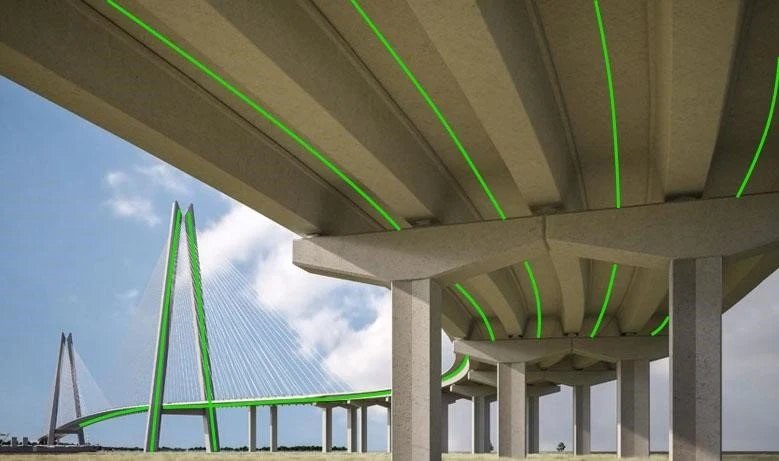
Folium has built its sensing stack into five product lines. Distributed Acoustic Sensing (DAS) covers 40–80 km with roughly 10-metre resolution for security, railways and pipelines; Distributed Temperature Sensing (DTS) profiles temperature over 10–30 km with 1-metre resolution for fire detection and power cables; Distributed Strain Sensing (DSS) tracks structural deformation over 10–40 km with sub-millimetre resolution for bridges, dams and tunnels; a fibre-Bragg-grating system adds ultra-precise point sensing for critical hotspots; and DATSS, its multi-parameter platform, combines acoustic, temperature and strain sensing with a unified dashboard, edge processing and SCADA integration.
From the lab to the field
The company says its technology has already moved beyond the laboratory. Folium has supplied DTS units for a tunnel on the Mumbai–Pune Expressway in partnership with Forbes Marshall, and completed a project with TDK Ventures monitoring heating, ventilation and air-conditioning systems in smart buildings. Proof-of-concept work is underway on pipeline-leak monitoring with GAIL, CPCL and IOCL, mine monitoring with Tata Steel and bridge monitoring in Kolkata. The startup has filed patents for its technology and, notably, has raised no external funding so far — it is incubated by the IIT Madras Incubation Cell and IIT Madras Pravartak, and it won the IIT-Madras Alumni Association’s Sangam Pitch Fest in 2025.
More Read
A founder stack built for the long game
Folium’s founding team pairs research depth with industry experience. CEO Sanidhya Chaturvedi, an IIT Madras electrical-engineering graduate, leads alongside CTO Venkatesh Varadhan, an institute alumnus with some 20 years of industry experience. Professors Balaji Srinivasan and Krishnan Balasubramaniam — the latter a serial founder of 14 startups — are non-executive co-founders. The first year after incorporation was spent largely in the field, visiting prospective customers to understand what the technology needed to do in real pipelines and railways rather than in the lab.
What comes next
Over the next year the company plans to focus on data centres, border-intrusion detection, pipelines, railways and tunnels, with its first overseas target the Middle East, where it wants to work with oil-and-gas pipeline operators. India has thousands of kilometres of pipelines, rail tracks, bridges and tunnels that are inspected sporadically today — often only after something fails. If Folium can make the cable already buried alongside them do the watching, continuously and without new power infrastructure, it would be one of the cheapest upgrades Indian infrastructure monitoring has ever seen.