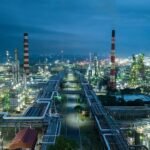
Every factory that dyes fabric, makes steel or brews chemicals faces the same quiet problem: what to do with the water once it has done its job. In India, that water is usually treated in sprawling plants that dose it with chemicals, produce mountains of toxic sludge, and still send much of it down the drain. A Maharashtra company called Indra Water looked at that whole chain and asked a simpler question — what if electricity could do the cleaning instead?
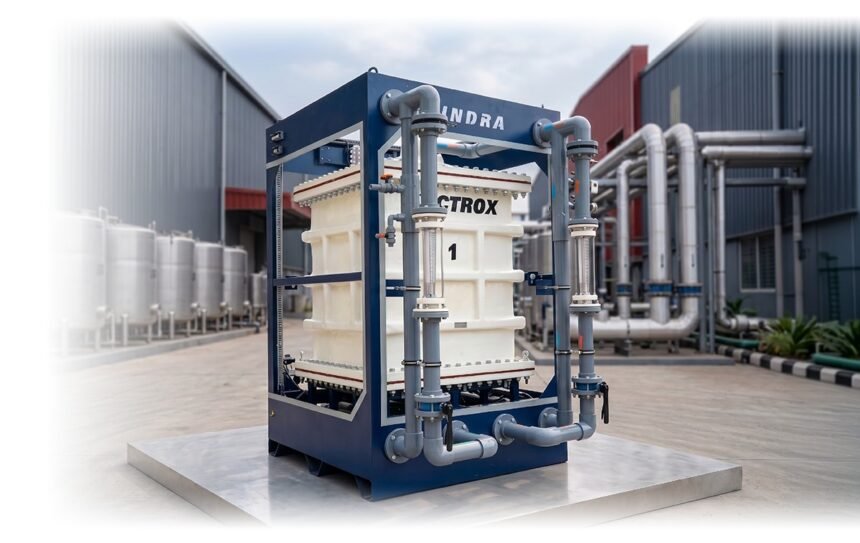
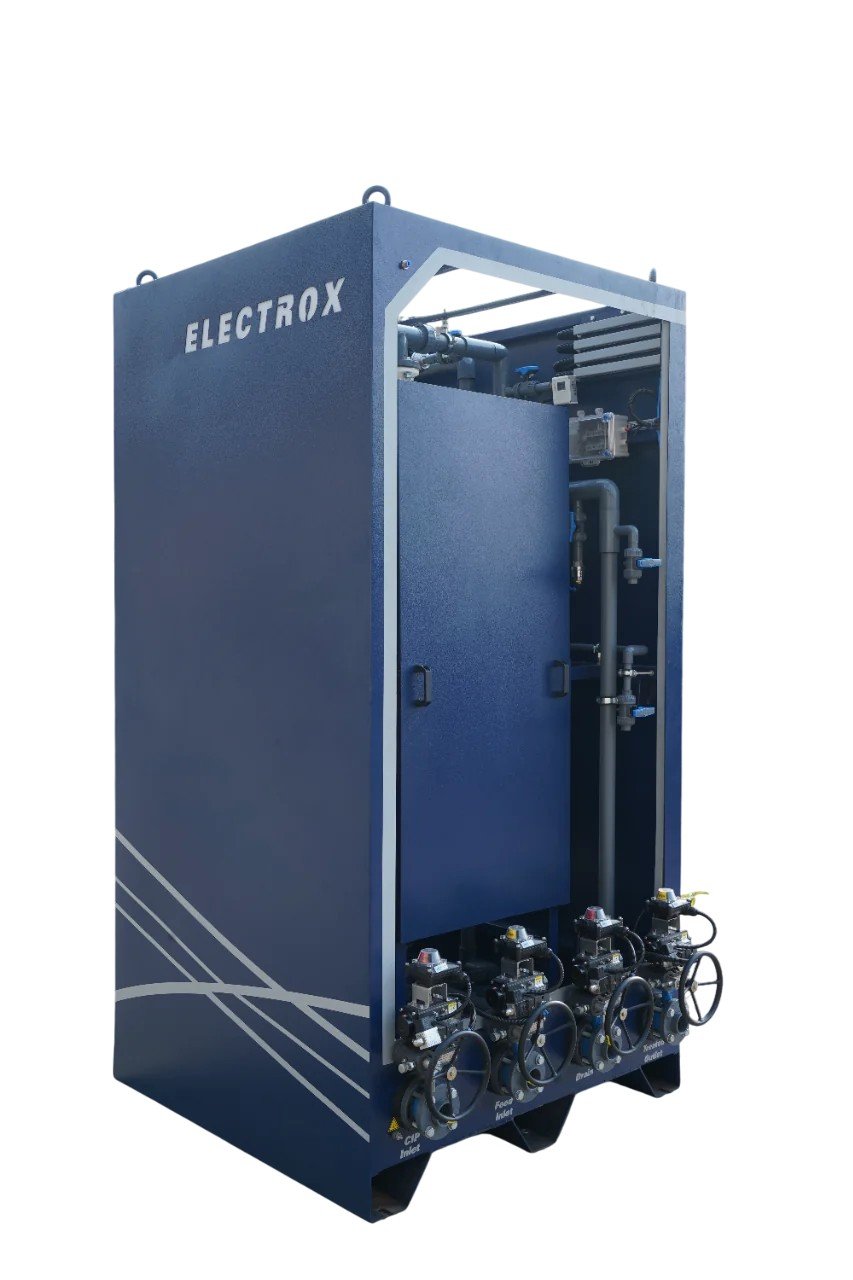
The answer is ElectroX, a patented, modular reactor that treats industrial wastewater with electricity rather than chemical-heavy primary treatment. The systems arrive as plug-and-play skids, are installed right where the wastewater is generated, and are run by smart controls that watch the process continuously. The company says the approach recovers up to 99% of the water for reuse, in a footprint up to 90% smaller than a conventional plant, with up to 70% less sludge and no bulk chemical dosing for primary treatment.
The scale of what ElectroX has already done is striking. Indra Water says its systems have recycled more than 5.3 billion litres of water, cut over 16,000 tonnes of toxic sludge and over 14,000 tonnes of harmful chemicals compared with conventional chemical and biological treatment, and reduced greenhouse gas emissions by more than 3,800 tonnes. The company puts the number of lives positively touched by its water reuse at over 500,000, and estimates a 70% net carbon offset across all its deployments. In October 2026, the technology was featured by NITI Aayog’s Frontier Tech platform, which tracks Indian innovations with national-scale potential.
How the machine works is where the engineering gets elegant. ElectroX uses non-contact micro-electrolysis: electricity passed through specialised electrodes triggers a set of reactions inside a single reactor — electrochemical oxidation, coagulation, flotation, flocculation, disinfection and sorption — that destabilise pollutants, lift them out with tiny gas bubbles, clump them into removable flocs and generate oxidants on the spot. Because the electrodes never touch the water directly, the system keeps running steadily across wildly different effluents, from textile dye baths to steel-plant process water. IoT-enabled monitoring, automation, remote diagnostics and predictive maintenance keep the whole thing humming without a crew of specialists on site.
The proof is in deployments the company can name. Its systems are running in mission-critical facilities at Tata Steel, the Aditya Birla Group, Unilever and IHCL’s Taj hotels, among others, and the company says it works with wastewater treatment plants handling up to 8 million litres a day across various stages of deployment and operation. At Tata Steel’s Kalinganagar site, the company says, a 500-litre-per-hour pilot treating stormwater and process effluent cut chemical oxygen demand by 93.5%, silica by 91.5% and total hardness by 57.1% — the kind of numbers that turn a pilot into a purchase order.
More Read
Indra Water was founded in 2018 by Amrit Om Nayak and Krunal Patel, and has grown to a team of more than 60 people. The journey has collected recognition along the way: the company won the Marico Innovation Foundation’s Indian Innovation Icons award in the business category in 2025, was selected for the Urban Water Challenge at World Water Week in Stockholm in 2019 and the Global Freshwater Challenge in 2022, and has been recognised by the World Economic Forum, the Cleantech Forum and Global Water Intelligence. The company says its roadmap is to make ElectroX the default choice for primary wastewater treatment across industries, scaling through partnerships with large engineering and construction firms.
It is a quietly radical idea: that the dirtiest water a factory produces can become an asset rather than a liability, cleaned not by adding chemicals but by switching on a current. If ElectroX keeps scaling at its current pace, the next billion litres it recycles will be the least surprising thing about it.
Keep reading: Crude In, Chemistry Out: Inside MRPL, the Mangaluru Refinery Winning National Awards for Homegrown Technology · The Bed That Never Sleeps: Inside Dozee, the Bengaluru Startup Monitoring Patients Without Touching Them · More Chemicals, Materials & Life Sciences stories
Like stories like this? Add Exceptional Technology as a preferred source on Google to see more of our reporting in your search results and Discover feed.