A wrong diagnosis in a field is not a small mistake. Spray the wrong chemical across acres of cotton and the cost lands on a whole season’s income. That is the problem a Surat startup has built its reputation on refusing to cause.
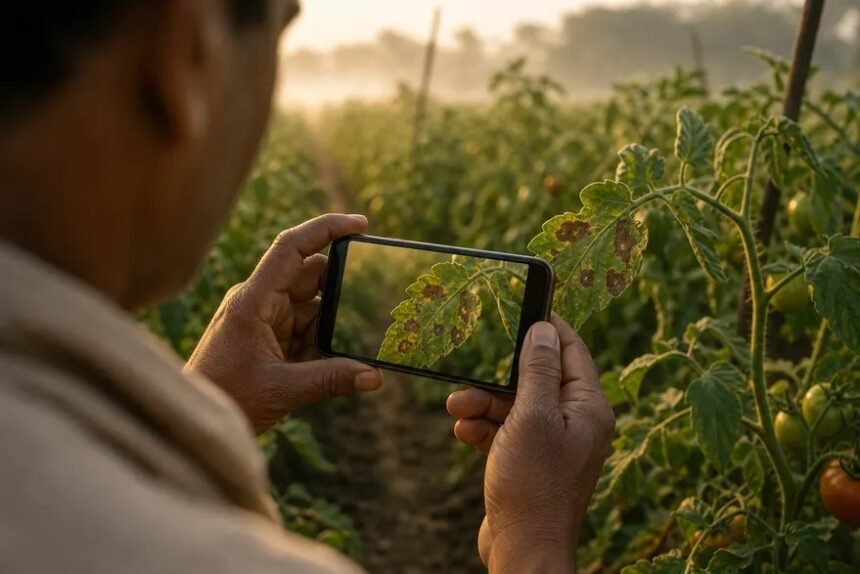
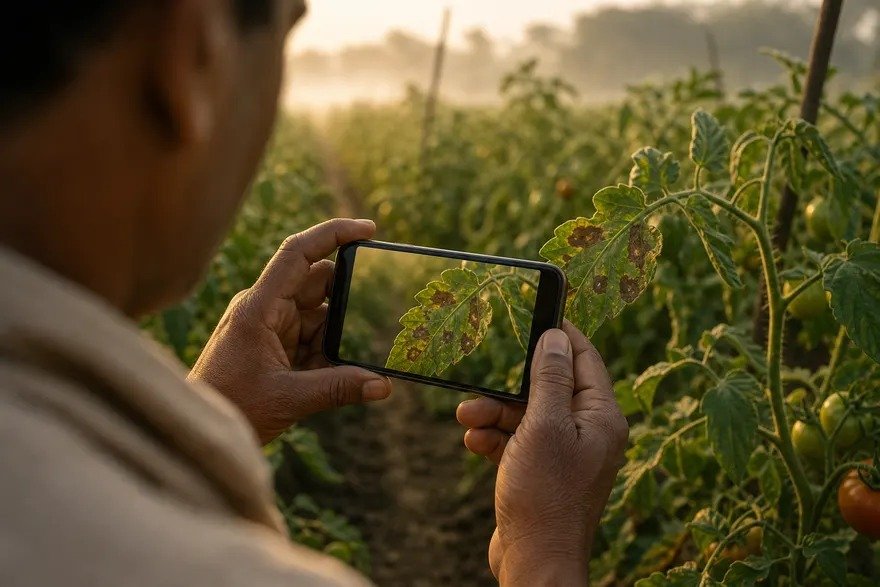
KissanAI’s Dhenu Vision, launched in August 2026, diagnoses crop pests and diseases from a photograph taken on an ordinary phone — and when the image does not support a confident answer, the model says so and asks the farmer for a sharper picture instead of guessing. The company says the second version of the model diagnoses with 95.1% precision, a figure it puts more than 10 percentage points ahead of frontier models on its own agricultural benchmark, AI AgriBench.
The model that refuses to guess
Most vision models answer every picture they are given. Dhenu Vision is built the other way round: precision first, even if that means asking for another photo. If the model is not confident about an image, the company says, it identifies what it can and asks the farmer to move closer and take a clearer shot — because in agriculture, a wrong diagnosis can mean the wrong treatment for an entire crop.
Under the hood, the diagnosis is not a single model’s guess. The image first goes through segmentation, the segments go to specialist models trained for individual crops and problem types, and a vision-language model then grounds the results. The company says it spent close to $500,000 building the system, after more than a year experimenting with different architectures and building its own reinforcement-learning environment for agricultural diagnosis.
Two million pictures of trouble
The training set behind that precision is unusually literal: more than 2 million real-world field images, annotated and segmented to mark pests, diseases, worms, caterpillars and other problems. The images span crops from India and from farming regions across Africa, Southeast Asia, South America and the United States.
The first version of Dhenu Vision covers more than 80 crops and 980 agricultural issues. The company says a larger version is already in training, covering more than 2,500 issues across about 170 crop and agricultural entities, with animals and aquaculture next. The ambition, in founder Pratik Desai’s words, is 98–99% precision over time — and a model that would rather ask again than answer wrong.
More Read
One operating system for the field
Dhenu Vision is one half of a bigger platform. KissanAI’s Dhenu is an AI operating system for agriculture: voice and vision applications live today, with engagement, agent and knowledge tools joining on the same account. Underneath them sit the Dhenu language models — Dhenu Llama 3 and Dhenu2, post-trained on more than 1.5 million real farmer conversations across 4,000-plus agricultural topics and released open on Hugging Face — and Bharat Jargons, a vocabulary layer of more than 100,000 agricultural terms across 22 languages and 14 scripts, so that late blight is understood whether a farmer says it in Hindi, Marathi or Tamil.
The company says more than 4 million farmers have been reached through its platform, and its diagnosis API now runs inside agribusiness applications — including Syngenta’s Cropwise farm-management app, used by more than 3 million farmers. Three Fortune 500 agricultural companies are taking the technology into production, and the API is priced from 6 cents a call, a fraction of what the company says existing agricultural classifier APIs charge.
From Surat to the world’s farms
KissanAI was founded in Surat in 2019 by Pratik Desai, Chintan P and Lokesh Desai. Its first agriculture language model, Dhenu 1.0, arrived in 2023, followed by an early multimodal vision model in 2024. In October 2026, Ericsson named KissanAI one of six winners of its Innovation Challenge 2026 at the India Mobile Congress, picked from more than 800 applicants for solutions using 5G, AI and emerging connectivity to solve real-world problems.
The road ahead, the company says, runs through larger deployments: state-government conversations in Rajasthan, Madhya Pradesh and Jammu and Kashmir, satellite and drone imagery for early detection across whole fields, and a farmer-facing app built around actions rather than answers. A model that photographs a leaf, refuses to guess, and asks for a better picture is a small interaction — multiplied across millions of farms, it is how agricultural advice earns a farmer’s trust.
Keep reading: Brewed, Not Farmed: Inside Arboreal Bioinnovations, the Indian Company Fermenting Tomorrow’s Food Ingredients · Every Field on the Map: Inside Terrastack, the Mumbai Startup Giving India’s Farmland a Digital Identity · More Food Processing & Agri-Tech stories
Like stories like this? Add Exceptional Technology as a preferred source on Google to see more of our reporting in your search results and Discover feed.