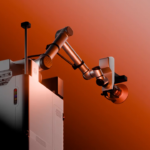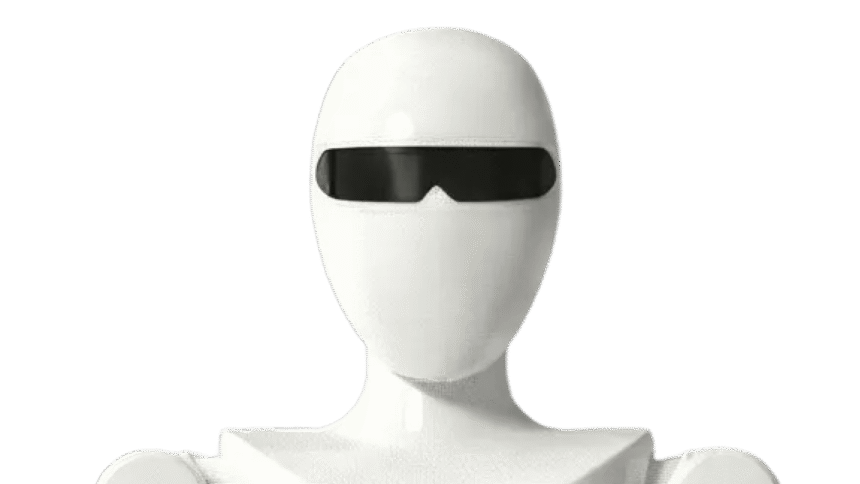
Image credit: Muks Robotics
In February 2026, passengers at Pune Airport met an unusual new member of the terminal staff: a 1.6-metre humanoid called Spaceo M1, introduced on a trial basis by the Airports Authority of India to answer questions, give directions and talk about the city. Eight months later, the Pune startup that built it says its next machine is aimed considerably higher — at work in space itself.
The company is Muks Robotics, founded in Pune by Dr. Mukesh Bangar, a former dentist who taught himself artificial intelligence and robotics. Bangar’s stated mission from the start, per the company’s own site, is “fully autonomous humanoids for earth & beyond” — and on 16 October 2026 the company announced it had secured a project with the Indian Space Research Organisation (ISRO) to develop SPACEO Prime, which the company describes as India’s first humanoid space worker.
One family, three jobs
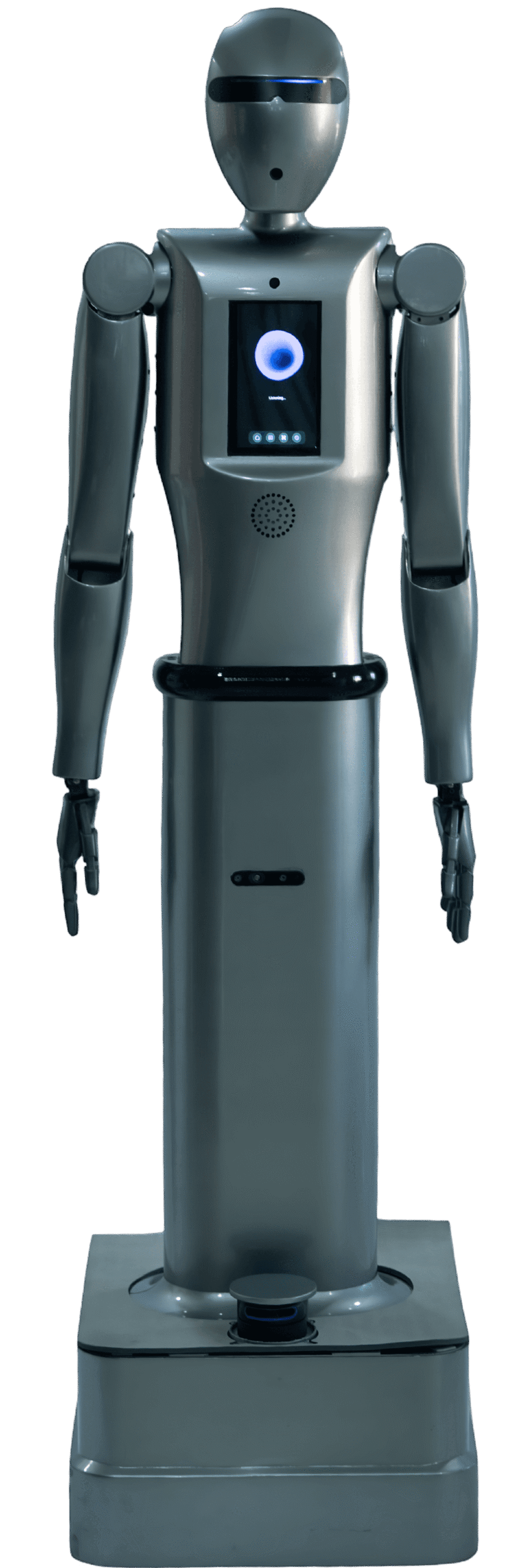
SPACEO is a family of machines rather than a single robot. The SPACEO M1 is the social humanoid — the airport greeter. The company’s published specifications put it at 1,625 mm tall and about 45 kg, with 12 degrees of freedom, RGB-D vision and a 2D LiDAR for navigation, a Jetson Orin AGX module delivering around 275 TOPS for on-board AI, and a lithium-iron-phosphate battery good for up to six hours of active operation or 72 hours on standby, with autonomous docking and over-the-air updates. Then comes SPACEO Pro, the industrial sibling, and finally SPACEO Prime — the bipedal explorer, intended for extreme environments and space missions.
The brain: Fusion Max
What the company calls the brain of every SPACEO robot is Fusion Max, a vision-audio-language-action model the company says is optimised to around two billion parameters and trained on real-world data. Inc42’s profile of the company describes it as an omni-modal AI system powering perception, reasoning and interaction, alongside a custom-built Awareness Processing Unit meant to give the robots real-time situational awareness — all running on the device itself, without a cloud connection.
Proof it works
Muks is one of the few Indian humanoid builders with machines already doing jobs in public. The Pune Airport deployment was confirmed by the airport’s director, Santosh Dhoke, who told the Hindustan Times the robot had been introduced on a trial basis and would be closely monitored before any permanent integration. Inc42 reports the robots have also been deployed at Sayaji Hotels in Pune, and that Muks is the first Indian company to put NVIDIA’s RTX PRO 6000 Blackwell 96 GB GPU inside its robots — a claim that, like most of the company’s numbers, comes from the company itself.
More Read
The ISRO project
The space chapter opened on 16 October 2026, when the company announced a project with ISRO to develop SPACEO Prime for space applications. The company says Bangar conceived the space-humanoid idea in 2021 and shared it publicly in a 2023 video; the ISRO project is, in its telling, the next phase. But here is the honest part: the announcement carried no technical specifications, no development schedule and no mission parameters, and we could find no independent confirmation from ISRO itself. As defence publication IDRW noted, the announcement gives no indication whether Prime is being built for an upcoming mission, a technology demonstration or an exploration programme. Treat “India’s first humanoid space worker” as the company’s description of its ambition, not a certified milestone.
Why a humanoid for space at all
The logic is the same one driving humanoid programmes from Texas to Tokyo: space habitats, like factories and airports, are built for human bodies. Tools, workstations, handrails and hatches are all shaped for two arms, two legs and a head with cameras in it. A machine that fits the same interfaces can manipulate the same objects and operate the same equipment without redesigning the environment — and can take on the dull, dangerous and repetitive tasks that would otherwise consume astronaut time. ISRO has its own humanoid heritage: Vyommitra, the half-humanoid the agency unveiled in 2020 for uncrewed Gaganyaan test flights. A full humanoid co-worker for station operations would be a genuinely new chapter for India’s human spaceflight ambitions.
What would make this real
The distance between an announcement and a space-qualified humanoid is enormous. A machine that survives launch vibration, radiation, vacuum-adjacent thermal swings and months of fault-free operation is a different engineering problem from a machine that greets passengers at an airport. What would turn this story from press release into milestone: published test reports, radiation and thermal-vacuum qualification campaigns, and any public linkage to an ISRO programme. Muks has done something rare among Indian robotics startups — it has shipped real humanoids doing real jobs. SPACEO Prime is the bet that the same team can take one where no Indian-built humanoid has gone.