


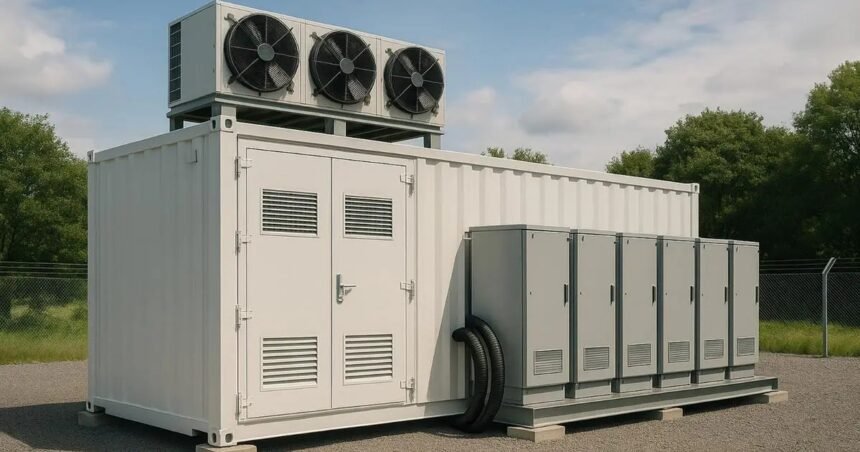
India’s solar and wind farms now generate enormous amounts of clean power — but often at the wrong time. Midday sunshine and monsoon winds arrive when demand is low, and by the time evening demand peaks, the sun has set. Lithium-ion batteries can bridge a few hours, but storing clean energy for days, weeks or whole seasons needs something fundamentally different. Sthyr Energy, a Chennai startup born from five years of research at IIT Madras, has built its answer out of one of the most ordinary metals on Earth: zinc.
Electricity, stored as metal
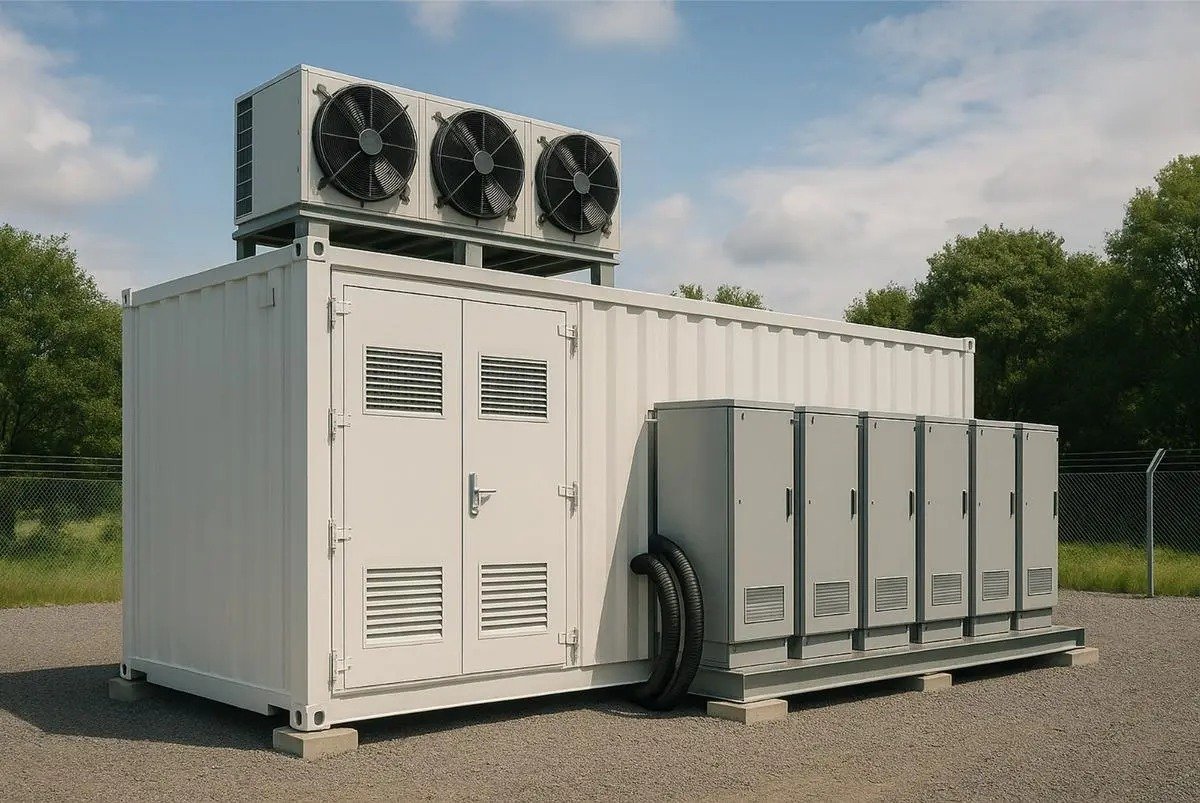
The idea at the heart of Sthyr’s system is disarmingly simple: turn surplus electricity into solid zinc, keep it on a shelf, and turn it back into electricity whenever it is needed. When renewable power is abundant, the company’s Zinc Regeneration Units use that energy to convert zinc oxide powder into pure zinc metal, deposited onto plates. The plates sit happily for weeks or months — zinc does not self-discharge, so the stored energy simply waits. When power is needed, the plates go into a zinc-air battery, where they react with oxygen from ambient air and a water-based electrolyte to release the electricity again. The zinc becomes zinc oxide once more, and the cycle repeats in a closed loop.
The company says the approach delivers more than 100 hours of continuous backup, with energy stored for over 30 days, and an energy density of 550 watt-hours per litre — around three times that of a lithium-ion cell. Because the system separates the job of making zinc from the job of using it, charging and discharging are decoupled: one stack can discharge while another charges, and capacity grows simply by adding more zinc plates and regeneration units.
Safe, cheap and homegrown
Zinc brings a set of advantages that matter at grid scale. It is abundant and available in India, it costs far less than lithium, and the water-based electrolyte is non-flammable — a meaningful safety edge over chemistries that can catch fire. The company says more than 95% of the system is recyclable, and its modular design scales from a 200 kWh unit to gigawatt-hour installations. The company puts the capital cost of its systems at around $70 per kilowatt-hour today, with a target of $30–40 as production scales.

The name itself carries the mission: Sthyr comes from the Sanskrit word sthir, meaning stability — exactly what a grid full of variable renewables needs most.
From the lab to the grid
Sthyr Energy was founded in August 2024 by Gunjan Kapadia, Akhil Kongara and Muhammed Hamdan, three IIT Madras researchers who had spent five years working on the chemistry before incorporating the company. The work has been backed by IIT Madras and by the Department of Science and Technology’s IMPRINT programme with Ashok Leyland, and the company holds three granted patents on its approach. In June 2025 it closed a $1 million seed round led by Speciale Invest, with Antares Ventures participating.
More Read
The hardware is moving steadily from the lab towards the field. The company’s first 3.2 kWh battery module is built, its batteries have been tested for 2,000 hours of continuous operation, and its first Zinc Regeneration Unit is now running at a pilot facility in Chennai, where a manufacturing and research unit with 30 MWh a year of capacity is coming up. The company says it has signed memoranda of understanding with government and private customers looking to replace diesel generators, and expects three pilot deployments by the end of the year, with 300 kWh systems first in line.
The applications Sthyr is aiming at read like a list of India’s hardest energy problems: solar and wind farms that today throw away surplus power, microgrids and remote communities that need reliable electricity far from the grid, data centres and industrial clusters that cannot afford a blackout, and defence outposts where a silent, fuel-free backup beats a diesel generator. A battery that can hold summer’s sunshine until winter — built in Chennai, from a metal India already produces in abundance — is the kind of quiet engineering that could make the country’s renewable energy transition genuinely round the clock.
Keep reading: The Robot That Cleans India’s Solar Panels Without a Drop of Water: Inside Greenleap’s LOTUS · The Reel Holding India’s Solar Panels Together: Inside RenewSys’ CONSERV AUGMENSHEET · More Energy & Power stories
Like stories like this? Add Exceptional Technology as a preferred source on Google to see more of our reporting in your search results and Discover feed.







