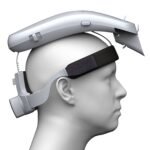
Picture a Mirage 2000 pilot settling into a cockpit that never leaves the ground — hands on the throttle and stick, eyes on the radar picture, an adversary closing in on the display. The pilot runs the engagement again, and again, until every switch throw and weapon selection is muscle memory. No jet is burned, no flying hour is spent, and no sortie is risked. That rehearsal room is exactly what a New Delhi company has built for the Indian Air Force, and the Air Force has now put a ₹135-crore contract behind it.
The company is Threye Interactive Pvt. Ltd., a deep-technology studio based in Dwarka, New Delhi, and a subsidiary of NewSpace Research & Technologies. In late September 2026, the Indian Air Force signed a contract worth about ₹135 crore with Threye for part-task trainers for its Mirage 2000 fleet, a deal the parent company confirmed publicly. The Mirage 2000 has served with the Air Force for four decades, and Threye is now the Indian startup trusted with training the pilots who fly it.
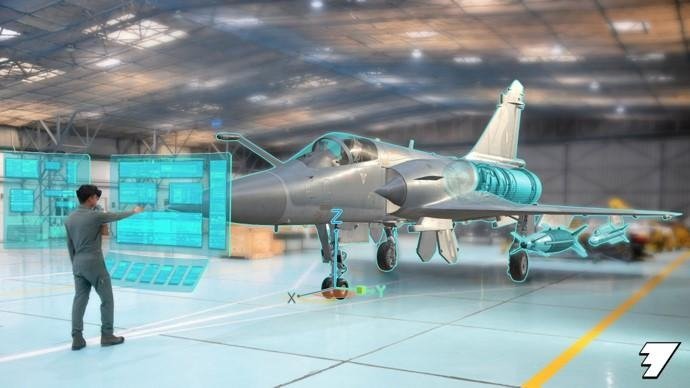
A part-task trainer does not try to recreate an entire flight from take-off to landing. Instead, it reproduces one slice of the pilot’s job with high fidelity, so that slice can be practised over and over: working the radar, identifying a target, selecting a weapon, responding to a threat. Threye’s system, which the company calls an Immersive Flight Training Device, is built for the upgraded Mirage 2000 I/TI aircraft and combines virtual reality, flight simulation and real-time networking in a compact, PC-based system that can be used by an individual pilot or by a group, in VR or non-VR configurations.
Here is what the pilot steps into. The company says the trainer reproduces the upgraded aircraft’s cockpit controls, displays and functions, with a 1:1-scale HOTAS — hands-on throttle-and-stick — replica, simulated aircraft sensors and weapons, realistic terrain and weather, and computer-generated adversary forces. Pilots can rehearse complex air-to-air engagements, radar procedures, missile-launch scenarios and surface-to-air threats, and because the trainers are networked, several pilots can fly the same scenario together — the large-force engagements that are hardest and most expensive to recreate in the air.
From an iDEX challenge to a frontline contract
Threye developed the trainer under the Ministry of Defence’s Innovations for Defence Excellence (iDEX) programme, in response to the Defence India Start-up Challenge-5 (DISC-5) requirement for a part-task trainer for the upgraded Mirage 2000. The Department of Defence Production lists the Mirage 2000 part-task trainer among the DISC-5 challenges assigned to the Air Force, and the system went on to complete Air Force trials on the Mirage 2000 platform before this procurement. It is the classic iDEX journey: a startup answers a service requirement, proves its system in trials, and earns its way onto a frontline fleet.
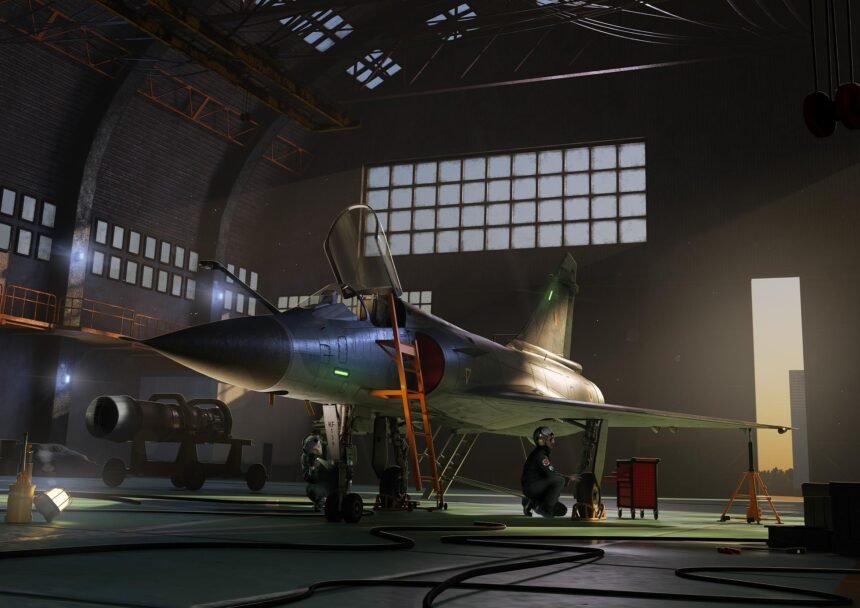
Threye’s work with the Mirage community does not stop at the cockpit. The company has also built an AR/VR technical training system for Mirage 2000 ground crew, combining physical mechanical replicas, live electrical systems and interactive digital modules for maintenance, system checks and fault diagnosis. The company says that system has been accepted and deployed by the Air Force, and that practising on it can cost less than 5% of conventional training on an operational platform — because crews can repeat procedures, inject faults and learn from mistakes without taking an aircraft out of service.
More Read

A studio that has flown with the Air Force for a decade
Threye has worked with the Indian military for more than a decade. The company says it has made the official game of the Indian Air Force twice, won the Nasscom Studio of the Year award twice, and been awarded iDEX programmes twice. Its connection with the Mirage runs deep: in 2013 it released the PC game Operation Morning Glory, which put players in a Mirage 2000, and in 2019 it produced Indian Air Force: A Cut Above, the service’s official mobile game. Former Air Force fighter pilot Sameer Joshi, who flew the Mirage himself, went on to found NewSpace Research & Technologies, Threye’s parent company, which is best known for its unmanned aerial systems work for the armed forces.
That blend — engineers, artists and combat-experienced veterans, in the company’s own description — is what makes Threye’s trainers feel less like software and more like the aircraft itself. The pilots get to fight the hardest missions on the ground, as many times as it takes, and walk to the real jet already knowing the fight. For an Indian startup, a ₹135-crore contract to train a frontline fighter fleet is a proud milestone. For the Air Force, it is readiness built at home, one rehearsed engagement at a time.
Keep reading: India’s Own GPS, Back on Its Feet: Inside ISRO’s GSLV-F18 Launch of NVS-03 · A Gentle Hug in Orbit: Inside Cosmoserve Space, the Hyderabad Startup Cleaning Up Earth’s Orbit · More Aerospace & Defense stories
Like stories like this? Add Exceptional Technology as a preferred source on Google to see more of our reporting in your search results and Discover feed.