It is three in the morning, and a production alert fires. Before any engineer has woken up, a teammate has already picked it up, traced the failing service, written a fix and asked for a review — all from inside Slack. The teammate is not a person. It is an AutoBot, one of the AI coworkers built by Vorflux, a startup that wants engineering teams to stop managing software work ticket by ticket and start directing a team of agents that never logs off.
From autocomplete to autopilot
Vorflux’s founder, Prasanna Sankar, has watched this shift from the inside. He co-founded Rippling in 2016 and served as its chief technology officer until 2020; the company is now valued at more than $10 billion, Sankar notes in the launch post, with an engineering team in the thousands. In fifteen years of running companies and engineering teams, he writes, he has never seen the craft change this fast: IDE autocomplete gave way to command-line agents, then to cloud agents, and now to what he calls multiplayer Slack bots.
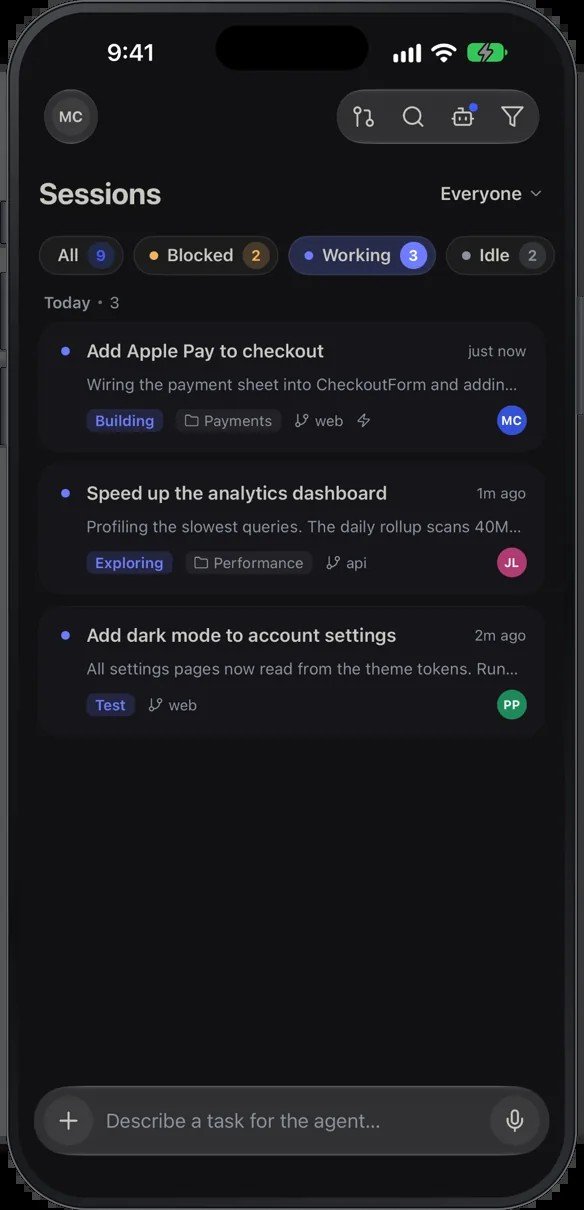
The idea behind Vorflux is that writing code is no longer the bottleneck. A single developer working on a laptop can run perhaps five things in parallel; cloud coding agents pushed that to around twenty. What slows teams down now is everything around the code: starting the work, keeping track of it, and chasing people for approvals. Vorflux attacks that layer instead. Its agents run entirely in the cloud, each on its own machine, with the team’s repositories, services and tools in context — and they keep working after the laptop closes.
How an AutoBot works
Every AutoBot is hired like an employee. It gets a goal, a daily budget, the models it may use for each kind of task, and a home of its own in a Slack channel, where it brings decisions to its human manager. For every piece of work it plans, designs, builds, tests and reviews. It reads the request and turns it into a scoped plan with edge cases and the checks it will use; it mocks up the design before building; sub-agents split the work by role; and it runs the finished app and reports what it tested, with screenshots or recordings where the workflow supports them.
Vorflux 2.0, launched in November 2026, takes the idea further: AutoBots no longer wait to be assigned a ticket. Plugged into the team’s data, they watch for work that needs doing and pick the highest-impact item first, with a project-manager layer on top. The company offers a directory of ready-made AutoBots — an on-call bot that triages Sentry and PagerDuty alerts and investigates before looping in an engineer, a CI bot that keeps speeding up builds, a project-manager bot that holds a whole project in one Slack channel and reports progress and blockers every day, and a customer-experience bot that reads call transcripts and screen recordings, finds the to-dos and asks if it can pick them up. Each bot learns over time, scaling up as its work gets accepted and scaling down when nobody engages.
Code review gets the same treatment. Vorflux reviews each pull request, scores its merge risk and points to the lines that need a human’s eyes, tracking every fix across revisions. Recurring work can be put on a schedule or a trigger — every Monday at 10:30, or the moment a CI run fails — and each run comes back as a session with a result to check. Teams bring their own Claude or Codex subscriptions and pay for machine time by the hour, which the company says makes the service practically free on top of tools they already pay for.
More Read

The team behind it
Vorflux was founded in 2026 by Sankar with Haritha Elango and Anant Nag, both formerly of Databricks, and joined Y Combinator’s Fall 2026 batch. In July 2026 the company closed a $15 million seed round backed by Y Combinator, Peak XV Partners, Powerset and Alliance DAO, with angel investors including Rippling co-founder Parker Conrad, Mercury founder Immad Akhund and former Coinbase chief technology officer Balaji Srinivasan. The company is based in San Francisco, with most of its team in Bengaluru.
Teams already building on Vorflux include Khatabook, TrashLab, Supermemory, Exaforce, Aurva and Combinely. John Tan, co-founder and chief technology officer at TrashLab, describes how a customer’s Slack request for customisable contract colours and logo placement became a shipped feature: Vorflux built the controls, and Tan reviewed how they fit TrashLab’s existing system. “I think like everything, I usually try to do through Vorflux, if possible,” he says.
Why it matters
Every generation of developer tools has moved work further from the keyboard: first the editor finished your lines, then the terminal ran your agents, then the cloud ran them while you slept. Vorflux’s bet is that the next step is not a smarter assistant but a colleague — one that takes responsibility for a whole job, reports back with evidence, and knows when to ask a human. If that bet lands, the scarcest skill in an engineering team will not be typing code but deciding what is worth building, and a small Bengaluru-built team will have helped make the company that builds itself a real thing.
Keep reading: The Earbuds That Hear Only You: Inside antimattr’s Voice-First Wearables · One Model, Seventeen Languages: Inside FrontiersMind’s NandiBERT · More Industrial Automation & Technology stories
Like stories like this? Add Exceptional Technology as a preferred source on Google to see more of our reporting in your search results and Discover feed.