Farm work in India is labour-intensive, diesel is expensive, and on small plots a farmer often needs a different machine for every job. A Mumbai startup says the answer is not another diesel workhorse but a single battery-powered machine that can do the work of several — controlled from a dashboard, or even remotely.
Balisto Agritech, founded in 2024 by IIT Bombay alumni Aishwarya Ramakrishnan and Kedar Gokhale, builds the Balisto 130 Pro: an electric, multi-purpose farm machine the company sells through dealers across Maharashtra. Both founders later worked together at Boston Consulting Group; Ramakrishnan, who also holds an MBA from Harvard Business School, worked at the Mahindra Group — first in the Chairman’s Office and later setting up the group’s agritech venture Krish-e — while Gokhale ran his own agritech startup, Truce, before becoming vice president of operations at Swiggy, where he led its delivery fleet.
The machine: three motors, one control unit
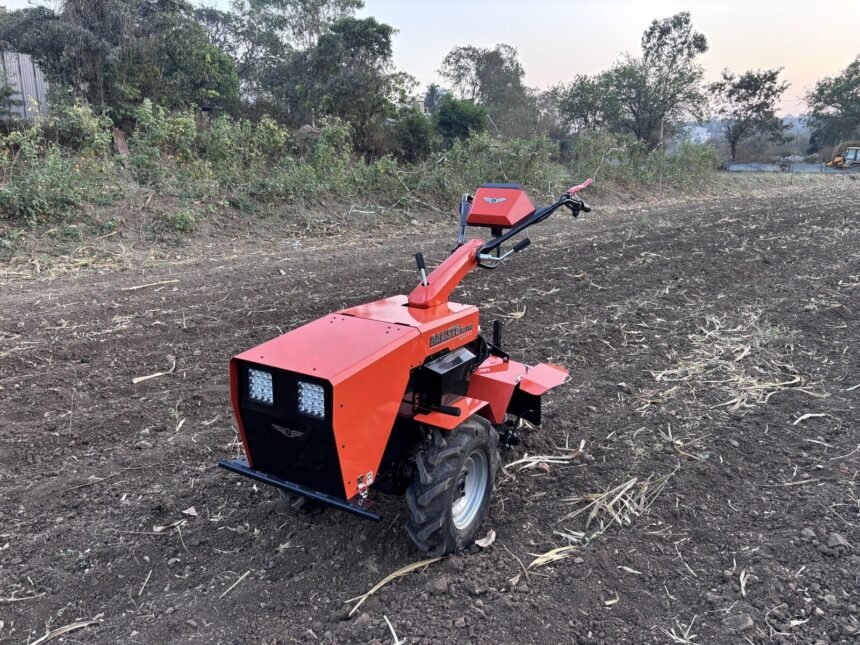
The Balisto 130 Pro runs on detachable batteries and can be operated through an electric dashboard or by remote control. At its centre is a smart machine control unit running firmware the company developed in-house. The unit manages the battery and three motors — one for each wheel and another for the rotary unit at the back — and the separate wheel motors let the controller correct the machine as it moves, keeping it on a straight line in the field. Each machine also carries an internet-connected unit that sends operating data to the company’s servers on AWS, so the team can diagnose faults remotely.
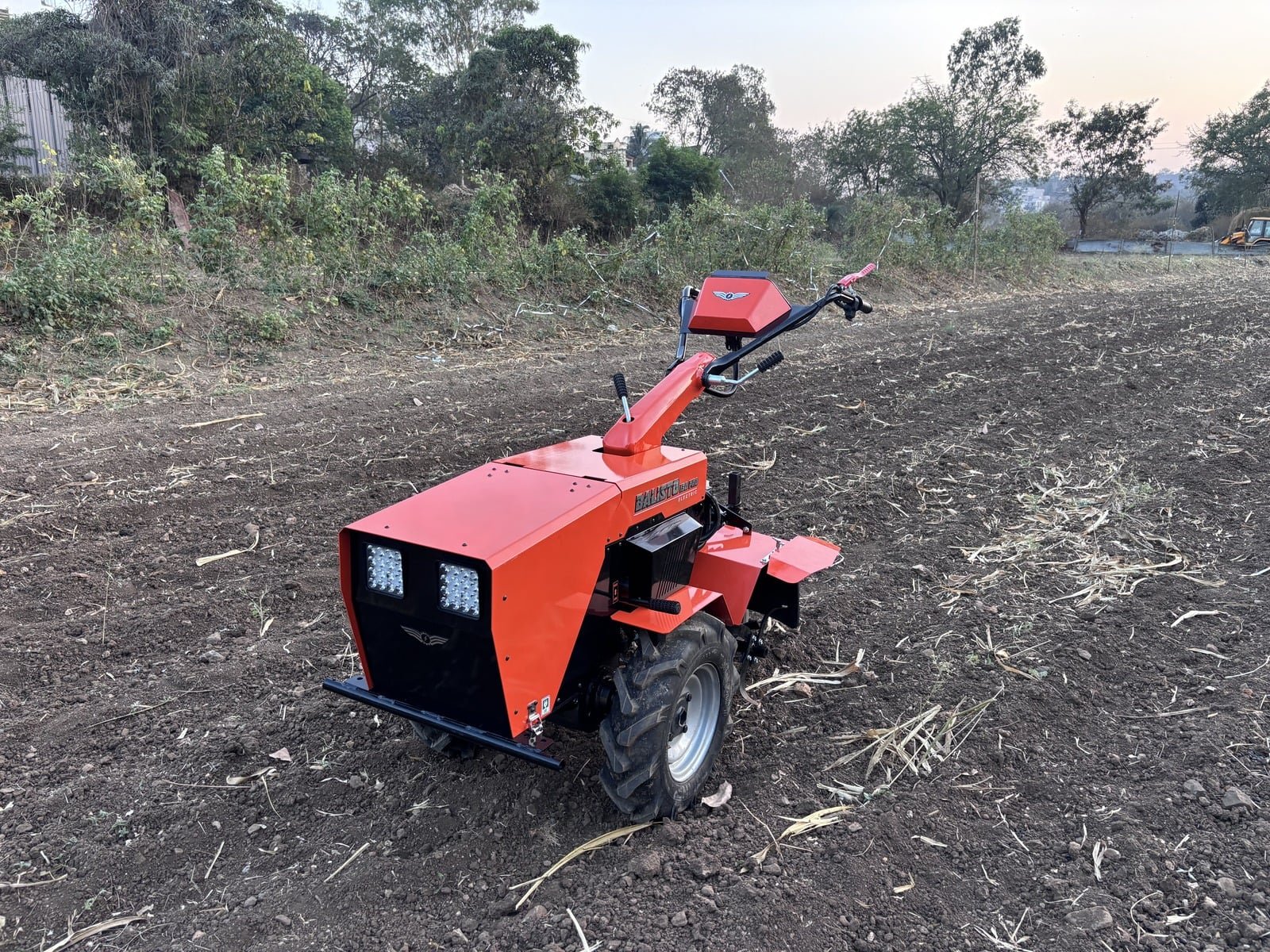
One machine is designed to handle the jobs that would otherwise need several: earthing up, weeding, intercultivation, rotavating and trolley operations. Balisto took 18 to 20 months to move from prototype to commercial rollout, and along the way it sold an initial batch to paying farmers to gather feedback — the field reports, the founders say, shaped the production machine.
Proof on the field: paying farmers and real acres
The claims that matter are the delivered ones. Last year, the company sold 15 earlier-version machines at introductory prices across four districts and eight crops; in total, the company says it has sold more than 30 machines, with cumulative sales since June 2025 crossing Rs 60 lakh. Those 30 paying customers have used the machines across more than 600 acres, saving an estimated 3,300 litres of diesel, per the company. The current version is government-certified, eligible for subsidy, and patented.
The business behind it
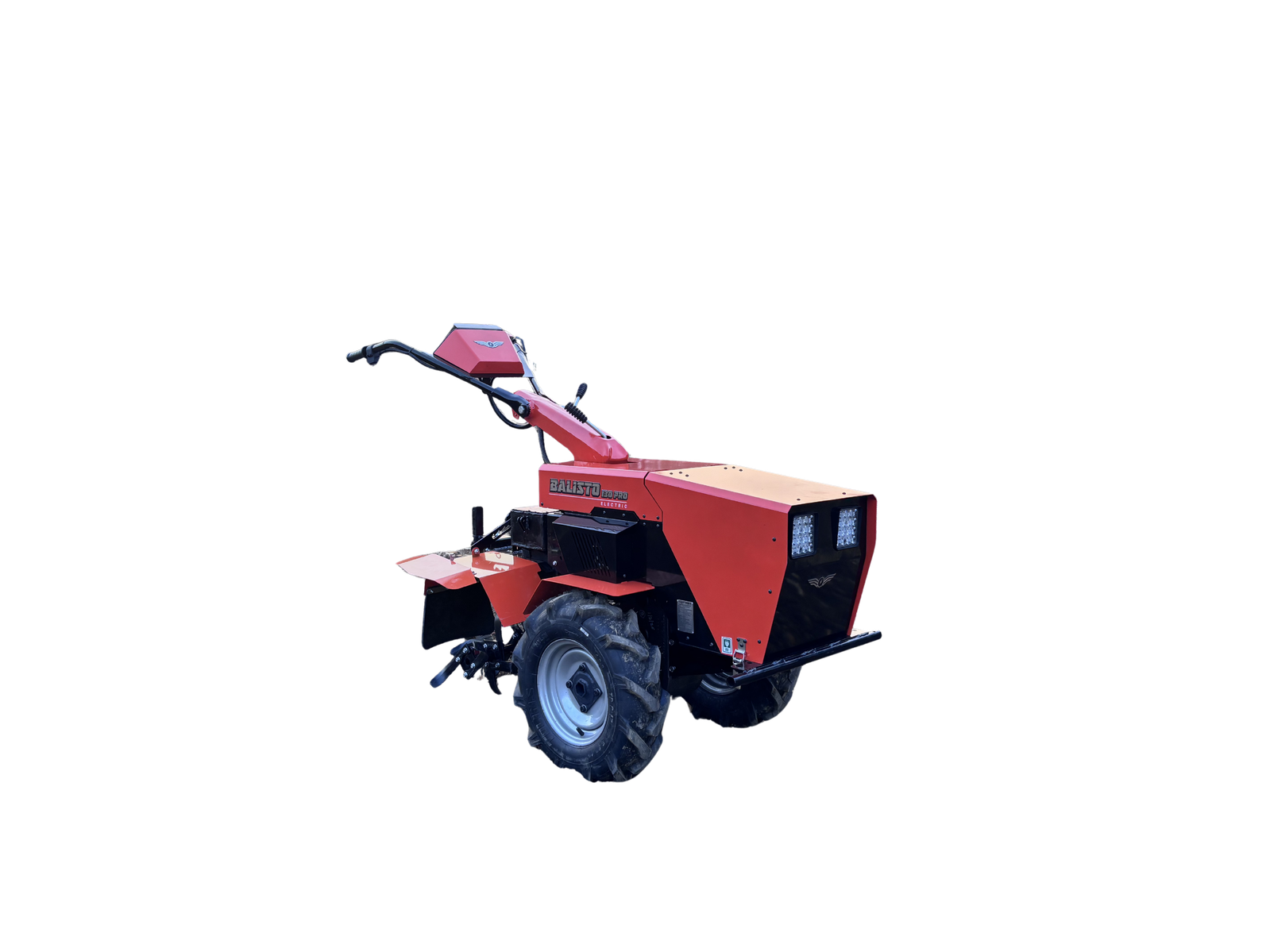
Balisto sells through multi-brand dealers across Maharashtra: the retailers buy the machines from the company, sell them to farmers and handle after-sales service. The double-battery unit costs Rs 3 lakh, the single-battery version Rs 2.5 lakh, and the battery carries a three-year warranty. The machines are manufactured at the company’s plant in Pimpri-Chinchwad, Pune, which has the capacity to produce 60 units a month and can scale to 150; the team is now more than 40 people. Its pre-seed round, raised in April–May 2024 from micro VCs and family offices including DeVC, KPB Ventures, iSeed VC, Bharat Founders’ Fund, Spectrum Impact, ISV Indian Silicon Valley and Amplify Fund, plus angel investors, went mainly into R&D, product development and manufacturing. The company has not disclosed the round’s amount.
More Read
The next act is autonomy. While the machines can already be operated remotely, the company says it is in advanced R&D for an autonomous version, using the same hardware with a magnetometer and GPS added. Ramakrishnan says the startup plans to introduce autonomy and more multi-purpose features this financial year, aims to sell more than 200 machines by March 2027, and expects to reach profitability within three years. The company was named to YourStory’s Tech30 2026 cohort.
The caveats
The traction figures — 30-plus machines, 600 acres, 3,300 litres of diesel saved — are the company’s own, and the startup is early: it is pre-profit, dealer coverage is so far concentrated in Maharashtra, and the autonomous version is still in R&D. The autonomy timeline and the March 2027 sales target are stated ambitions, not results. The field it plays in is busy too: agri-robotics startups like Harvested Robotics’ tractor-mounted laser weeder and electric-farm-vehicle makers like Moonrider’s electric tractors are attacking the same labour-and-fuel problem from different angles. What distinguishes Balisto is the form factor — a single multi-job machine that fits small Indian plots and is already bought, not piloted, by farmers.
Why it matters
Farm mechanisation in India has long meant diesel: expensive to run, polluting, and sized for farms bigger than most Indian holdings. Electric machinery has mostly stayed in prototype halls or niche pilots. Balisto’s bet is that the transition happens through a machine farmers can already buy, use for five different jobs, and get serviced by their local dealer — with the software-defined control unit as the differentiator rather than raw horsepower. If the 200-machine target lands and the autonomy stack follows, the Balisto 130 Pro could be the first electric machine to mechanise small-farm India at scale.