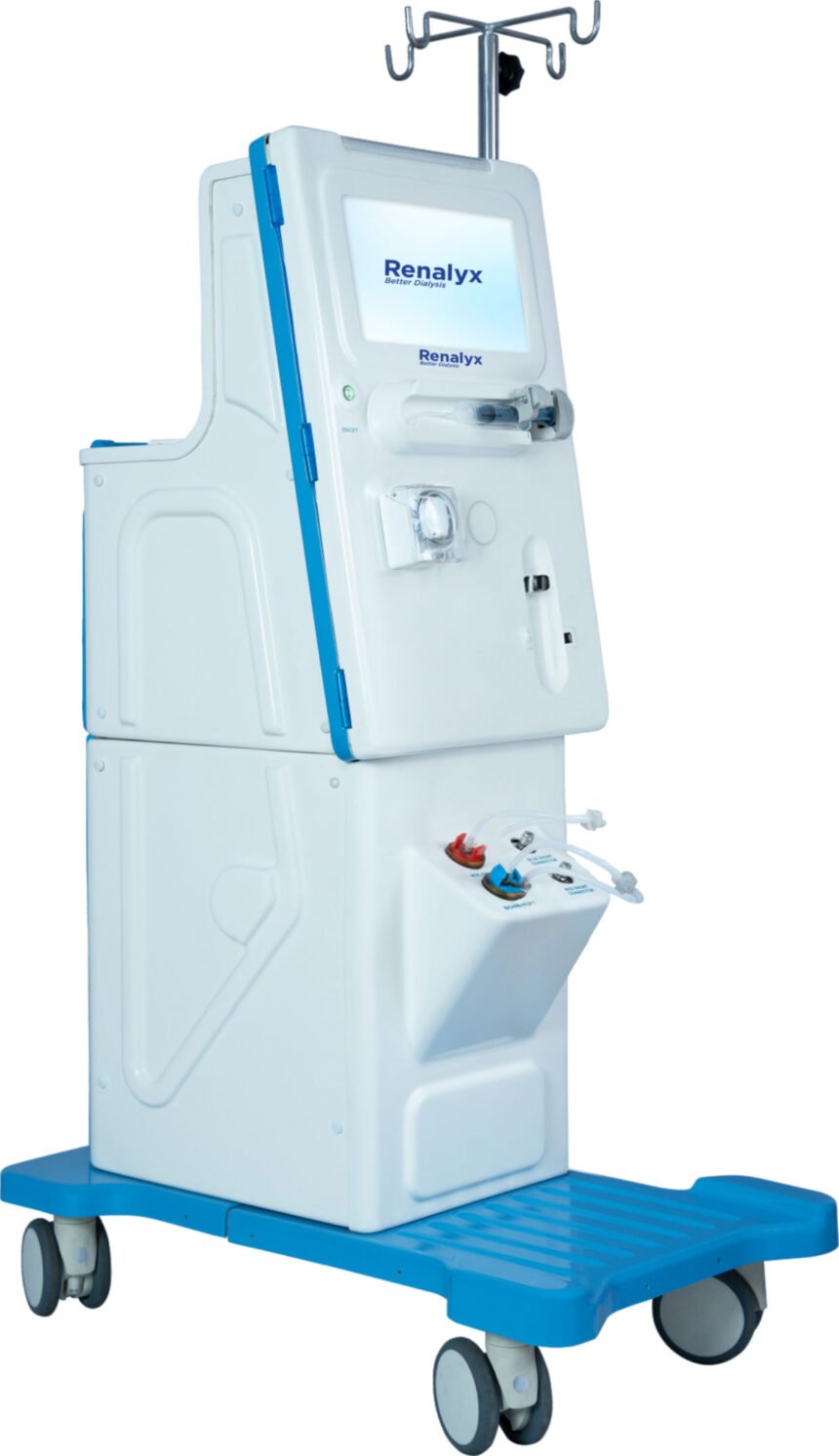
Every year, an estimated 2.2 lakh Indians reach end-stage kidney disease, creating demand for over 3.4 crore dialysis sessions annually, according to the Pradhan Mantri National Dialysis Program. For most of them, treatment means a journey to a big city, because nearly all of the country’s 4,950 dialysis centres are private and concentrated in Tier 1 cities. In Bengaluru, a medical-technology company spent over a decade engineering a machine designed to change that arithmetic. Renalyx Health Systems builds the RxT 21 — an AI- and cloud-enabled smart hemodialysis machine the company says is fully designed and manufactured in India.
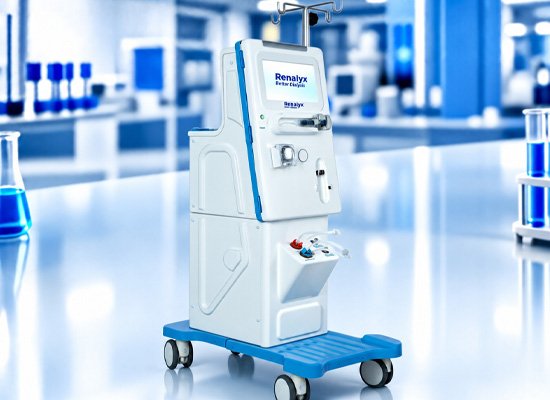
Image: Renalyx (official company image) — the RENALYX – RxT 21 AI-enabled smart hemodialysis machine.
A machine that watches, learns and adapts
The RxT 21 is built around intelligence, not just plumbing. AI-based algorithms optimise treatment, while a cloud-based Nephrology Information System integrates electronic medical records, remote telemetry and diagnostics — so a nephrologist can monitor a session from afar through the company’s telenephrology platform. The company says this makes care safer and more continuous, especially across geographies.
The engineering is thorough: a 13-inch touchscreen console, one-touch operation, blood-pump flow from 10 to 400 mL/min, Kt/V and urea-clearance monitoring for dialysis adequacy, advanced sodium and ultrafiltration profiling, single-needle dialysis support, an endotoxin-removal filter, and an optical blood-leak detector. A Sustained Low Efficiency Dialysis (SLED) mode suits intensive-care environments, and a 20-minute battery backup keeps the extracorporeal circuit safe during a power cut. The whole unit weighs just 80 kg and draws only 0.9 kW during dialysis.
Certified alongside the world’s best
The company says the RxT 21 makes Renalyx the sixth company globally — and the first in India — to produce an advanced dialysis machine with EU CE certification, with the company also holding ISO 13485 quality certification. It has secured a Class C manufacturing licence from India’s CDSCO — the high-risk, life-sustaining device category where even a minor process deviation can affect patient survival.
More Read

The newest milestone came on 28 September 2026, when the AI-powered haemodialysis system secured registration with the UK’s Medicines & Healthcare products Regulatory Agency (MHRA) — the device registered for both institutional and home use under GMDN code 58131. The company plans to start exporting to the UK and allied markets from January 2027, taking Indian medtech to British hospitals.
Priced for Indian pockets
At a starting price of Rs 6.70 lakh, the RxT 21 is aimed squarely at affordability. The company says comparable imported machines cost 20–25 per cent more, and it targets a 40 per cent lower total cost of ownership. To get there, Renalyx plans to invest Rs 800 crore over four years in company-owned manufacturing — capacity for 5,000 machines by FY26 and another 1,500 by FY28 — across facilities in Bengaluru, Mysuru and Mumbai, alongside indigenous consumables.
Its RxT 17 model is being manufactured in collaboration with Bharat Electronics for 6,000 units, targeting primary and community health centres and rural hospitals — exactly the places where dialysis is hardest to find today.
A Bengaluru origin story
Renalyx was founded in 2012 by Dr Shyam Vasudeva Rao, a former co-founder of ophthalmic-device maker Forus Health, who set out to solve renal care as a technology problem. In late 2025, Mumbai-based Lords Mark Industries acquired an 85 per cent holding in Renalyx, which continues to operate as an independent business unit. From a Bengaluru lab to British hospitals, Renalyx is putting India on the global medtech map — one dialysis session at a time.