There is a moment in modern warfare when the radio goes silent. The GPS signals die, the command link is jammed, and the expensive equipment that depended on both turns into scrap metal. On battlefields from Ukraine to the Middle East, the weapon that kept working through that moment was the small, cheap, autonomous flying munition — and a Bengaluru startup has spent three years making sure India can build its own.
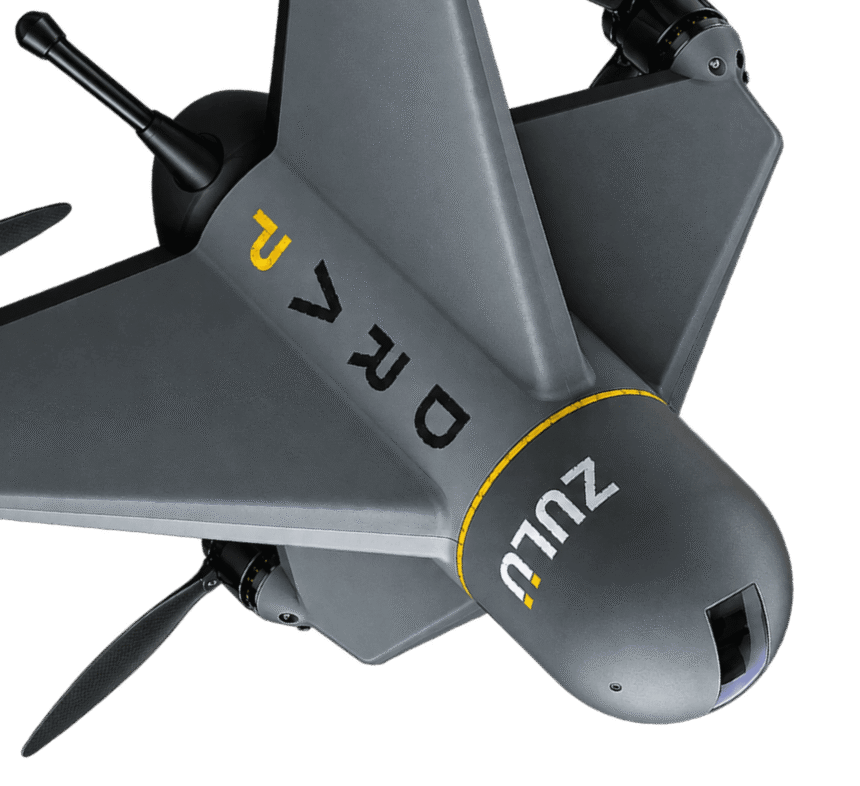
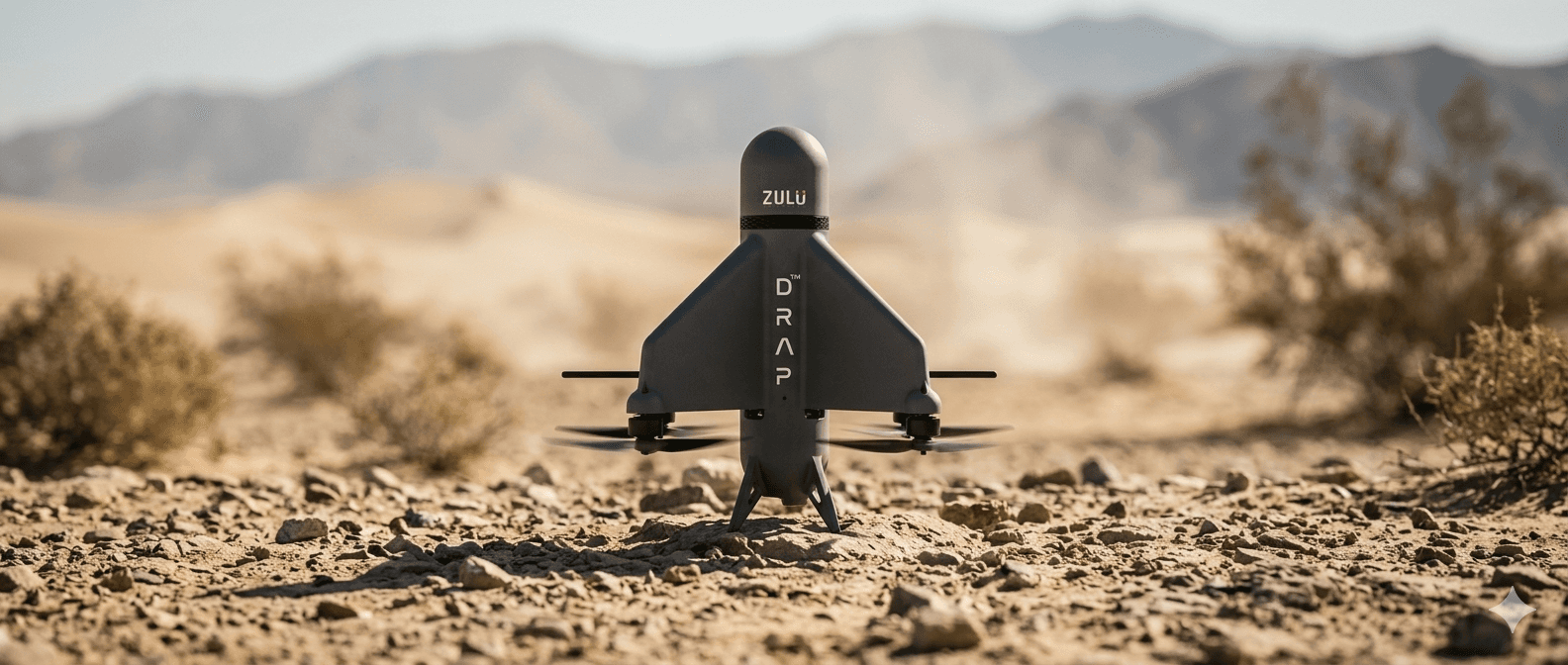
The company is Zulu Defence Systems, founded in October 2023 by Rajagopal Sethauram and Nagendran Kandasamy, and its flagship is the DRAP — the Directed Reconnaissance and Attack Platform, a hovering loitering munition the company describes as India’s first indigenous hovering munition built to find, fix and finish a target on its own. Where a traditional kamikaze drone is a one-way missile, DRAP is a VTOL aircraft that loiters over the battlespace, watches through its own eyes, and dives only when its onboard AI has picked the target.
Built for the jammed sky
The defining design choice of the DRAP is that it assumes the worst. According to the company, it navigates when satellite signals are blocked, keeps flying when its command link is cut, and shrugs off electronic attacks through dynamic frequency switching and jamming-resistant links — a radar cross-section the company says is three times lower than traditional loitering munitions. Onboard edge computer vision detects, tracks and engages targets with minimal operator input, and an autonomous terminal-strike mode means the drone can complete the attack run itself.
The numbers from the company’s own specification sheet tell the rest: a compact 400×400×500 mm airframe weighing 4.5 kg, a 1.5 kg high-explosive warhead, a cruise speed of 120 kmph with a 150 kmph dash, more than 25 minutes of endurance and a 15 km strike range. The dual EO/IR seeker — a 1080P electro-optical camera paired with a 160×120 long-wave infrared sensor — guides the weapon to a circular error probable of under two metres, roughly twice the precision the company attributes to conventional systems. Impact, proximity and delayed fuses let commanders tune the same airframe for anti-armour, anti-personnel or structure-breach missions.
A NATO special forces order
The most striking line on Zulu Defence’s story is not a specification — it is a customer. The Netherlands Special Forces placed a procurement order for the DRAP platform, an export result that few Indian defence startups of this age have matched. The company has also begun exporting to other markets in Europe and West Asia, and back home its systems have been through field evaluations with units of the Indian Army and the Navy’s Marine Commando Force. Its Hoverbee nano reconnaissance drone has been inducted by the Indian Army for GPS-denied reconnaissance work.
More Read

The company sells to armed forces and nobody else — an unusual stance even among Indian defence startups. As YourStory noted in its July 2026 profile, most peers keep a commercial line running alongside; Zulu Defence deliberately narrows its customer base so that every system is built to military requirements from the start rather than adapted from a civilian drone later. Co-founder and CEO Nagendran Kandasamy, who had built two companies before this one, is emphatic about supply-chain sovereignty too: the company does not source critical components from adversarial nations, says 70–75 per cent of materials are locally sourced and rising, and keeps its software entirely in-house.
The distributed air-defence family
DRAP does not fly alone in the catalogue. The same AI-powered architecture — which the company calls AADAS, an Advanced Air Defence Aerial System unifying ISR data, target identification and precision strike — runs across a family of platforms: Hoverbee for nano reconnaissance, Recon90 for long-endurance tactical ISR, Volume35 for heavy-lift cargo, and now the Stark LMS. And the company is thinking beyond the single shot. In September 2026 it tested CLAD, a canister-launcher air-defence system that fires five DRAP loitering munitions from a field-deployed launcher, a mobile and deployable answer to hostile drone swarms that treats the munitions themselves as the interceptor.
A separate variant, the DRAPMAX, takes the anti-tank mission further with a 30 km strike range, keeping operators safely away from armoured targets while the hovering munition does the work.
Why it matters
India has spent years buying this class of weapon from abroad while trying to build its own. What makes Zulu Defence’s arc so compelling is the velocity: founded in 2023, exporting to a NATO special forces unit within two years, and doing it with barely a million dollars in early funding from Finvolve, India Accelerator and Indusbridge Ventures. If the next era of warfare is fought by small autonomous systems in electronically contested skies, this Bengaluru workshop is ensuring some of them carry an Indian flag.
Keep reading: The Machine Shop the World’s Plane-Makers Trust: Inside JJG Aero’s Precision Play · Detonation Engines for Indian Missiles: Inside Prime Toolings, the Bengaluru Startup Building the Propulsion Stack · More Aerospace & Defense stories
Like stories like this? Add Exceptional Technology as a preferred source on Google to see more of our reporting in your search results and Discover feed.