India’s coastline runs over 11,000 kilometres — far too vast for any affordable number of crewed ships to watch around the clock. The answer, navies around the world are discovering, is to send boats that need no crew at all. And in a turn few would have predicted, one of India’s most ambitious unmanned-warship programmes is being built out of landlocked Alwar, Rajasthan.
Parshu Tactical Defence, a deep-tech company founded by serial entrepreneur Priyanshu Joshi, announced on 23 October 2026 that it has begun manufacturing its first unmanned surface vessel. The hull of the company’s technology demonstration vessel is now in fabrication to Parshu’s own design, with the fitting-out of propulsion, control and communication systems to follow. The milestone takes the company from design and engineering into physical production — a programme the company notes has been built entirely on the founder’s own capital.
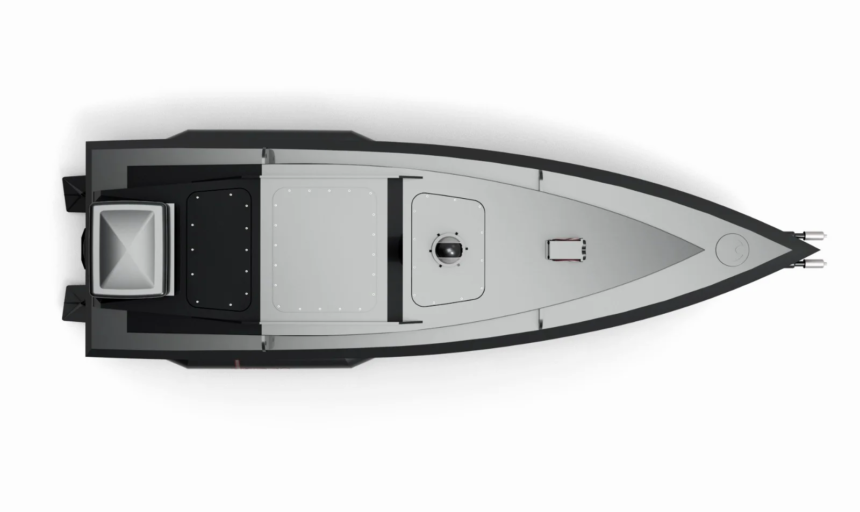
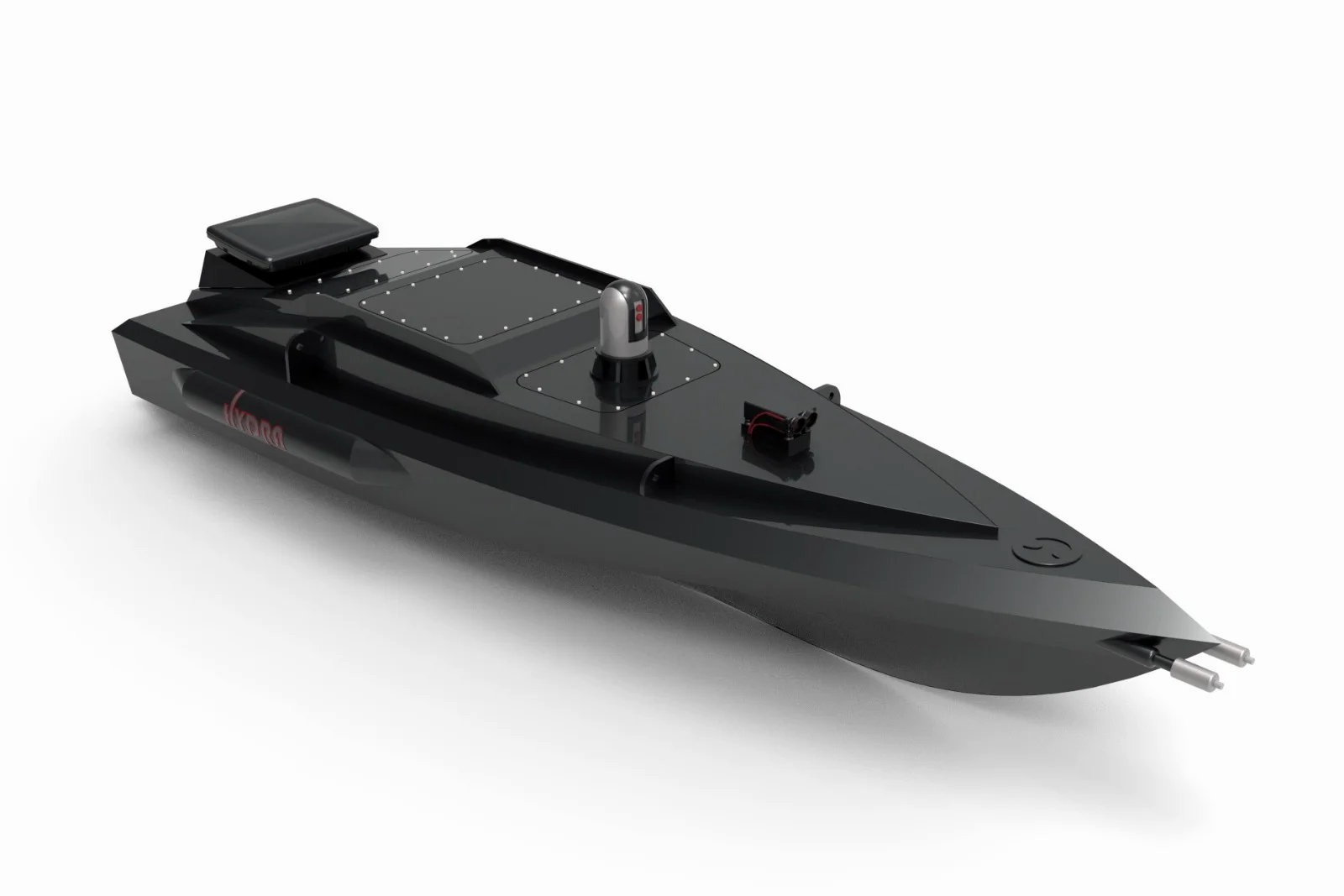
What is taking shape in the fabrication bay is a single modular platform with three very different jobs. By changing mission equipment on one common hull and autonomy core, Parshu can build a long-range stealth surveillance vessel that patrols up to 1,500 kilometres, a one-way attack vessel carrying a 300-kilogram payload at 40 knots, or a fast interceptor running at 50 knots with a mounted autonomous gun. Every configuration can deploy from a warship’s deck or from the shore, and the company says more than 75 per cent of the content is indigenous. The approach keeps each configuration affordable and lets a navy or coast guard operate one platform type across several roles.
The engineering is designed for contested waters. The hull is a self-righting monohull built from fully recyclable HDPE, rated for sea-state 5 operations and finished with composite coatings that reduce both radar and thermal signatures. Parshu says the 5-to-10-metre platform is engineered to a tactical signature lower than any aluminium-class equivalent. Two further vessels are already at the research and development stage: a larger USV designed for missile integration, and a submersible one.
The real brain of the vessel is its autonomy. Parshu is writing its own Level-4 autonomy software in-house — perception, navigation that complies with the international collision regulations, guidance, control and mission execution — with LiDAR and radar sensor fusion and onboard SLAM/INS so it can navigate even when satellite positioning is denied. The company says development readiness is targeted for December 2026, and once reached, the software will be installed on the demonstration vessel for water trials. Every sortie will record sensor, navigation and sea-state data from Indian waters, feeding the autonomy models before production release. The company expects the demonstration vessel to be on the water in the first quarter of 2027, with production-grade vessels and a production software release by mid-2027.
Parshu arrives at this moment with unusual credentials. The company says it is the first Indian naval company in over a century to develop and deliver a product inducted into NATO forces with an official NATO Stock Number, after co-developing an advanced unmanned surface vessel with a UK defence partner. It has also designed and delivered more than five civilian marine vessels from its own coastal yard, and it is incubated at the IIT Madras Pravartak Technologies Foundation and the IIT Madras Incubation Cell. The company’s thinking on how unmanned vessels are reshaping naval conflict — from the Black Sea to the Baltic — was published this month in an Occasional Paper by the United Service Institution of India, co-authored by founder Priyanshu Joshi and Lieutenant General Karanbir Singh Brar (Retd).
More Read

In parallel, the same autonomy expertise is being pointed at land. Parshu is developing Level-4 ADAS and autonomous driving software for cars, buses, trucks and tanks, with an ambition to build the first large-scale trainable dataset of Indian road conditions — retraining on Indian traffic the models first trained on European and North American driving data.
“India has the engineers, the boat-building skills and the operational need,” Joshi said. “What has been missing is a company prepared to design, build and integrate the complete system in India. That is what we have started.”
From a fabrication bay in Alwar to the Arabian Sea: India’s autonomous warships are taking physical form — one hull at a time.
Keep reading: Zero Diesel, Full Autonomy: Inside Clear Robotics, the Startup Giving India’s Waters a Cleanup Fleet · First of Its Class, Built by a Private Yard: Inside INS Samarthak, L&T’s 106-Metre Multi-Purpose Warship · More Shipbuilding & Maritime stories
Like stories like this? Add Exceptional Technology as a preferred source on Google to see more of our reporting in your search results and Discover feed.