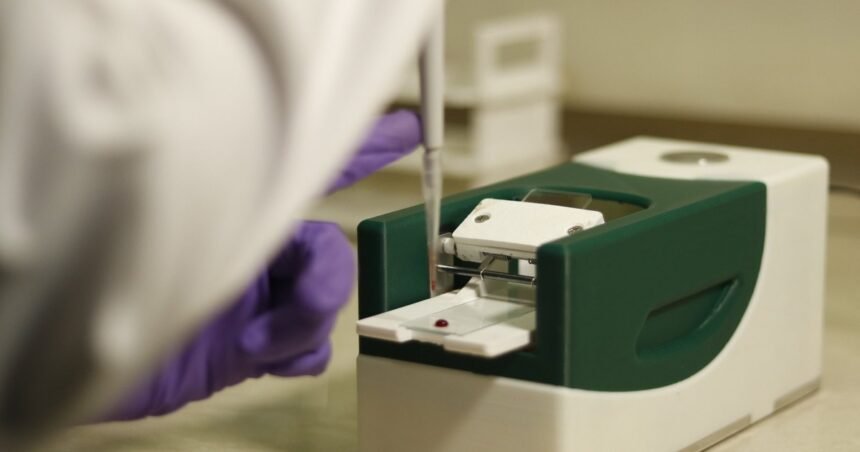
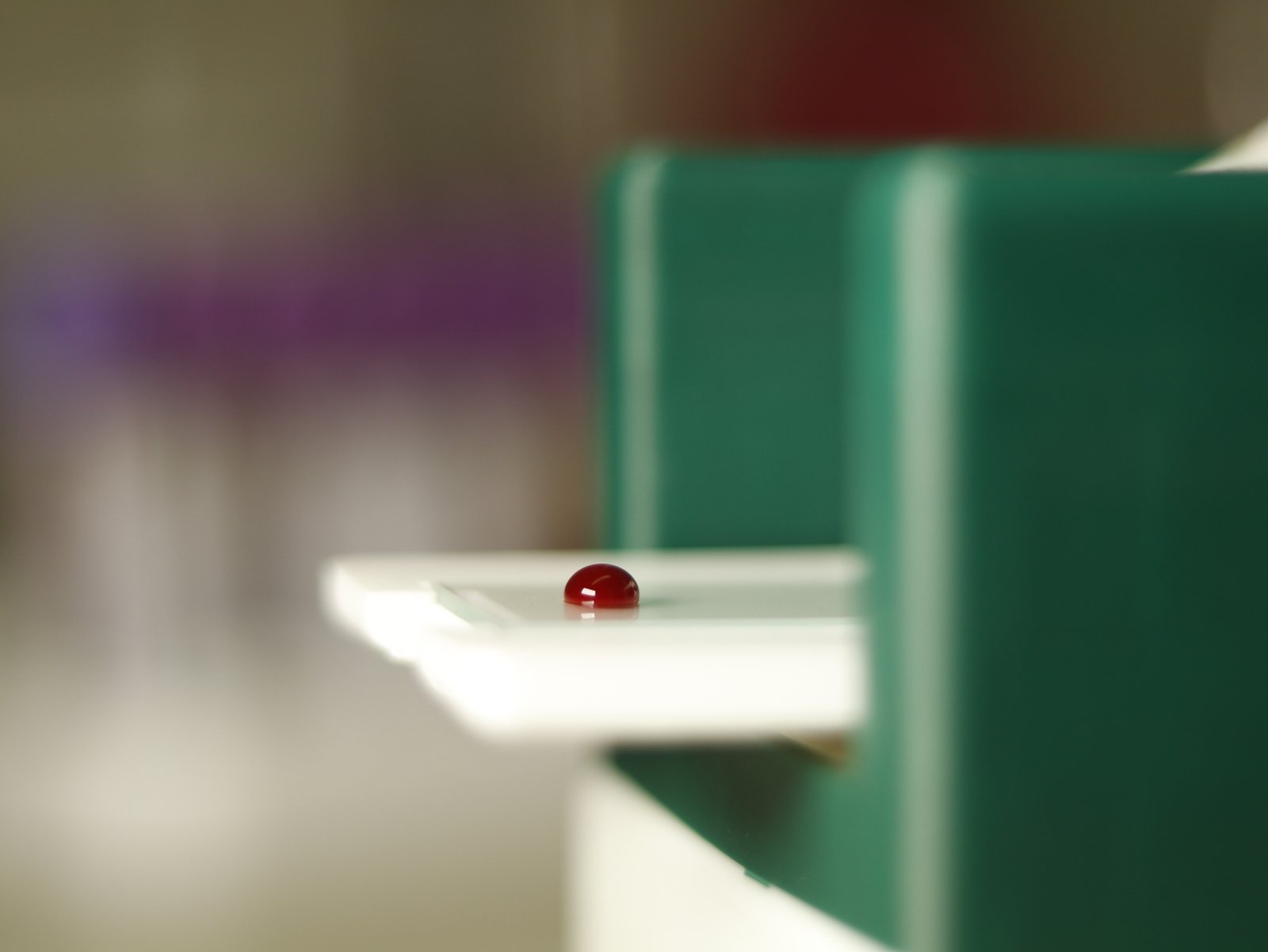
In a village health camp far from the nearest diagnostic laboratory, a blood test usually means a long journey: a sample drawn, packed, shipped, and a report that arrives days later — if it arrives at all. A team at the Indian Institute of Technology Bombay asked a beautifully simple question instead: what if a single drop of blood, spread across a glass slide, could tell the story by itself?
The answer is a compact benchtop device now licensed to Rheoheme Private Limited, an IIT Bombay startup based at the institute’s SINE incubator in Powai, Mumbai. The company says its patented diagnostic system screens for anaemia and sickle cell disease from one drop of blood, delivering a result in under three minutes with equipment no more elaborate than a pipette, glass slides, an inexpensive chemical and a ruler or imaging device to measure the smear.
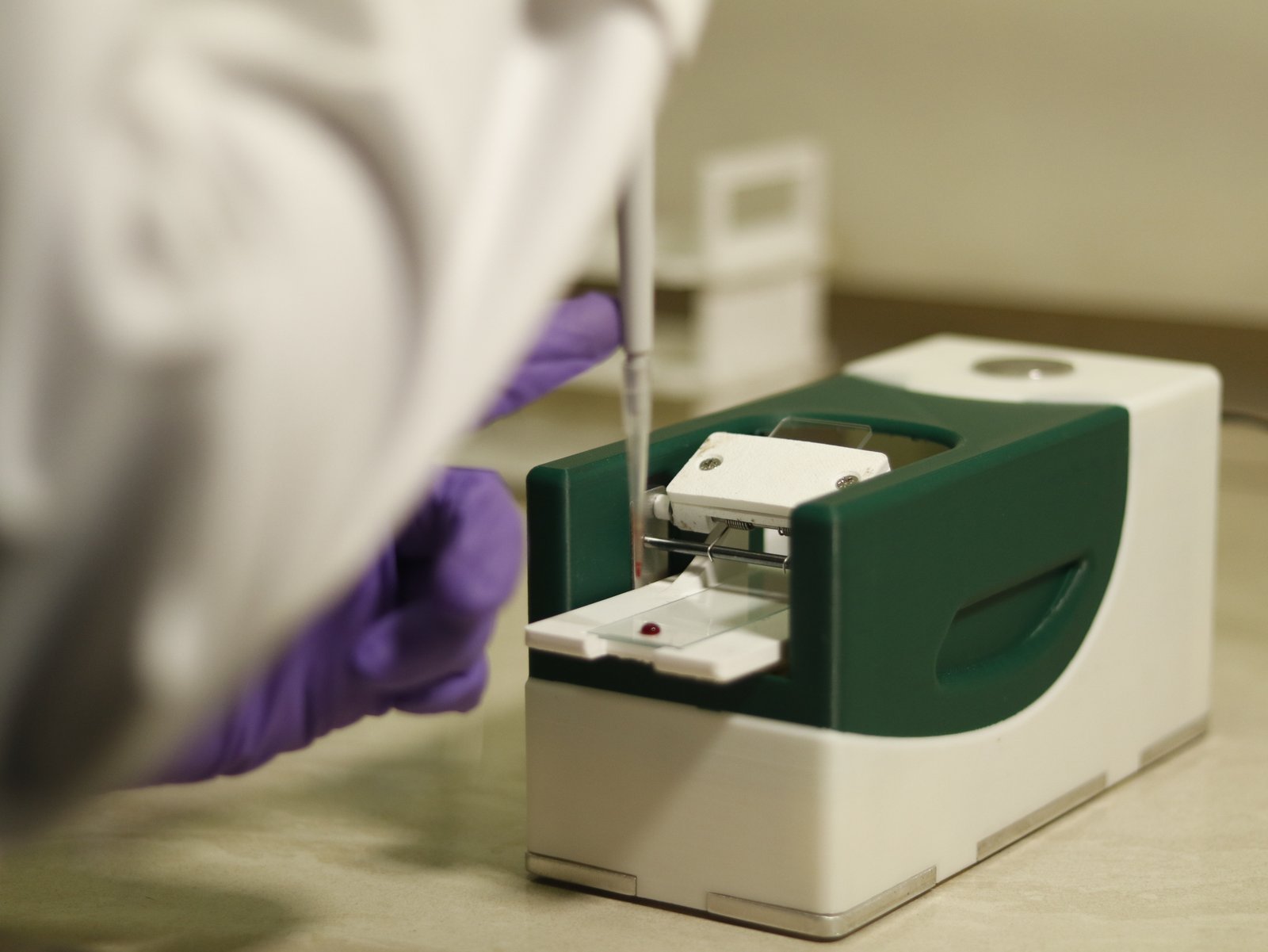
The science behind it began not in a hospital, but in a physics question. The research team from IIT Bombay’s Department of Chemical Engineering, led by Prof. Mahesh Tirumkudulu, set out to understand how a spreading drop of blood behaves — and discovered that the length of the smear it leaves behind carries a precise signature of the blood’s viscosity. More viscous blood spreads less easily and leaves a shorter, thicker smear under identical conditions; less viscous blood travels further.
That signature turns out to be a powerful diagnostic clue. Anaemia lowers red blood cell concentration and haemoglobin, changing how blood flows; in sickle cell disease, red blood cells turn rigid and sickle-shaped when oxygen levels fall, again changing the flow. The team’s automated device makes every smear identical — a motorised blade draws the smear at a controlled speed of 10 to 200 millimetres per second at a fixed angle — so that differences in smear length mean something real. A 5 to 20 microlitre sample, pre-treated with 1% sodium metabisulphite to mimic low-oxygen conditions, is all it takes, and a specially designed SMEAR CARD with printed graduations lets a health worker read off the smear length and the corresponding viscosity without any advanced laboratory equipment.
The same test also tells sickle cell trait apart from sickle cell disease — a distinction that cheaper screening methods often cannot make, and one that matters enormously for families planning their futures. By comparing blood viscosity before and after the deoxygenation treatment, the technique distinguishes healthy samples, trait carriers and people living with the disease. The method has been tested on real patient samples, and the underlying patent was granted in March 2025 to IIT Bombay.
The numbers behind the device show why it has travelled so fast from laboratory bench to field. The method estimated haemoglobin in more than 1,000 patients with an accuracy of approximately plus or minus 0.5 grams per decilitre, the company and researchers report, and field trials involving 394 people in tribal areas of Maharashtra and central India classified participants in approximately 95% of cases across healthy, trait-carrier and disease groups. The technique can even help doctors track treatment: in patients taking hydroxyurea, a commonly used sickle cell medicine, the rise in blood viscosity after oxygen removal fell from around 125% to approximately 70% in the observations reported by the researchers.
More Read

That combination — laboratory-grade insight from a device that needs no laboratory — is exactly what makes the technology so promising for India. Conventional sickle cell diagnosis relies on advanced tests like HPLC or electrophoresis, which are expensive, need trained staff and are rarely available in rural or low-resource areas. Rheoheme’s device needs no special expertise to use, the team says, which means screening can travel to the patient instead of the other way around: to primary health centres, to field camps, and to the tribal communities where sickle cell disease is most prevalent.
Rheoheme describes itself as an indigenous MedTech company building a single-platform diagnostic technology that performs multiple tests from one drop, eliminating the need for multiple devices, expensive reagents and cartridges — with machine-learning algorithms interpreting the visual and viscosity patterns for rapid, automated results. The company says its system is 100% designed, engineered and assembled in India, and it is already looking beyond today’s tests, exploring whether the same approach can measure blood clotting time and glucose levels. The team is working with the National Institute for Research in Tribal Health in Jabalpur and AIIMS Nagpur towards regulatory approval, carrying a device born from a physics curiosity towards clinics across the country.
What began as a question about a spreading drop has become something quietly remarkable: a test that asks almost nothing of the patient, almost nothing of the clinic, and still returns an answer that can change a family’s life. That is the kind of Indian engineering that travels — from an IIT Bombay laboratory to the last health camp on the road.
Keep reading: The Device That Fixes Sleep While You Sleep: Inside DUSQ, India’s Closed-Loop Sleep Regulation Wearable · Back on Their Feet: Inside Meril’s MISSO, India’s Own AI Robot for Knee Replacement Surgery · More Chemicals, Materials & Life Sciences stories
Like stories like this? Add Exceptional Technology as a preferred source on Google to see more of our reporting in your search results and Discover feed.