


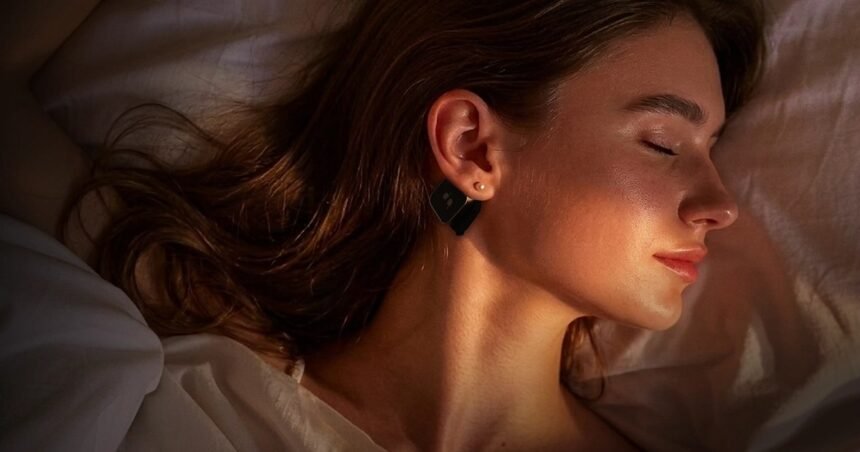
Most sleep gadgets are brilliant spectators. They watch you sleep, score your night, and hand you a graph in the morning about a night you cannot change. DUSQ was built on a different idea entirely: what if a device did not just report your sleep, but actively protected it while you were still asleep?
DUSQ is a sleep science and recovery company from India, founded in 2023 by Dr Siddhant Bhargava, Shalmali Kadu and Mitansh Khurana. Its device is a tiny behind-the-ear wearable that reads the nervous system in real time and responds the moment sleep starts to break apart — a closed loop of sensing and stimulation that runs all night, without a pill, a wire or a bulky headset.
A wearable that listens to your nervous system
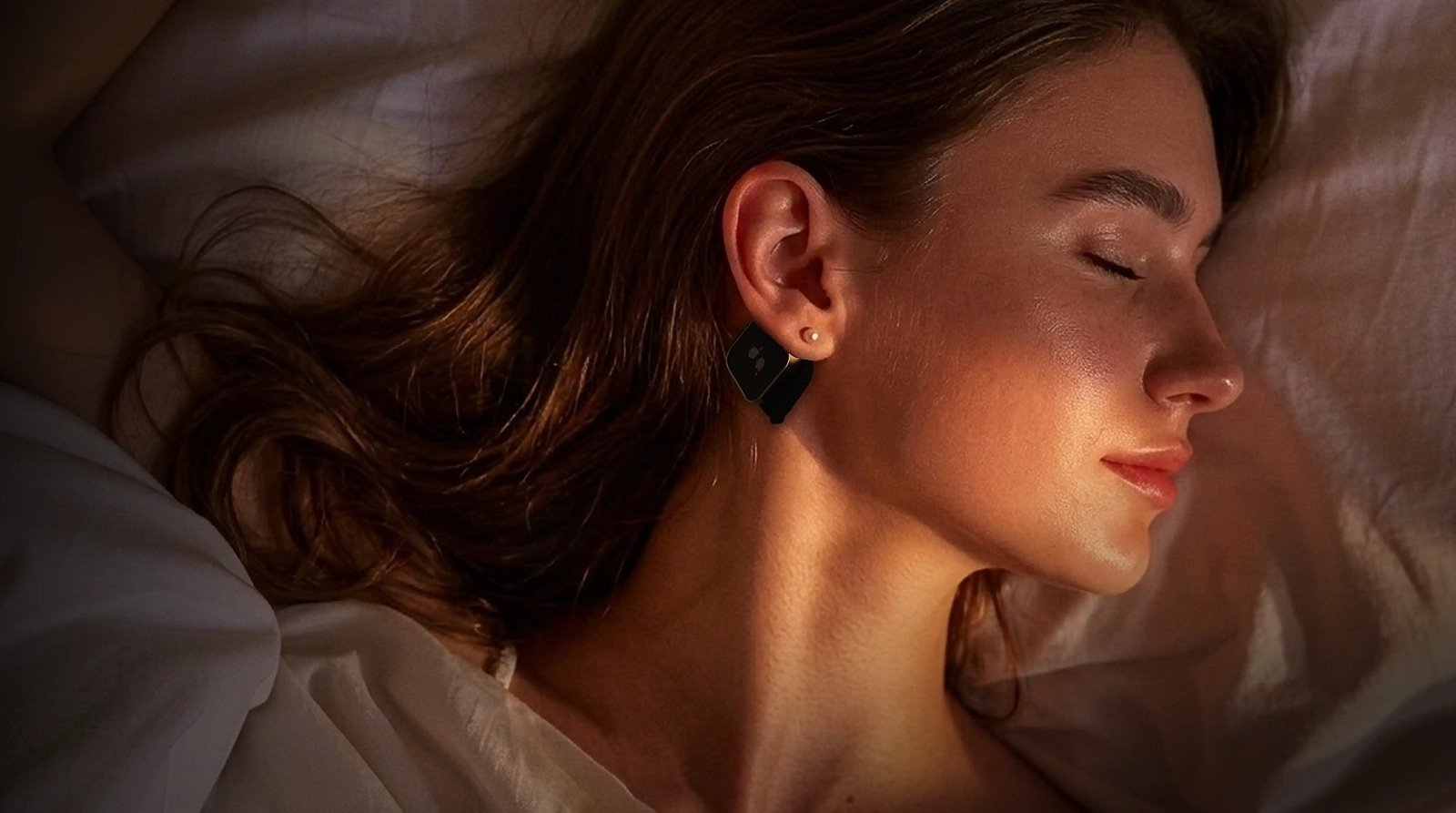
At just 12 grams and 7.2 millimetres thin, the DUSQ device sits flat behind the ear, on the mastoid junction where the skin is at its thinnest and the parasympathetic nervous system is closest to the surface. The company says the skin there gives it an unusually clear read on the body’s state, and the flat shape means it can be worn on your side, against a pillow, without pressing or shifting through the night.
The sensing is the heart of the system. Using an electrodermal activity (EDA) sensor, DUSQ measures changes in skin conductance that reveal subtle disruptions in sleep — the small surges in nervous-system activity that the company says happen 20 to 30 times a night, often without fully waking you. Most trackers miss these moments entirely; DUSQ is built to catch them as they happen.
Then comes the response. The moment a disruption is detected, DUSQ answers with a gentle, non-invasive mix of vagus nerve stimulation and vestibular stimulation, delivered automatically and below the level of conscious perception. The aim is simple and elegant: calm the nervous system back toward deep, restorative sleep before the sleeper ever surfaces. The device works from wind-down to wake-up, and its charging case also keeps an eye on the room itself, so a noise spike or a temperature shift can be matched against the surges it detects.
From InnerGize to a category of its own
DUSQ did not arrive fully formed. Its first product, InnerGize, launched in India in 2025 and reached more than 2,000 people. The company says the lesson from those early users was unmistakable: almost everyone went straight for sleep. So the team re-engineered the device around the night — a patch redesigned to stay put for eight hours of sleep, a new optical sensor, and a thinner body, down from 9 millimetres to 7.2.
More Read

Behind that redesign sits a serious research engine. The company says it has analysed more than 50 million physiological data points and built its own sleep lab in Delhi to test the device cohort after cohort. In its trials, the company reports striking results within two weeks of daily use: 31 per cent more deep sleep, 38 per cent better heart rate variability and 22 per cent fewer night awakenings. Instead of a sleep score that describes yesterday, DUSQ offers its own Sleep Quotient — a measure of the body’s capacity to produce sleep in the first place.
India built it, the world backed it
The journey from an Indian lab to a global launch has been swift. DUSQ secured a three-shark deal on Shark Tank India, then raised Rs 24 crore in a seed round led by Fireside Ventures, with Antler India and others participating, to scale its neuroscience and hardware teams and deepen its intellectual property.
Then came the moment that put it on the world map. On 9 June 2026, DUSQ launched on Kickstarter in the United States, and within its opening days it crossed $1 million — the fastest any Indian healthtech company had reached that mark on the platform, the company says. By the close of the campaign, 4,329 backers had pledged $1,232,557 to bring the device to life, surpassing every previous Indian healthtech campaign on Kickstarter. The device is priced at $300 to $350, including a three-month supply of adhesive sleep links, with refills at $25 for three months and the app free for the first year.
The arc is a neat one: a team in India asked why sleep technology only ever watched, built the sensing, the stimulation and the intelligence together in one tiny device, proved it in its own lab, and then watched the world line up to try it. DUSQ is not another tracker telling you how badly you slept. It is a device that spends the whole night making sure you sleep better — and it is, unmistakably, made in India.
Keep reading: Back on Their Feet: Inside Meril’s MISSO, India’s Own AI Robot for Knee Replacement · From Paralysis to Recovery: Inside S3V Vascular, the Mysuru Company Building India’s Own Stroke-Saving Devices · More Chemicals, Materials & Life Sciences stories
Like stories like this? Add Exceptional Technology as a preferred source on Google to see more of our reporting in your search results and Discover feed.







