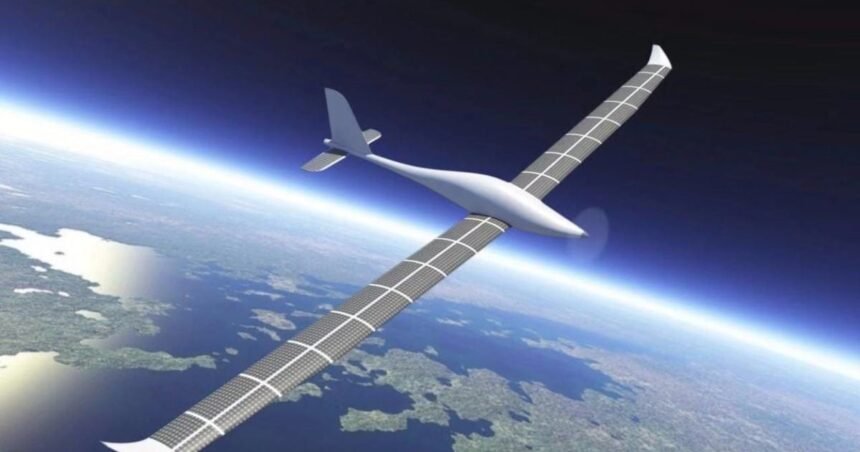
Most drones come home after an hour or two, their batteries spent. The one built by a young Noida startup is designed to stay up all day, drinking sunlight as it flies — and the Indian Army has just come calling for it.
Maraal Aerospace, an IIT Kanpur-incubated startup founded in 2023, builds solar-powered fixed-wing unmanned aerial vehicles. Its flagship aircraft, Tejasvaan, recently completed successful flight trials, and on 28 October 2026 the company won an Indian Army tender worth about ₹1.98 crore for the development and supply of solar-powered UAVs. It is a striking vote of confidence in a company barely three years old — and in an idea whose time has arrived: an eye in the sky that does not need to land to refuel.
A wing covered in sunlight
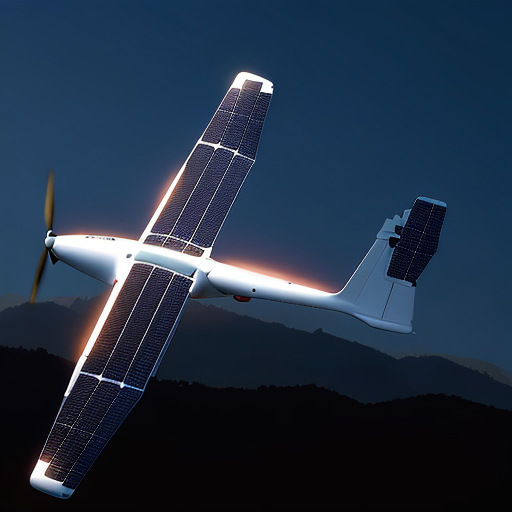
Tejasvaan is a sleek, high-altitude fixed-wing aircraft built around one elegant idea: cover the wing in solar panels, back them with batteries, and let the sun do the heavy lifting. The company says the aircraft stays aloft for up to 12 hours, flying at altitudes of up to 5–6 km, with a 12-metre wingspan and a maximum take-off weight under 60 kg. It covers 150 km, extendable to 250 km, while carrying a 5 kg payload of high-zoom day and night cameras and thermal sensors.
The engineering is in the details. Tejasvaan uses sun-tracking technology to squeeze the most energy from its panels through the day, and it can be launched from a runway of just 200 metres — a short strip in a forward area, not an airbase. The company says it can be made mission-ready in under 30 minutes, and that it is resistant to electronic warfare and GPS spoofing, so it keeps flying and reporting even when the electromagnetic environment turns hostile.
That combination — long endurance, a light footprint and a small logistical tail — is exactly what persistent surveillance demands. A conventional drone watches a stretch of border for an hour and comes home; Tejasvaan watches it all day. The company says the aircraft delivers persistent surveillance, communication relay, target acquisition, search-and-rescue support and maritime domain awareness for the Army, Navy and Air Force.
From an IIT Kanpur lab to the Army’s order book
Maraal’s story begins in the aerospace department at IIT Kanpur, where chief technology officer Dr Vijay Shankar Dwivedi led the development of the Maraal UAV. Founder and chief executive Vivek Kumar Pandey, who had worked with Dwivedi in a previous organisation, saw a gap no Indian company was filling: a domestically developed, long-endurance UAV for both defence and civilian needs. The startup was incubated at IIT Kanpur, and the company says it is backed by the government’s iDEX innovation programme.
More Read
Institutional backing followed quickly. In January 2026, Hindustan Petroleum Corporation Limited (HPCL) invested ₹2 crore in Maraal under its HP Udgam startup programme at India Energy Week in Goa, to accelerate product development, testing and system validation. The company says the investment recognised Tejasvaan as India’s first solar-powered long-endurance drone — a clean-energy aircraft built for defence and civilian missions alike, from border and maritime surveillance to infrastructure inspection and disaster response.
Tejasvaan has already stepped out of the lab and into public view. At the Uttar Pradesh International Trade Show in Greater Noida in September 2026, the aircraft drew crowds at the state’s Defence Corridor pavilion, where visitors explored the solar UAV alongside missiles, bulletproof equipment and other indigenous platforms. The company says students who worked on the aircraft’s development hope to see it in service with the Indian Army — a hope the Army’s October tender has now brought much closer.
Watching rivers, borders and disaster zones
Tejasvaan’s missions go well beyond the battlefield. The company has highlighted a potential role for the aircraft in the Namami Gange programme, using drone-based river surveys, real-time data collection and habitat monitoring to track the health of the Ganga ecosystem. The same persistence that serves a border post serves a flood zone: an aircraft that can stay overhead for 12 hours, relaying what it sees, is a powerful tool when roads are washed out and communications are down.
That versatility is deliberate. Maraal designs its aircraft as modular platforms, so the same airframe can carry different sensors for different jobs — optical and infrared cameras for surveillance, mapping payloads for terrain surveys, relays for communications. The company says the aircraft’s low operating cost and minimal logistical dependence make it practical for agencies that need eyes overhead every day, not just on special occasions.
The road to the stratosphere
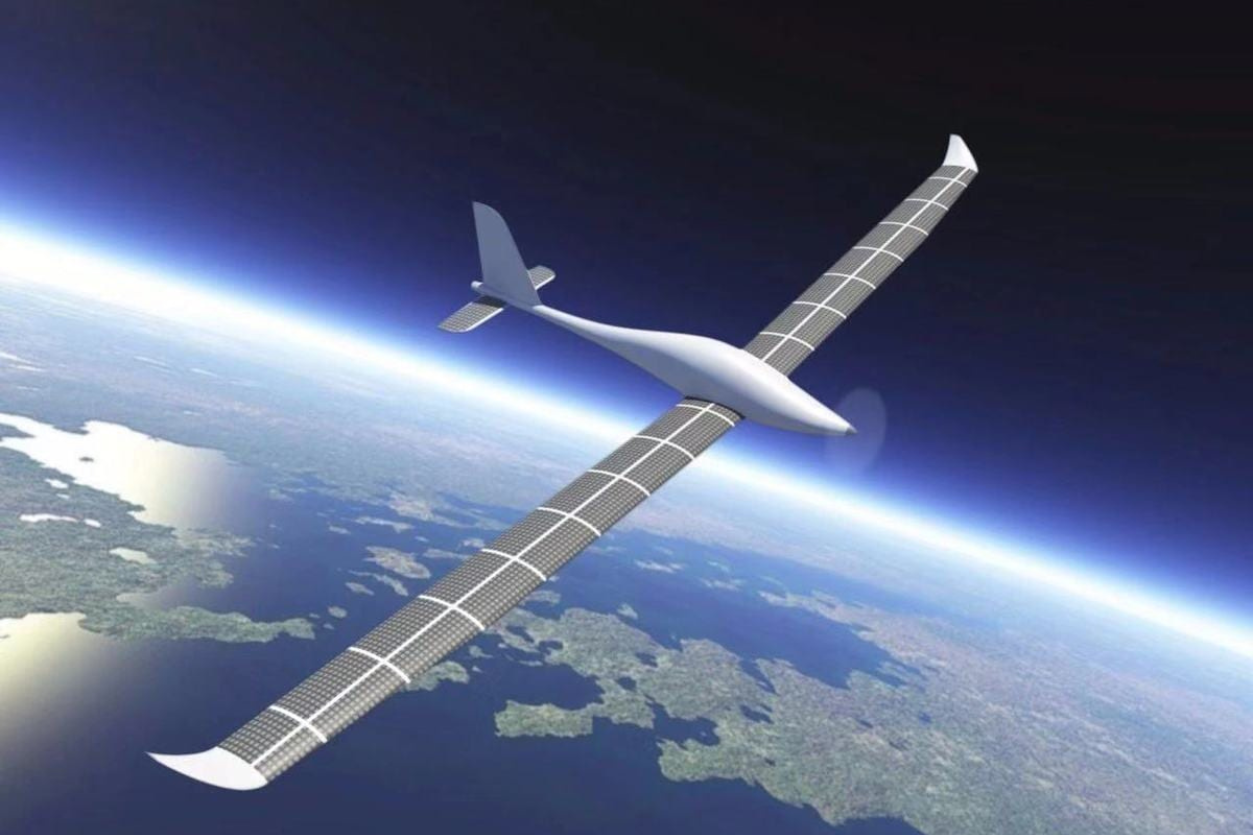
Tejasvaan is only the first step in Maraal’s roadmap. The company is working on a solar-plus-hydrogen hybrid variant targeting 24-hour endurance, and beyond that, a High-Altitude Pseudo Satellite (HAPS) — a stratospheric aircraft designed to fly at 18 to 30 km for more than 90 days at a time, acting as a satellite that can be launched from a 250-metre runway and redeployed at will. The company’s official HAPS concept carries a 30–50 metre wingspan, a take-off weight of around 80 kg and a payload of more than 5 kg, with high-definition optical and infrared cameras for round-the-clock border patrolling, maritime surveillance and disaster communications.
It is an audacious ladder: from a 12-hour solar drone today, to a day-long hybrid tomorrow, to a months-long stratospheric platform after that. But each rung is built on the same core skill — harvesting sunlight, managing energy with exquisite care, and building airframes light enough to turn that energy into endurance. The Army tender, the HPCL investment and the flight trials all point the same way: a small Indian team is learning, flight by flight, how to keep an aircraft in the sky on sunlight alone.
For a country with thousands of kilometres of borders, a vast coastline and a monsoon that regularly tests its disaster response, that is a capability worth celebrating. Tejasvaan does not roar, does not burn fuel and does not hurry home. It simply stays — watching, relaying, enduring — powered by the same sun it flies under.
Keep reading: Nine Colours, Half a Kilo: Inside EON Space Labs’ MIRA, the Indian Space Telescope Now in Orbit · Where Roads End: Inside ideaForge’s YETI, the 200-kg Heavy-Lift Drone Built for India’s Toughest Terrain · More Aerospace & Defense stories
Like stories like this? Add Exceptional Technology as a preferred source on Google to see more of our reporting in your search results and Discover feed.