


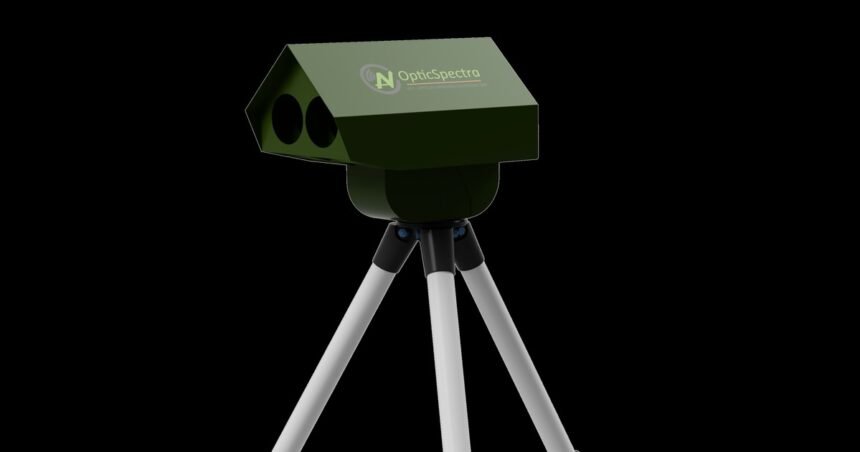
Some of the most important networks in the country never touch a cable at all. In Ahmedabad, Nav Wireless Technologies (NavTech) is building communications that travel as precisely aimed beams of light — and its newest system adds something no ordinary cable can offer: encryption keys exchanged using the principles of quantum physics.
The company unveiled OpticSpectra 10G QKD at India Mobile Congress 2026 on 31 October 2026, the company says. The India-developed Free Space Optical (FSO) system combines data speeds of up to 10 Gbps with Quantum Key Distribution (QKD) capability over optical wireless links of up to 5 km, aimed at telecom, defence and other security-sensitive communication environments. The unveiling took place in the presence of Shri Anil Kumar Lahoti, Chairman of the Telecom Regulatory Authority of India (TRAI).
“India’s progress in indigenous optical wireless communication and quantum technologies reflects the growing capabilities of our domestic technology ecosystem,” he said. “Innovations that bring together high-speed connectivity, secure communications and advanced photonics have the potential to contribute meaningfully to India’s digital infrastructure and technological self-reliance.”
Free Space Optical communication transmits data between two points using highly directional beams of light rather than a physical fibre connection across the complete link, the company says. QKD generates and exchanges cryptographic keys using quantum principles, adding a security layer to the communication architecture. Together, the company says, the two technologies serve links where both capacity and security matter: telecom infrastructure where extending fibre is difficult or time-consuming, defence networks, strategic facilities and other mission-critical links, with rapid deployment and network resilience built in.
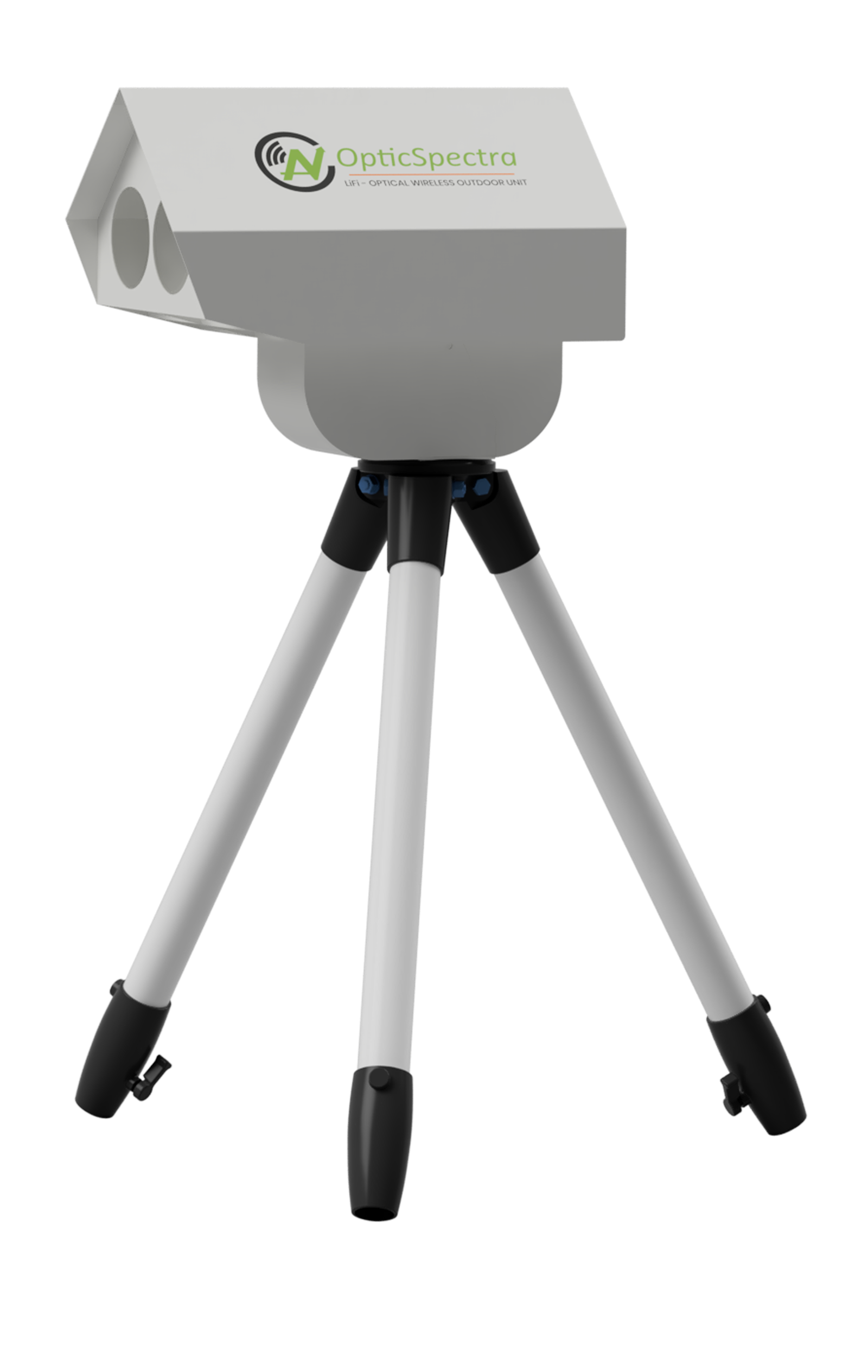
NavTech’s OpticSpectra outdoor unit. Image: Nav Wireless Technologies.
More Read

NavTech is no newcomer to light-based communication. The Ahmedabad company, led by co-founder and CTO Hardik Soni, pioneered LiFi in India, the company says, has supplied LiFi technology to ISRO, and works with IIT Delhi’s technology-transfer body FITT on indigenous LiFi networks. OpticSpectra 10G QKD joins the OpticSpectra family, which includes the 40G system unveiled earlier at IMC 2026, and forms part of the company’s broader effort to move optical, laser and photonics technologies from Indian research into deployable systems for domestic and international markets.
“The next phase of communication infrastructure will need to address capacity and security together,” said Hardik Soni, co-founder and CTO. “With OpticSpectra 10G QKD, our objective is to combine high-speed optical wireless communication with advanced key-distribution capability in an India-developed platform for telecom, defence and strategic networks.” He added: “We want to take photonics technologies from Indian R&D into practical deployments.”
NavTech’s OpticSpectra film. Video: Nav Wireless Technologies.
From a beam of light across a city to a quantum-secured link between strategic sites, NavTech is turning India’s photonics research into infrastructure the country can deploy without digging a single trench.
Keep reading: The Motor With No Magnets: Inside Gyrodrive, the Pune Company Freeing India’s EVs From Rare Earths · The Suitcase That Follows You: Inside Arista Vault, the Gurugram Startup Teaching Luggage to Walk, Ride and Guard Itself · More Industrial Automation & Technology stories
Like stories like this? Add Exceptional Technology as a preferred source on Google to see more of our reporting in your search results and Discover feed.







