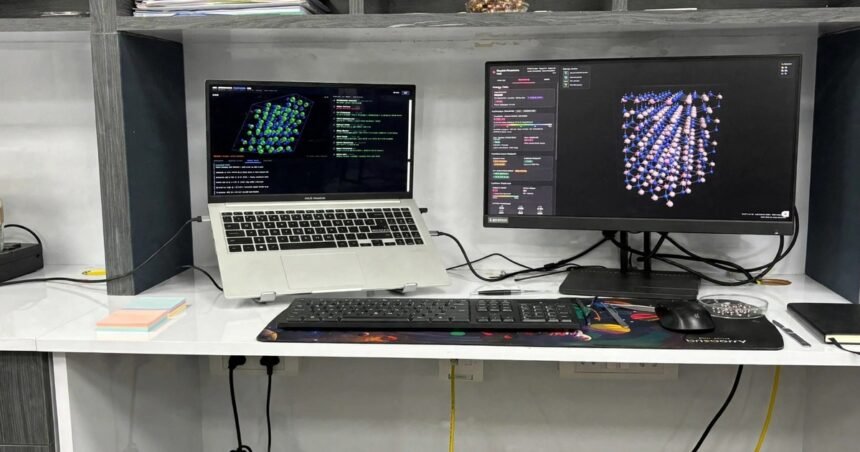
Scientific discovery has always been a slow craft. A researcher reads the literature, forms a hypothesis, runs an experiment, waits for the result, and starts again — one careful iteration at a time. For a new semiconductor material, that loop can stretch across months or years before anything useful emerges. NovAtom Labs, a student-led deeptech startup from BITS Pilani’s Hyderabad campus, is building the intelligence layer meant to run that loop far faster — an AI research copilot that helps scientists understand a problem, screen thousands of candidates, and decide what to try next.
The company began the way many great campus ideas do: in hostel rooms, alongside freelance AI projects and independent research. Founders Arnav Kulshreshtha and Sattwik Das started by talking to researchers about where their work actually got stuck — not in finding papers, but in the long, iterative middle of discovery, where every new direction means more reading, more simulation and more waiting. NovAtom’s answer is a platform that stays with the researcher through the whole workflow, rather than answering a single question and stopping.
An intelligence layer, not just a search box
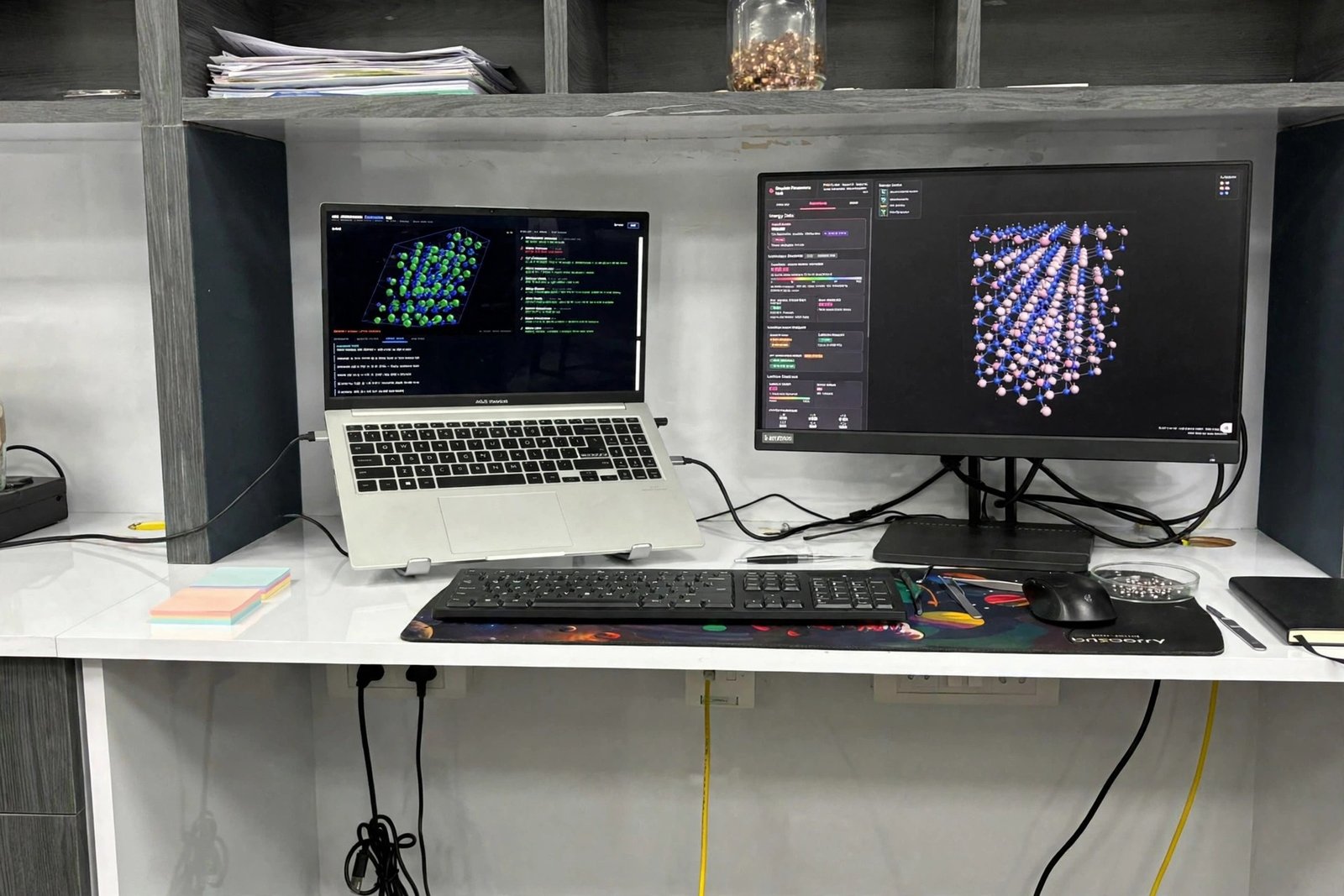
NovAtom describes its technology as an intelligence layer for scientific research. The platform is designed to help a researcher understand a complex problem, synthesise the relevant literature, identify the parameters and constraints that matter, learn from previous experimental or computational results, and explore promising directions for further investigation. Each cycle feeds the next: results from one round of experiments or simulations inform which candidates deserve attention in the round after.
That distinction matters. A tool that only retrieves information or generates text leaves the hardest part of research — choosing what to do next — entirely to the scientist. NovAtom’s copilot is built to support that decision itself, connecting scientific knowledge, experimentation, computation and decision-making into one continuous loop. The company says the approach applies anywhere researchers must explore a large space of possibilities: semiconductors, materials science, chemistry, biology, biotechnology, pharmaceuticals, energy and advanced manufacturing.
100,000 candidates screened, 17 novel materials found
The numbers coming out of the platform show what that loop can do. According to BITS Pilani, NovAtom’s platform generates and screens thousands of candidate materials, and has identified 17 novel materials from more than 100,000 screened so far. Its simulation layer has cut semiconductor device setup and convergence from 5–7 days to under 10 minutes — compressing one of the most tedious steps in device research into a coffee break.
That speed is already reaching real labs. The platform has been used and evaluated by researchers associated with institutions including ETH Zurich, the Georgia Institute of Technology and the University of Toronto, and it has been used and explored by researchers at BITS Pilani’s Hyderabad campus working across semiconductor technology, materials research, biology and engineering. In India, it has been demonstrated to researchers and engineers at the Semiconductor Laboratory (SCL) in Mohali, where NovAtom is now collaborating on applying the technology to semiconductor research problems. BITS Pilani also reports pilots with BITS researchers and discussions with organisations including DRDO and DIAT.
More Read

The road to self-driving labs
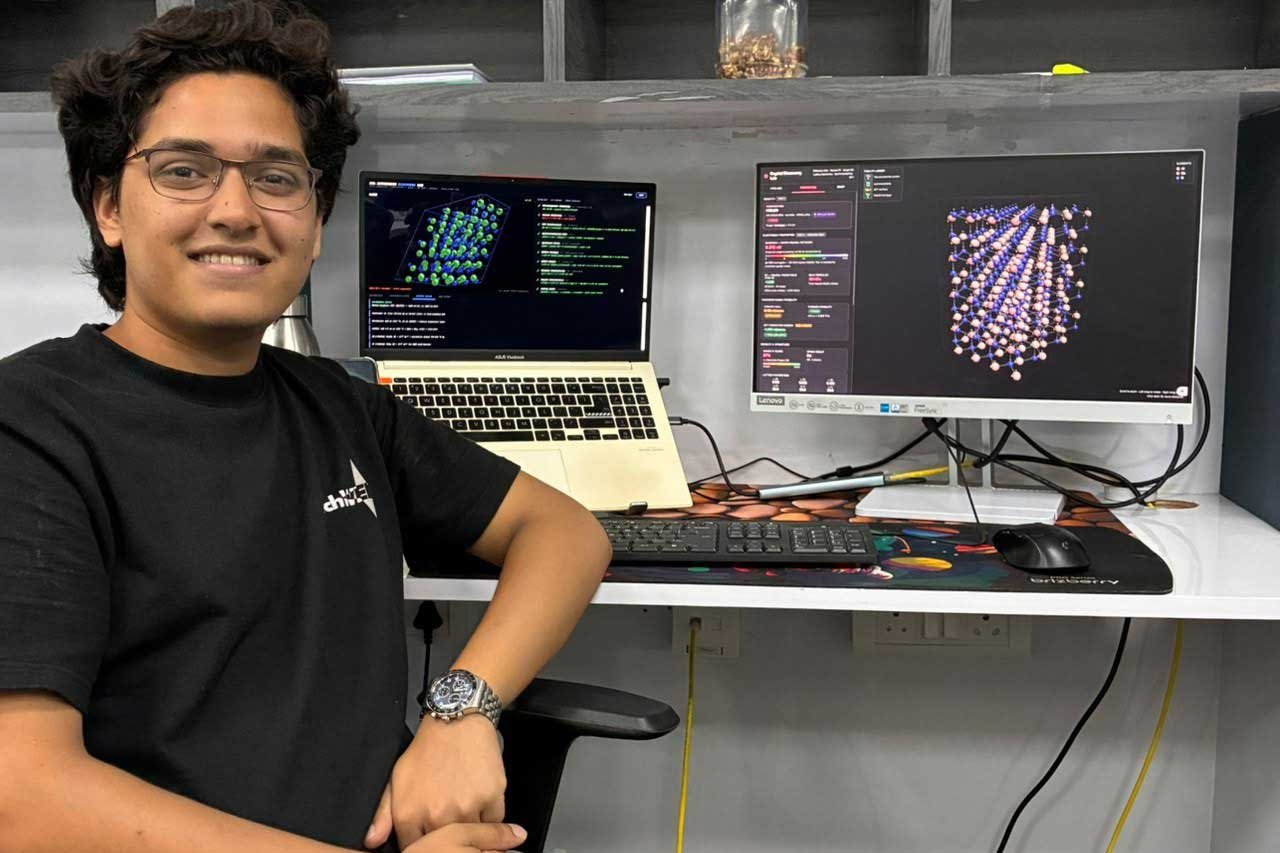
NovAtom’s ambition goes well beyond a smarter copilot. The founders say they aim to develop self-driving research laboratories in India — labs where AI systems work alongside scientists to analyse knowledge, design and prioritise experiments, learn from experimental outcomes, and continuously help determine the next direction of research. It is a vision in which the scientist sets the question and the system handles the search through candidate space, at a pace no human team could match by hand.
The campus ecosystem is backing that bet. Following a runner-up finish at SEEP 4.0, NovAtom Labs is set to incubate at BITS Hyderabad, giving the young team the mentorship, workspace and institutional support to turn a student project into a serious research-infrastructure company. From two students’ hostel-room experiments to engagements with semiconductor researchers in India and abroad, the journey already shows how quickly student-led innovation can grow when it solves a problem researchers genuinely feel.
If NovAtom succeeds, the payoff is measured not in one product but in every product that follows: faster materials for chips, cleaner processes for chemicals, and shorter paths from a research question to a working answer. The lab of the future may still have scientists at its centre — but the searching, screening and deciding around them is about to get a great deal faster.
Keep reading: The Voice That Speaks Your Language: Inside Vaani’s Self-Serve Platform for India’s Phone Calls · Meaning First, Not Word by Word: Inside NeuroDX’s Sphota, India’s Brain-Inspired AI Model · More Industrial Automation & Technology stories
Like stories like this? Add Exceptional Technology as a preferred source on Google to see more of our reporting in your search results and Discover feed.