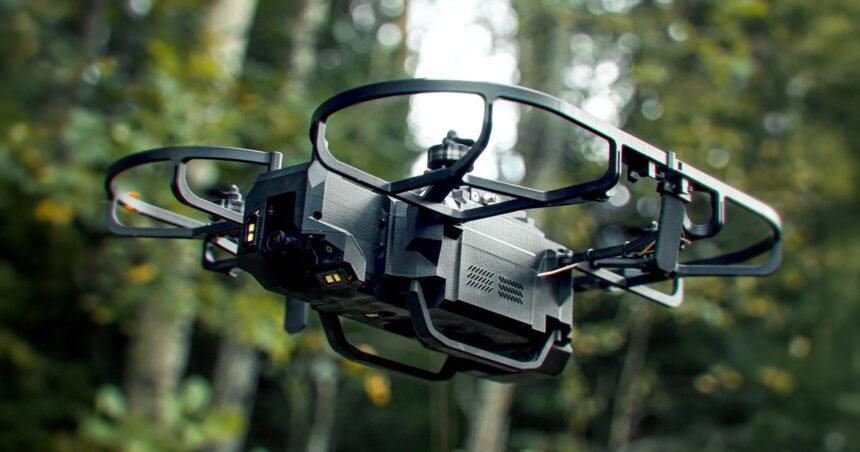
Image credit: XTEND — official company visual of the Scorpio 500, one of the tactical platforms MCRAY will manufacture in India.
India’s armed forces and security agencies could soon draw their tactical drones from a brand-new Indian production line. On 3 November 2026, Magellanic Cloud Limited of Hyderabad announced that the premises for its joint venture’s advanced unmanned aerial vehicle (UAV) manufacturing and testing facility are ready — the moment a defence-manufacturing plan announced in April 2026 turns from paperwork into a working factory floor.
The facility belongs to MCRAY XTEND INDIA Private Limited (MCRAY), the joint venture Magellanic Cloud formed with Rayonix Tech in collaboration with Israel-based XTEND. Magellanic Cloud holds a 60% equity stake in MCRAY, and the company says the venture is positioned as the exclusive manufacturing and distribution partner in India for select platforms running on XTEND’s proprietary XOS operating system.
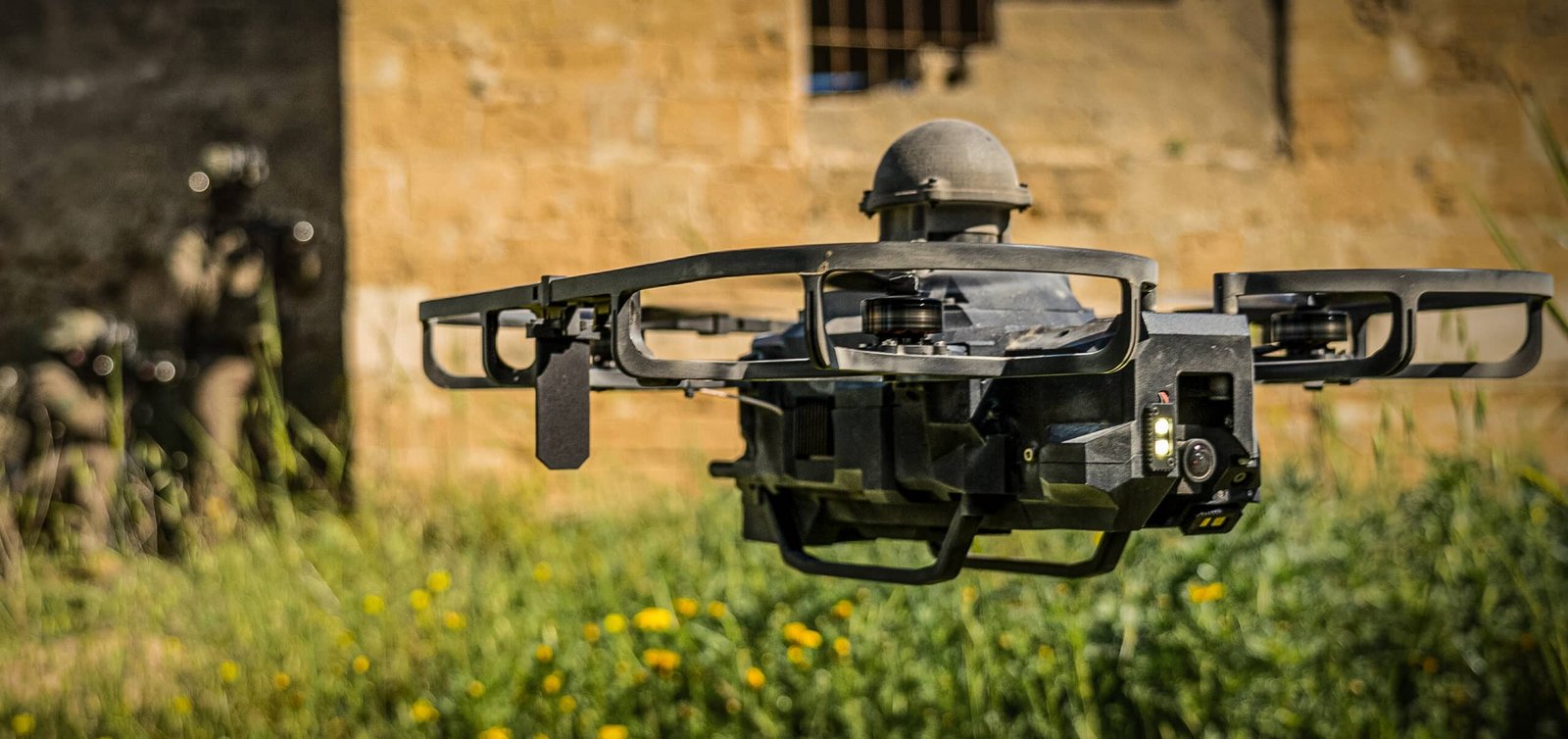 XTEND’s Scorpio tactical drone in flight — the kind of XOS-powered platform MCRAY’s new Indian facility will manufacture, assemble and test (official XTEND visual).
One roof, from assembly to flight test
The company says the facility is designed to bring the whole production chain under one roof: manufacturing, assembly, system integration, calibration, testing, flight testing and distribution of tactical drone systems. Production and testing capabilities will be deployed in phases, with commercial operations commencing progressively in line with Indian defence and security requirements.
That single-roof approach is the heart of the story. Building, calibrating, integrating and flight-testing a tactical drone in the same facility means the systems bound for India’s forces are proven in India, by an Indian venture, before they ever reach the field.
More Read

The drones it will build
The company says MCRAY’s planned portfolio covers the missions modern forces ask of small autonomous aircraft:
- Wolverine — AI-assisted tactical and combat operations.
- Scorpio 500 and Scorpio 1000 — precision strike capabilities and extended-range reconnaissance.
- XTENDER — micro-ISR indoor and outdoor surveillance in GPS-denied environments.
- Honey Badger — counter-drone and perimeter security operations.
Every one of these platforms runs on XTEND’s XOS operating system, which the company says delivers AI-assisted human-guided autonomy, autonomous navigation and unified multi-domain robotic control. One software backbone across the fleet means operators command different aircraft through a single, coherent system — human judgment stays in charge, while the machines handle the flying.
Why this matters for India’s defence
The company says the project aligns with Aatmanirbhar Bharat objectives and positions it to participate in government defence modernisation initiatives. Local manufacturing of advanced autonomous systems means the technology, the skills and the support chain grow in India: the venture’s proposed model combines tactical platform sales with software licensing, localised maintenance, repair and overhaul, and lifecycle support services.
The company also says the new platforms and their autonomous software architecture may complement its existing AI surveillance ecosystem (iVIS) and drone capabilities (Scandron), weaving the facility into a wider Indian defence-technology story. And looking further ahead, the company says the collaboration may support future export opportunities, subject to applicable approvals.
From a joint venture announced in April to a ready facility in November, MCRAY’s journey has been swift. The premises are ready, the portfolio is set, and the phased rollout has begun — India’s tactical drone story now has a new factory to call home.
Keep reading: Built Without the Blueprints: Inside izmo Microsystems’ Indigenous Pitch Detector for India’s Fighter Jets · Seeing Through Cloud and Darkness: Inside PierSight’s Varuna, the Ahmedabad Satellite Constellation Watching the Oceans · More Aerospace & Defense stories
Like stories like this? Add Exceptional Technology as a preferred source on Google to see more of our reporting in your search results and Discover feed.