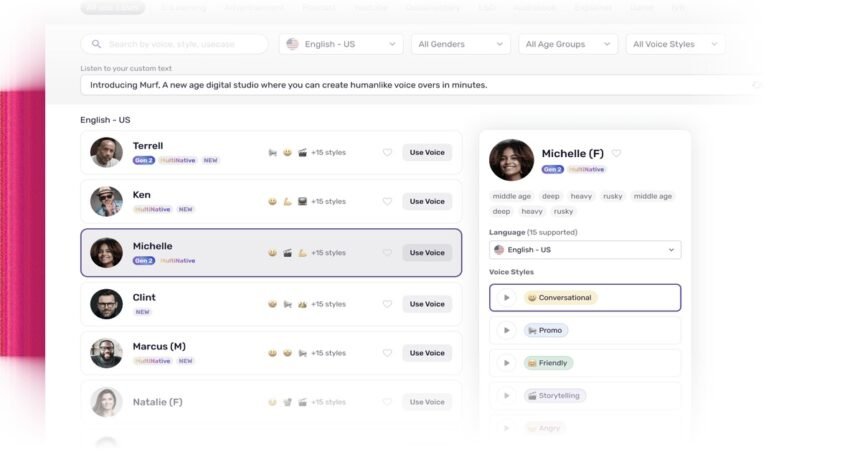
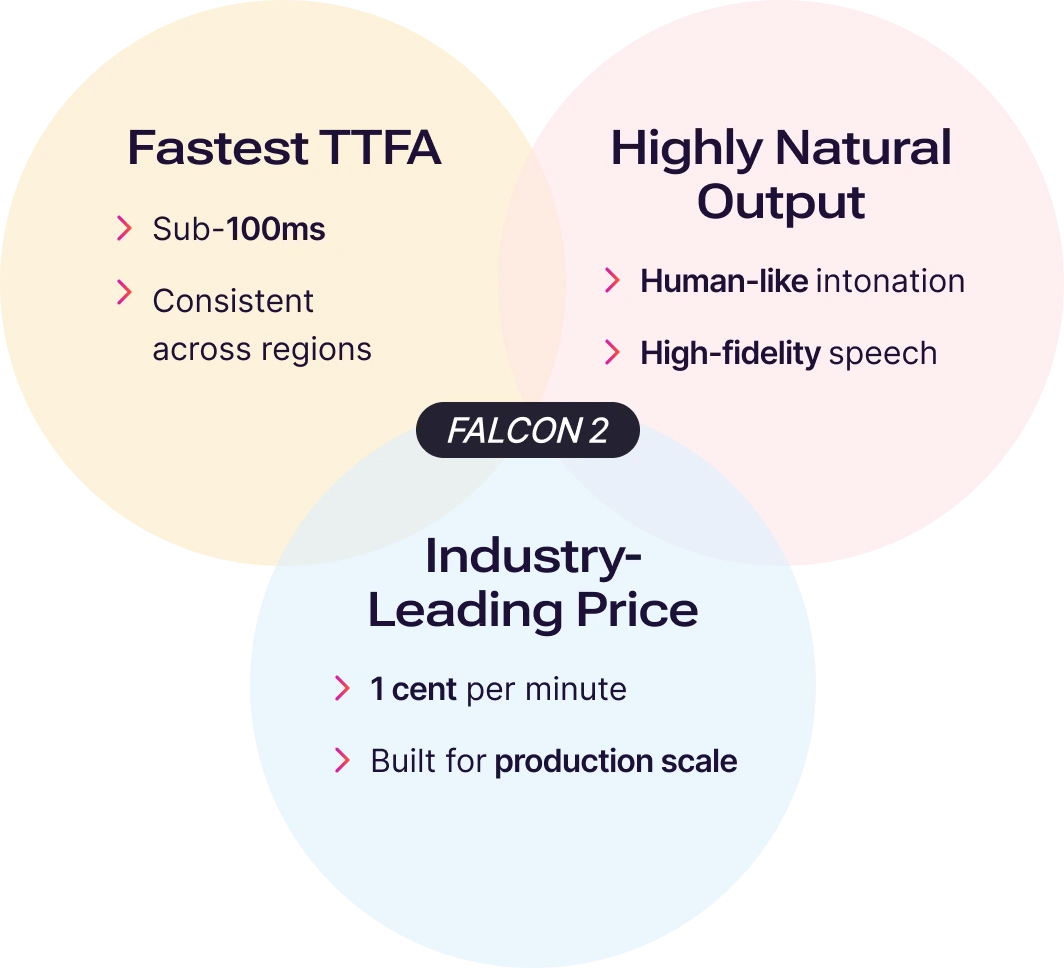
A caller rings a bank, asks a question, and waits. One second of silence is awkward; two feels broken. The entire promise of a voice agent lives or dies in that gap — and it is exactly the gap a Bengaluru company decided to close. Murf AI’s Falcon 2, publicly available since 20 August 2026, starts speaking in under 100 milliseconds, and the company’s live production median sits at 95 milliseconds. It is a voice model built for real conversations, not demos — and on an independent benchmark, it now outscores the best-known names in the business on how natural it sounds.
Murf AI was founded in 2020 by three IIT Kharagpur alumni — Ankur Edkie, Sneha Roy and Divyanshu Pandey — and its engineering and research teams are based in Bengaluru. What began as a voiceover studio for creators has grown into a voice platform that the company says is used by more than 10 million people and over 300 companies, and Falcon 2 is the model that takes it into the high-stakes world of live voice agents: call centres, banks and customer support lines, where a voice has to sound human, respond instantly and hold up at scale.
Outscoring the giants on naturalness
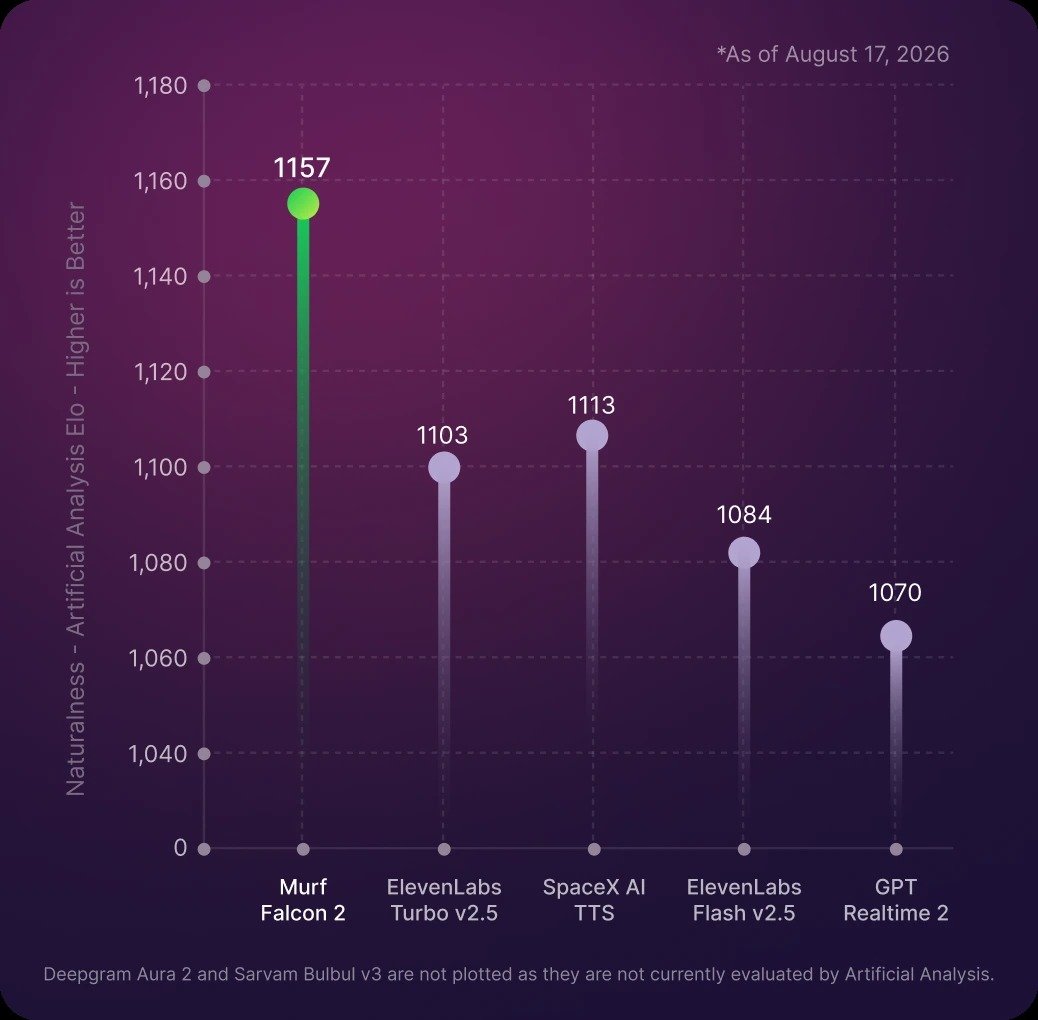
The headline number comes from the Artificial Analysis Speech Arena, an independent benchmark that ranks speech models by listener preference. On its naturalness scores, Falcon 2 posts an Elo of 1157 — ahead of ElevenLabs Turbo v2.5 at 1103, ElevenLabs Flash v2.5 at 1084 and OpenAI’s GPT Realtime 2 at 1070. The company says Falcon 2 scores above the real-time voices from ElevenLabs, OpenAI and xAI on naturalness, and the chart tells the same story at a glance.
The model was trained on real-world interactions — live customer calls and booking flows — rather than scripted narration alone, which is why it handles the messy middle of a conversation: the pauses, the emphasis, the sentence that changes direction halfway through. A deeper semantic layer reads the meaning of each sentence and shapes pacing, emphasis and pronunciation around it, so the voice lands like a person thinking aloud rather than a machine reading a line.
Faster than a blink, for a fifth of the price
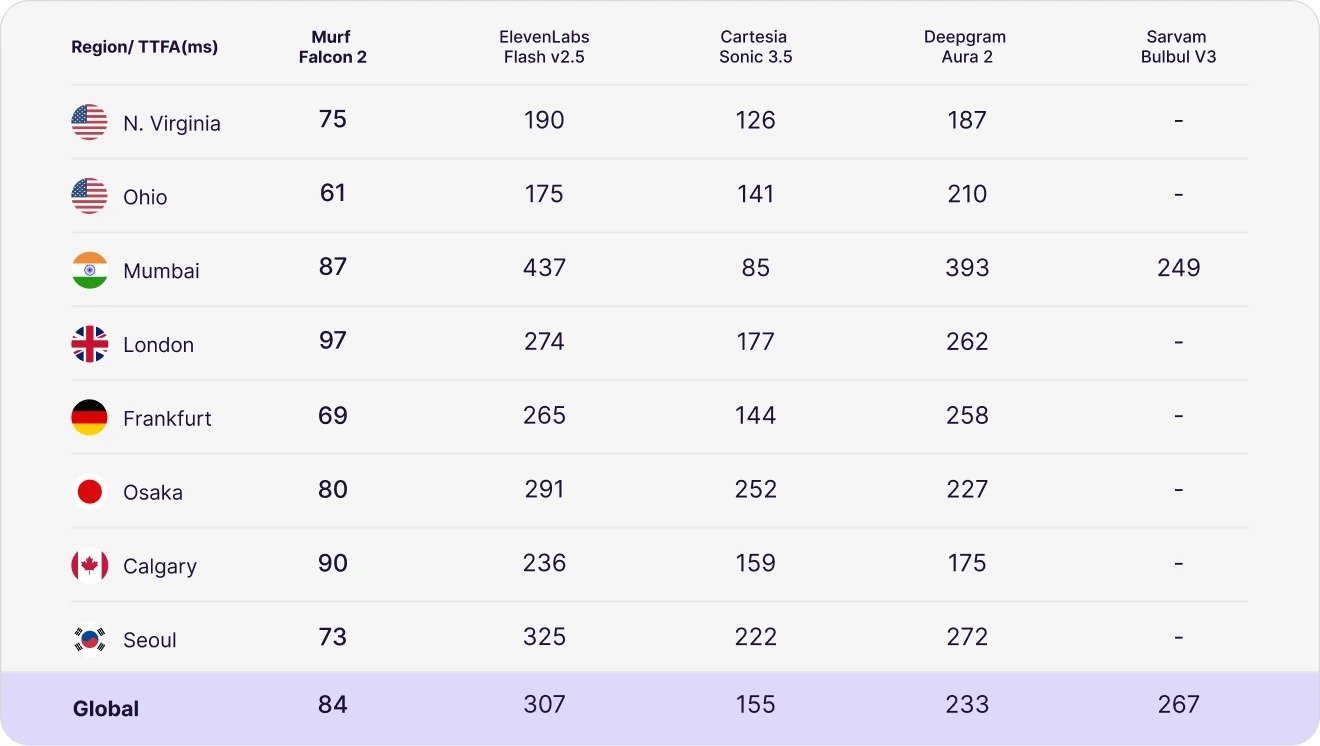
Speed is where Falcon 2 turns a good voice into a usable one. In latency tests run through a third-party geo-distributed relay, the model recorded a global median time-to-first-audio of 84 milliseconds — against 307 milliseconds for ElevenLabs Flash v2.5, 155 for Cartesia Sonic 3.5, 233 for Deepgram Aura 2 and 267 for Sarvam Bulbul v3. In Mumbai it answered in 87 milliseconds. The company’s live 30-day production median is 95 milliseconds, with a 99% uptime guarantee behind it.
Then there is the price. Falcon 2 costs 1 cent per generated minute — a fifth of the 5 cents charged by ElevenLabs Turbo and Flash. Over a million minutes of generated speech, the company says, that is $10,000 against $50,000. Since launch, the model has already processed more than 250 million characters in production, and the economics are the point: a voice agent that sounds this good stops being a premium experiment and starts being something a business can run on every call.
More Read

Built for the way India actually talks
Falcon 2 speaks in more than 150 voices across 35-plus languages, with some of the widest coverage of Indian languages among the leading real-time voice models — and it handles code-mixed conversations, the Hindi-English blends that fill real Indian phone calls, with smoother transitions than a model trained on one language at a time. For enterprises, it can clone a brand voice from just 10 seconds of spoken audio, created only with the speaker’s explicit consent, so a company’s voice agent can sound like the company itself.
The enterprise plumbing matches the ambition: up to 10,000 concurrent calls at stable latency, data residency across 11 geographies and on-premise deployment for organisations that need full control. The model is aimed squarely at the places where voice is the business — contact centres, banks and support operations — and it is priced to be deployed there at full volume.
The model keeps getting faster
Falcon 2 is not standing still. On 19 October 2026 Murf made Falcon 2.1 the streaming model on its Stream Speech and WebSocket endpoints, with lower latency and fewer artefacts — existing integrations upgrade automatically, since the old Falcon 2 model IDs now route to it. The update added inline IPA pronunciations and pronunciation dictionaries, per-word timestamps and a loudness control, and the company puts its pronunciation accuracy at 99.37%. A real-time speech-to-text API followed in beta on 22 October, splitting on 2 November into Finch-Indic and Finch-Global models. It is a fast-moving roadmap from a team that shipped its first Falcon model in November 2025 at 55 milliseconds of model latency — and has been shaving the gap ever since.
“Falcon 2 is competing directly with established global models on independent benchmarks, while being engineered around the economics and deployment requirements of enterprise production,” Murf AI says. A Bengaluru voice, answering in under a tenth of a second, at a cent a minute, in 35 languages — that is an Indian engineering story the rest of the world is now listening to.
Keep reading: The Eyes on a Thousand Factory Lines: Inside Frinks AI’s Vision AI for Zero-Defect Manufacturing · Two Minutes to Catch a Hacker: Inside BluSapphire, the Hyderabad Platform Guarding 500 Enterprises · More Industrial Automation & Technology stories
Like stories like this? Add Exceptional Technology as a preferred source on Google to see more of our reporting in your search results and Discover feed.