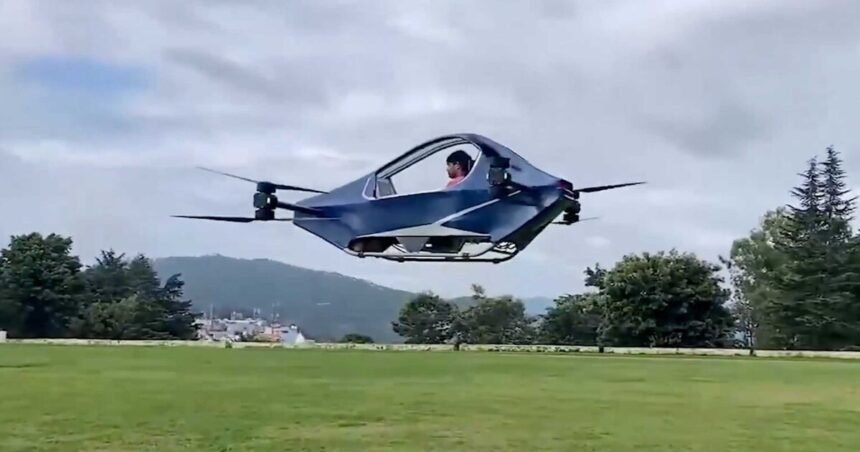
In Kaflikhan, a village near Jageshwar Dham in Uttarakhand’s Almora district, getting to a hospital can mean hours on winding mountain roads. Ravi Tamta grew up watching that journey — and decided to skip the road entirely. On 7 August 2026, the 21-year-old climbed into a single-seat electric aircraft he had built himself, lifted off from an Army helipad in Almora, and flew it for nearly a minute while district officials watched.
The aircraft is the HAPIDA SKYNeX, built under Tamta’s startup, Hapida Sky Private Limited. It is a fully electric, zero-emission personal flying vehicle designed to carry one person, and its first test flight made its builder the talk of the country — a Bachelor of Arts graduate with no engineering degree who taught himself to build a flying machine.
Tamta’s interest in flight began in 2015, when he was still a teenager. With no formal background in science, engineering or aviation, he learned from online resources, independent study and hands-on experimentation — thirteen years of it, with his family behind him. His father, Harish Ram, is a mechanic, and the workshop at home became the young inventor’s first laboratory.
A flying machine built like a giant drone
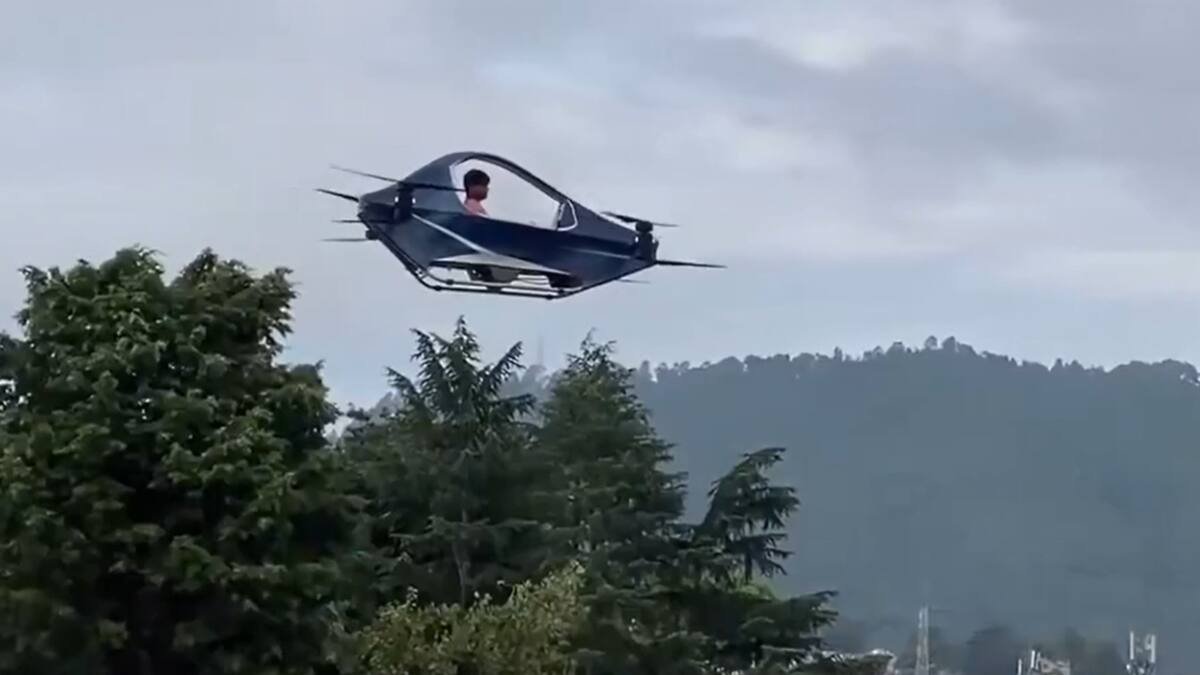
The SKYNeX is built around the same idea as a multirotor drone, scaled up to carry a person. Multiple electric motors and propellers generate the lift, its vertical take-off and landing design needs no runway at all, and the battery-powered system uses no aviation fuel. The single-seater has a lightweight frame and a transparent canopy, with the pilot sitting at the centre of the machine.

The design is deliberately simple: no runway, no fuel, no infrastructure beyond a patch of open ground. That is the whole point. In the hills, where a 40-kilometre journey can take ninety minutes by road, a machine that rises straight up changes what “nearby” means. Tamta says the hop between Almora and his village Kaflikhan — about 40 kilometres by road — could take roughly twelve minutes in the air.
Thirteen years of teaching himself to fly
The flying car was not Tamta’s first invention. His earlier work includes shoes designed to charge mobile phones, a smart walking stick for people with visual impairments, a bamboo-splitting machine and firefighting equipment, including a fire extinguisher developed for the Forest Department. His farm innovation, the Hapida BioPeat machine, won ₹25 lakh in Government of India support at IIM Kashipur’s UTTISHTHA entrepreneurship programme.
More Read

Each project was a lesson in the next one: how to learn a technology from scratch, how to build it with whatever is at hand, and how to keep going when the first version does not work. The SKYNeX is the biggest lesson of all — thirteen years of self-taught engineering, distilled into a machine that lifts its maker off the ground.
What comes next
Since the flight, the recognition has followed. Uttarakhand Chief Minister Pushkar Singh Dhami congratulated Tamta publicly, and Tamta has since met Union Civil Aviation Minister Ram Mohan Naidu and Union Road Transport Minister Nitin Gadkari to discuss the idea. He says he is in talks with the Directorate General of Civil Aviation as the project moves towards more testing and a formal approval pathway.
Tamta’s goal for the SKYNeX is short-distance travel in the hills — reaching remote areas and medical emergencies that the roads serve slowly, or not at all. The prototype has flown once, with its builder aboard, and the work now is more flight testing, more refinement, and the long road through certification.
A boy from a Himalayan village taught himself to build a flying machine, and on an August morning in Almora, it flew — with him in it. The road to the sky from Kaflikhan just got a little shorter.
Keep reading: Medicines Over Mountains: Inside TechEagle’s Vertiplane X3 Drone Delivery Network · You Can Now Book a Return From Space: Inside Catalyx Space’s ReX Orbital Return Vehicles · More Aerospace & Defense stories
Like stories like this? Add Exceptional Technology as a preferred source on Google to see more of our reporting in your search results and Discover feed.