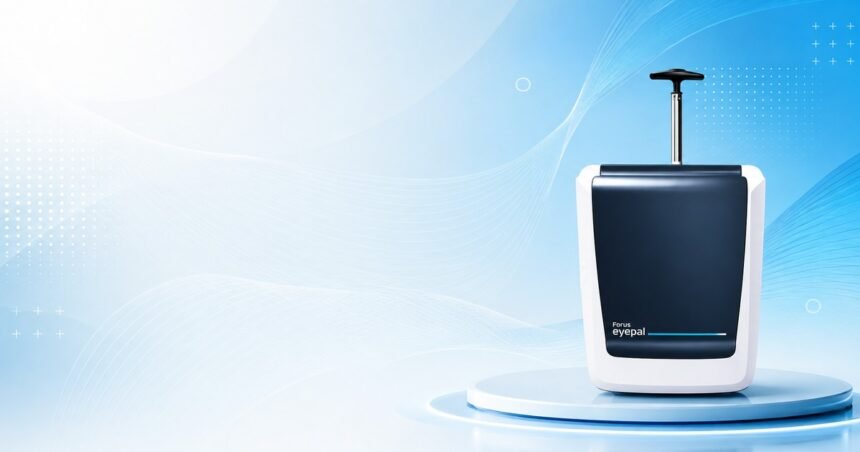
For most Indians, a thorough eye examination still means a trip to a hospital in a city — a journey many simply never make. In November 2026, Bengaluru’s Forus Health announced a product built to close that gap: FH eyepal, a portable digital eye clinic that packs a complete eye examination into a wheeled case, and sets it up wherever the patient happens to be.
The kit turns a primary health centre, a village schoolroom, a corporate office or a living room into a working eye clinic within minutes. A trained healthcare professional arrives with the case, runs the full examination, and the patient leaves with a digital report — and, where needed, a teleconsultation with an ophthalmologist.
Three devices, one complete check-up
FH eyepal is built around three of Forus Health’s 3nethra devices, each handling one part of the examination. The 3nethra aberro is an advanced aberrometer that measures refractive errors and higher-order aberrations, using wavefront analysis and pupil-size measurement to work out precisely how a patient sees. The 3nethra specto is a portable fundus camera that photographs the retina, looking for diabetic retinopathy, glaucoma and macular degeneration. And the 3nethra pico is a handheld slit lamp for the front of the eye, examining the anterior segment for cataracts and corneal conditions.
Together they cover the whole workflow of a hospital eye examination: vision assessment, refractive error testing, retinal imaging, anterior segment examination and intraocular pressure measurement. The devices link to each other over Bluetooth, so the examination keeps running even where the internet is patchy — a practical detail for village camps and rural health centres. The company says the screening report reaches the patient on WhatsApp.
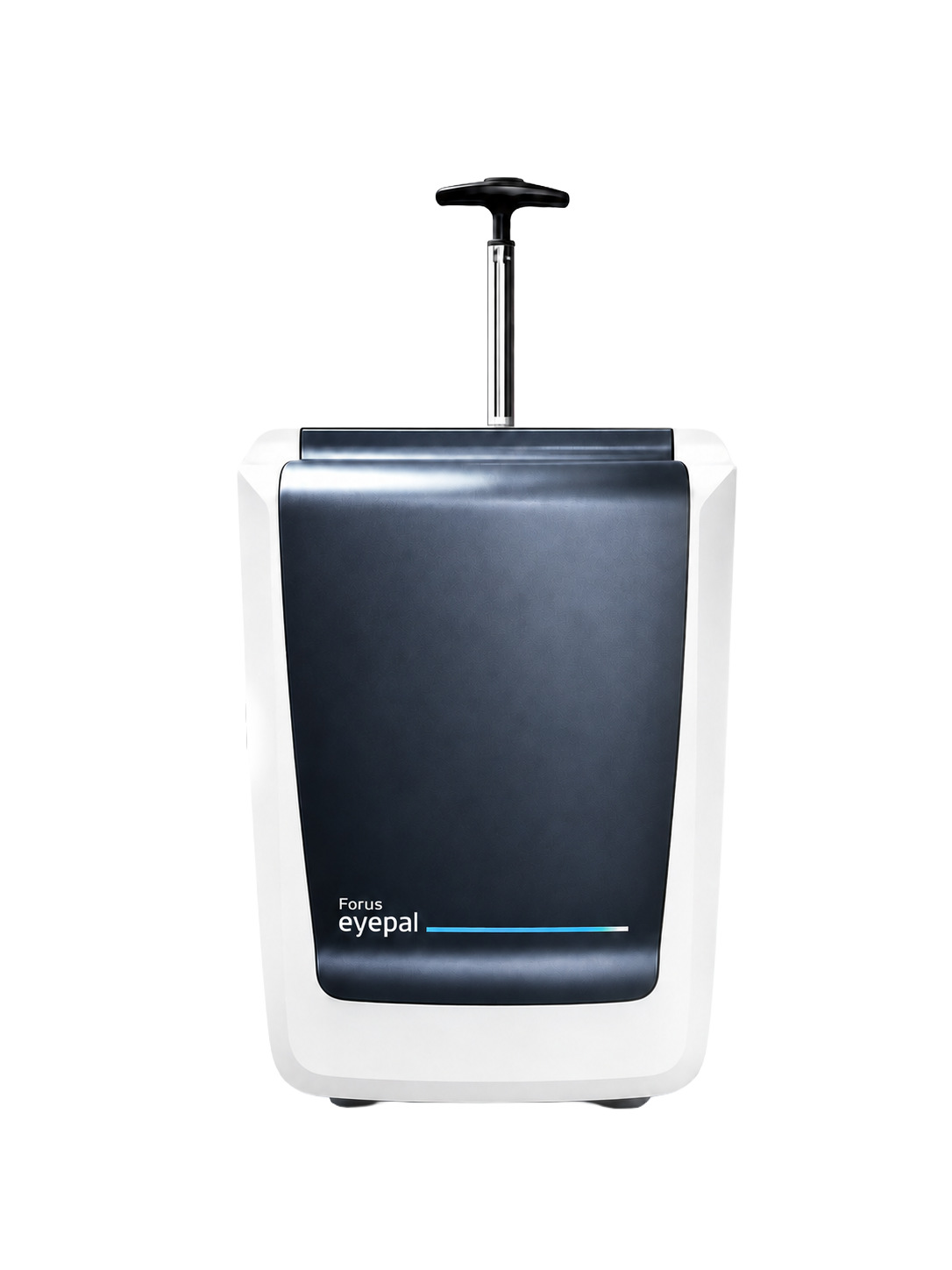 The FH eyepal kit. Image: Forus Health.
The AI that reads the retina
At the heart of the kit is FH-POISE, Forus Health’s proprietary artificial intelligence platform. As the retinal images come in, FH-POISE analyses them in seconds, flagging patterns linked to sight-threatening conditions so clinicians can decide quickly who needs a referral. The company says its clinically validated AI models reach 99% accuracy.
More Read
Every examination feeds into a single digital patient record on the company’s Digital Health Platform, and FH TeleCare connects the patient to an ophthalmologist by secure video consultation for diagnosis, a digital prescription and follow-up care — without the patient having to travel to a hospital at all.
Built for where the hospitals aren’t
Forus Health is positioning FH eyepal for primary healthcare centres, community screening programmes, corporate wellness drives, vision camps, mobile healthcare units and home-based care. The company says it wants to partner with eye hospitals, healthcare institutions and governments to take eye care beyond hospital walls.
The people it is designed for tell the story of the problem: elderly and homebound patients, rural communities, children and students, diabetic patients who need regular retinal checks, and post-surgery patients who need follow-up without another long journey. Forus Health says its screening platform has already completed more than 6.2 million screenings across 2,500 locations, with 50,000 healthcare professionals using its technology.
Sixteen years of learning to see
FH eyepal is the latest chapter in a long story. Forus Health was founded in January 2010 by K. Chandrasekhar and Dr Shyam Vasudeva Rao, two former Philips colleagues who had heard a talk by Aravind Eye Care about preventable blindness — and decided to build the technology to fight it. Their first device, the 3nethra, was a compact, affordable retinal camera designed for the places big hospital machines never reach.
The approach worked far beyond India. NITI Aayog records that more than 20 million people have been screened with 3nethra devices across more than 75 countries, and the devices have been adopted into national and regional screening programmes in over 35 countries. Microsoft, which worked with the company on cloud-based AI analysis, reported more than 3,500 installations in over 50 countries and around two million people saved from blindness caused by diabetic retinopathy, macular degeneration and cataracts. The company says its 3nethra range is now deployed in more than 85 countries, and its 3nethra Neo device screens premature babies for retinopathy of prematurity.
What comes next
FH eyepal takes that same idea — hospital-grade screening, built for the field — and extends it from a single camera to a whole clinic. A complete examination that once needed a hospital building, a room full of equipment and a specialist on site can now travel in a case, with the specialist joining by video.
For a country where so much avoidable blindness goes undetected simply because the nearest eye hospital is too far away, that is a quietly profound shift. The eye clinic no longer waits for the patient to come to it. Now, it comes to the patient — and it fits in a suitcase.
Keep reading: A Diagnosis in Thirty Seconds: Inside SigTuple, the Bengaluru Startup Automating the Microscope · From Burnt Stubble to Sunscreen: Inside altM, the Bengaluru Startup Turning Farm Waste Into Chemicals · More Chemicals, Materials & Life Sciences stories
Like stories like this? Add Exceptional Technology as a preferred source on Google to see more of our reporting in your search results and Discover feed.