


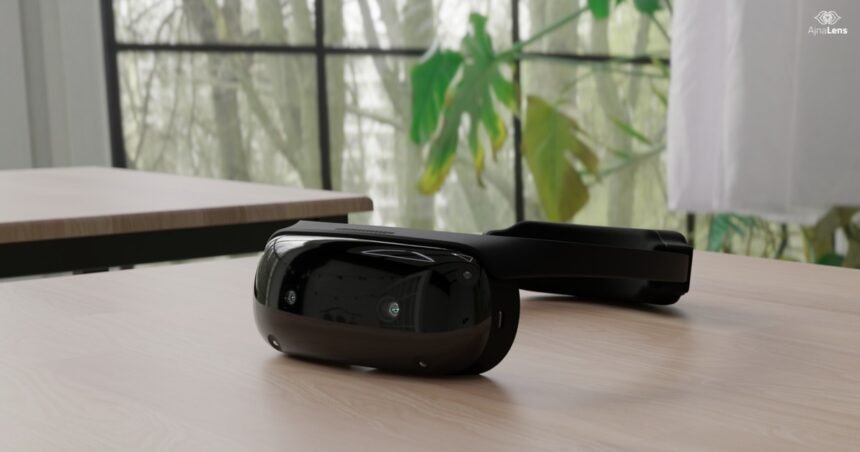
Most mixed-reality headsets are designed in California and assembled in China. AjnaLens’s are designed and manufactured in India — and they are already at work training Indian soldiers, welders and surgeons. The Mumbai startup is, the company says, India’s first and only XR hardware maker manufacturing AR and VR glasses in the country, and today it took its newest step beyond headsets: a service that puts hospital AI to work inside hospitals themselves.
AjnaLens is the flagship brand of Dimension NXG, a Mumbai-based deep-technology company founded in 2014. Born at IIT Bombay, the company is backed by leaders including Lenskart, and its name comes from ‘Ajna’ — the sixth chakra, the third eye, the seat of intuitive vision. It is a fitting name for a company whose whole business is helping people see more than their eyes alone can show them.
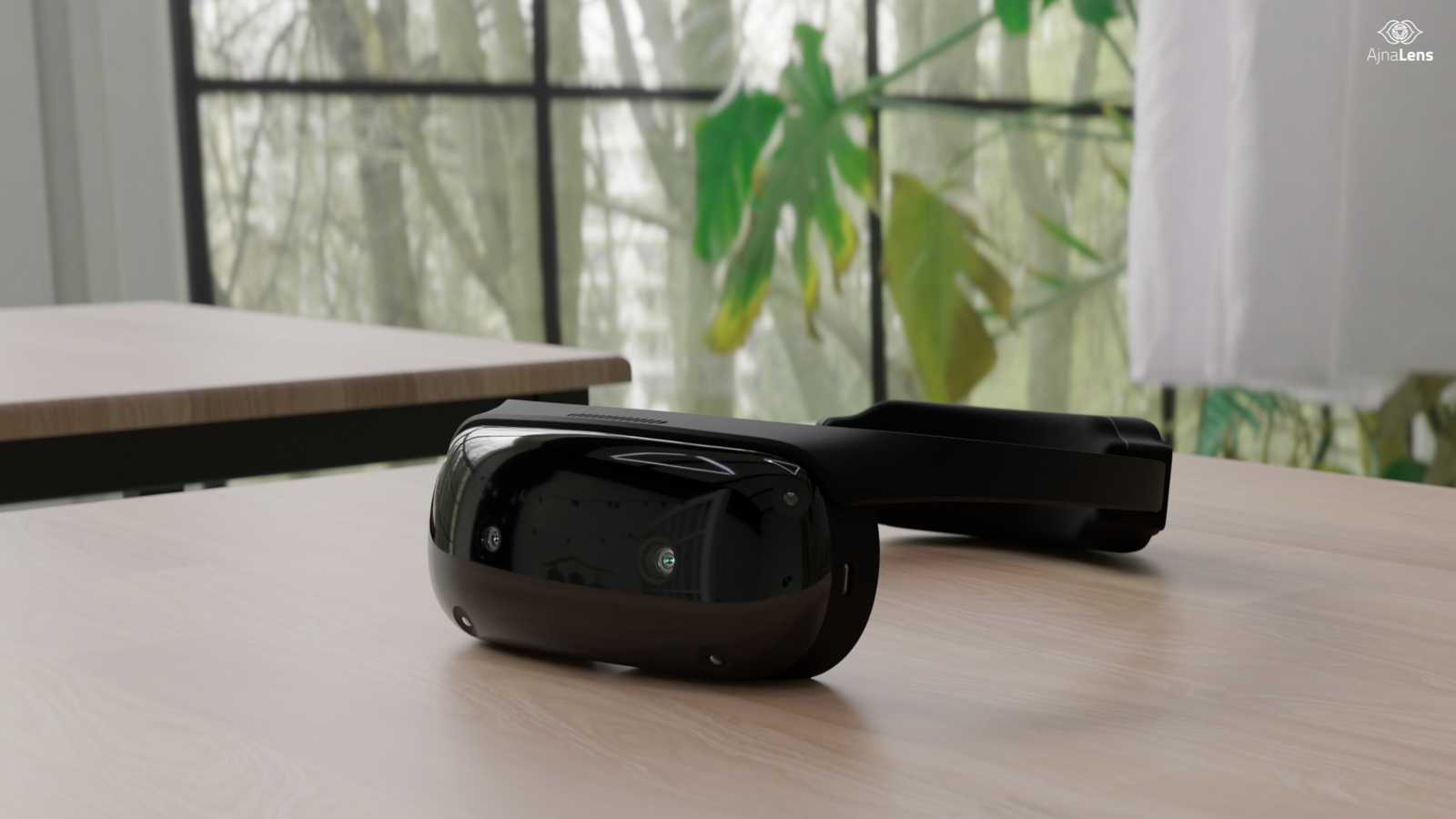
The headset India builds for itself
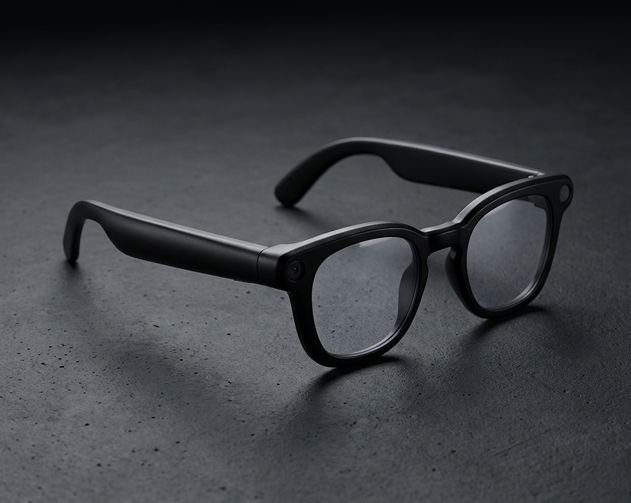
The company’s flagship is the AjnaXR, a mixed-reality headset that blends augmented and virtual reality into one device. The AjnaXR Pro runs on a Qualcomm XR2 chipset with 256 GB of onboard storage, 5K resolution and inside-out tracking, and the company calls it the world’s lightest mixed-reality headset. A lighter SE model sits alongside it, with the Pro priced at about ₹1 lakh and the SE at ₹85,000. The headsets run on Ajna Chakra, the company’s own Android-based operating system, and the company says its glasses weigh just 153 grams — a fraction of the roughly 500 grams of popular international brands.
The headset has collected recognition along the way: it was an honouree at CES 2023 in the virtual and augmented reality category, and AjnaLens won its third consecutive award at the India Mobile Congress Awards in 2024 for the AjnaXR and its AjnaVidya learning platform. The company has filed more than 15 patents in augmented reality and allied fields.
From barracks to classrooms
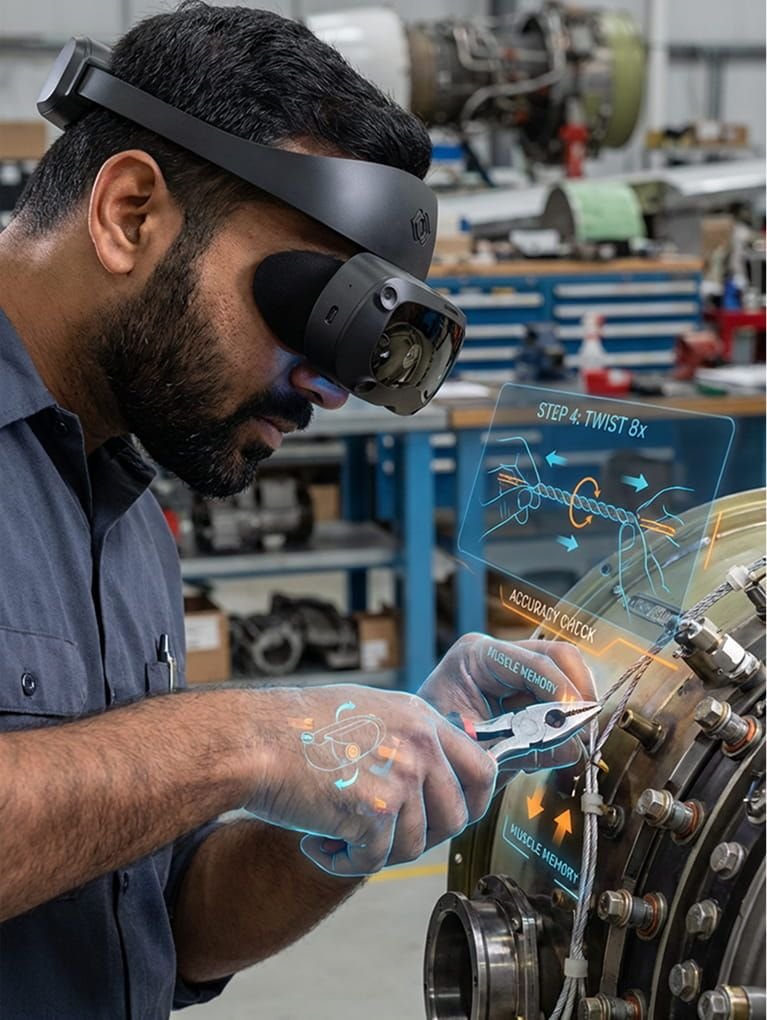
AjnaLens began in the defence sector, and its AR headsets are at work with the Indian Army, the Indian Navy and the DRDO, where immersive training and see-through-armour systems are already in use. From there the technology spread to factories and classrooms. With Tata Technologies, the company has digitised 150 industrial training institutes in Karnataka, and its headsets are now in use at more than 500 ITIs across India, helping over 72,000 trainees learn skills like welding, spray-painting and fitting in virtual workshops before they ever touch a real machine.
Behind the hardware sits AjnaVidya, an immersive learning platform where developers upload industry-validated courses that trainees anywhere can access. The client list now spans Tata Motors, Mercedes-Benz, Larsen & Toubro, Vedanta, Maruti Suzuki, ISRO and the Aeronautical Development Agency — a measure of how far a headset born for soldiers has travelled into Indian industry.
More Read

The newest chapter: AI inside hospitals
On 7 November 2026, Dimension NXG launched OJAS Forward Deployed Engineering, a new division that places engineering teams directly inside hospitals, health systems and government health programmes to take clinical AI from pilot to everyday use. Instead of sending patient data to an outside cloud, OJAS engineers deploy the AI inside the hospital’s own infrastructure, behind its own firewall and under its own access controls.
OJAS builds specialist AI models and workflows for healthcare — clinical documentation, dermatology, metabolic health and obstetrics and gynaecology among them — and it was developed with practising clinicians, including a collaboration with dermatologists at AIIMS, New Delhi, and peer-reviewed research published in 2026 on AI clinical documentation in Indian healthcare. The launch comes as India’s Digital Personal Data Protection Rules, notified in November 2025, require organisations to be fully compliant by May 2027.
For a company that started by putting new sight in soldiers’ eyes, the hospital is a natural next frontier: the same belief that technology should work where the real work happens, whether that is a barracks, a factory floor, a classroom — or a hospital ward. India spent decades importing its reality headsets. AjnaLens is building the one India wears instead.
Keep reading: The Ring That Knows What You Need Next: Inside Aina, the Bengaluru Startup Putting AI Agents on Your Finger · Intelligence, Engineered Into Silicon: Inside Azimuth AI’s ARKA GKT-1, India’s First Intelligent-Power Chip · More Industrial Automation & Technology stories
Like stories like this? Add Exceptional Technology as a preferred source on Google to see more of our reporting in your search results and Discover feed.







