


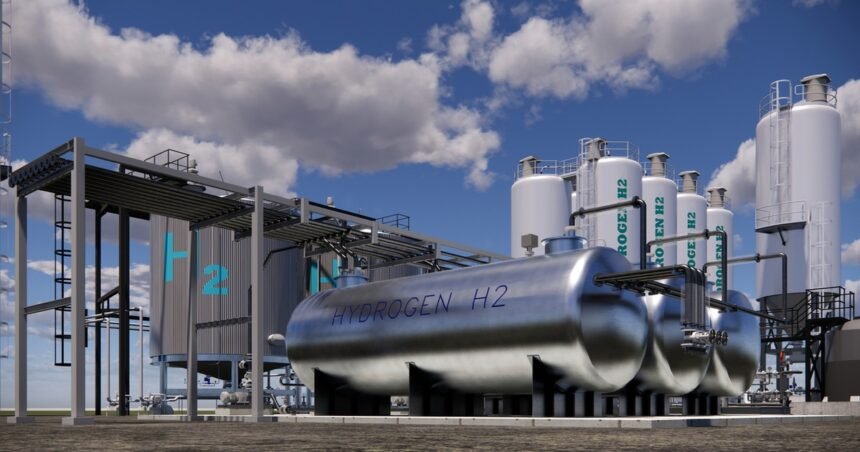
Most hydrogen is made with fire and steam. Enerzi makes it with microwaves. The Belagavi startup has spent two decades mastering industrial microwave engineering, and now it is putting that mastery to work splitting methane into clean hydrogen and solid nanocarbon — with no carbon dioxide coming out the other end.
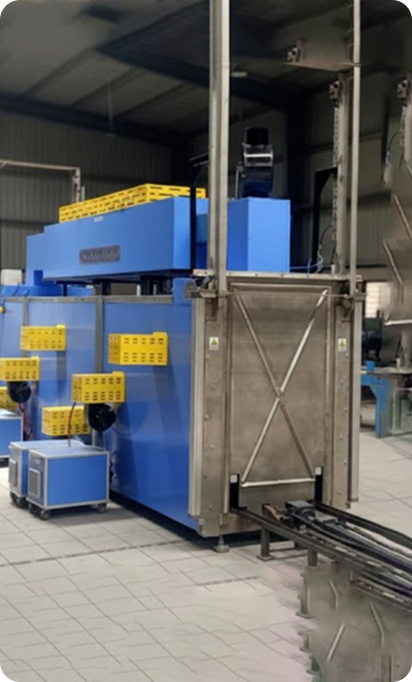
Enerzi, formally Enerzi Microwave Systems, builds machines that heat with microwaves instead of burners. Its industrial systems cure rubber, sinter ceramics and dry foundry cores using 30–40% less energy than conventional alternatives, the company says, and its newest bet is a microwave-plasma reactor that turns methane into hydrogen and nanocarbon in a single step. A ₹16.5 crore seed round led by Capital-A, announced in November 2025, is funding the scale-up — and a commercial plant roughly ten times the size of its pilot facility is next.
Two decades of microwaves before the hydrogen
Founder Prakash Mugali grew up in a small town not far from Belgaum, studied at a government school, and went on to study electronics and communications engineering at KLE Society’s College of Engineering and Technology. He turned down the safe IT job from campus placement to build things instead. In December 2003 he started a small manufacturing unit making measuring devices. Two years later he met MS Krupashankara, who had just returned from the US looking for a team in India to build industrial microwave components — and Mugali’s team spent 2005 to 2007 learning the craft, making solo, grill and convection microwaves on top of its instrumentation business.
By 2007 Mugali was confident enough to pivot the whole company to microwave technology. The years since have been about turning a laboratory capability into an industrial one: turnkey microwave systems for rubber processing, ceramic sintering and drying, food disinfestation that clears pests from grain, and sintering furnaces for laboratories. The company’s clients range from defence laboratories to research institutions, and its chief executive today is Kirankumar Hittalmani, who first joined as a junior engineer in 2004, built a career in the automotive sector, and returned to run the company.
Splitting methane with plasma
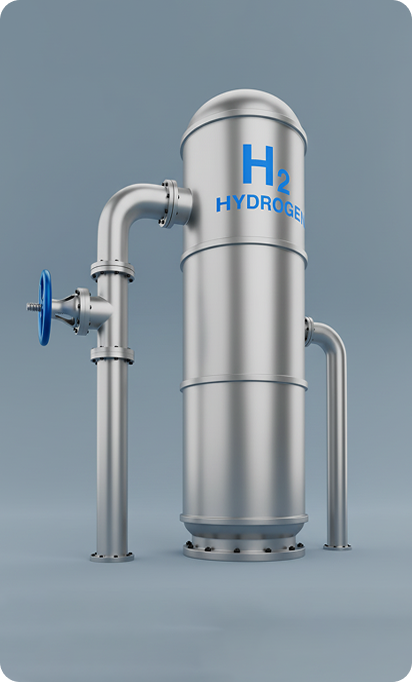
The hydrogen platform is the sharp end of all that microwave know-how. Enerzi’s reactors use microwave plasma to split methane — piped natural gas is the feedstock, though the system is designed to be raw-material agnostic — into hydrogen gas and solid carbon nanopowder. Because the carbon comes out as a solid instead of a gas, the process releases no direct carbon dioxide, and Mugali says it uses significantly less electrical energy than electrolysis.
The solid carbon is not a waste stream; it is the second product. The nanocarbon powder has uses in batteries, composites, coatings and advanced materials, and selling it alongside the hydrogen is what makes the economics work. Enerzi has been working on microwave plasma for over a decade — the breakthrough came, unexpectedly, from building microwave plasma components for the lab-grown diamond industry — and its pilot plant is a 20-tonne-a-year unit on the outskirts of Belagavi.
More Read
From bootstrapped to a ₹105 crore valuation
For 17 years Enerzi ran almost entirely on bootstrapped capital — about ₹3 crore in total. That changed with the seed round that closed in mid-2025: ₹16.5 crore led by Capital-A, India’s first manufacturing-focused venture fund, with 8x Ventures and angel investors joining in, valuing the company at ₹105 crore. Enerzi is also part of Maxcel, the hardware accelerator run by Capital-A and SanchiConnect.
The revenue trajectory backs the ambition. After years hovering at ₹2–3 crore, Enerzi crossed ₹10 crore in 2021–22 and closed its most recent financial year at ₹17.5 crore. The next round will fund the commercial plant, roughly ten times the size of the current pilot facility, and the company is hiring engineering and plasma-science talent to get there.
For a country racing to build a clean-hydrogen economy, Enerzi’s pitch is simple: the cheapest clean molecule is the one you make without burning anything at all. A small-town Karnataka company that learned to cook with microwaves is now aiming to make hydrogen — and the carbon that comes with it — a product India can build for itself.
Keep reading: Clean Panels, Zero Water: Inside Skilancer Solar’s Waterless Robots Keeping India’s Solar Farms Shining · More Miles From the Same Battery: Inside Epsilon’s Epsil, the Silicon-Graphite Anode Built in India · More Energy & Power stories
Like stories like this? Add Exceptional Technology as a preferred source on Google to see more of our reporting in your search results and Discover feed.







