


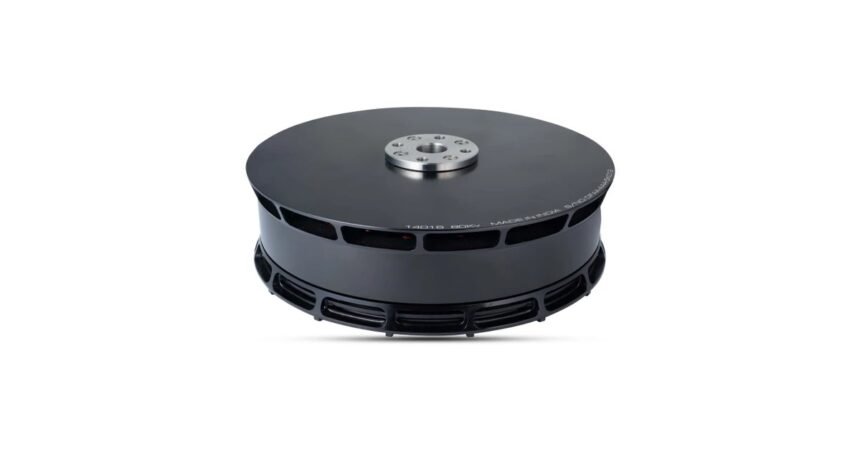
Every Indian drone has the same hidden dependency. The airframe can be designed in Bengaluru, the software written in Hyderabad, the mission flown by the Indian Army — but the parts that actually make it fly, the motors, the speed controllers, the propellers, have mostly come from somewhere else. In Hyderabad, one company has spent years removing that dependency, piece by piece, until nothing in the propulsion system needs to be imported at all.
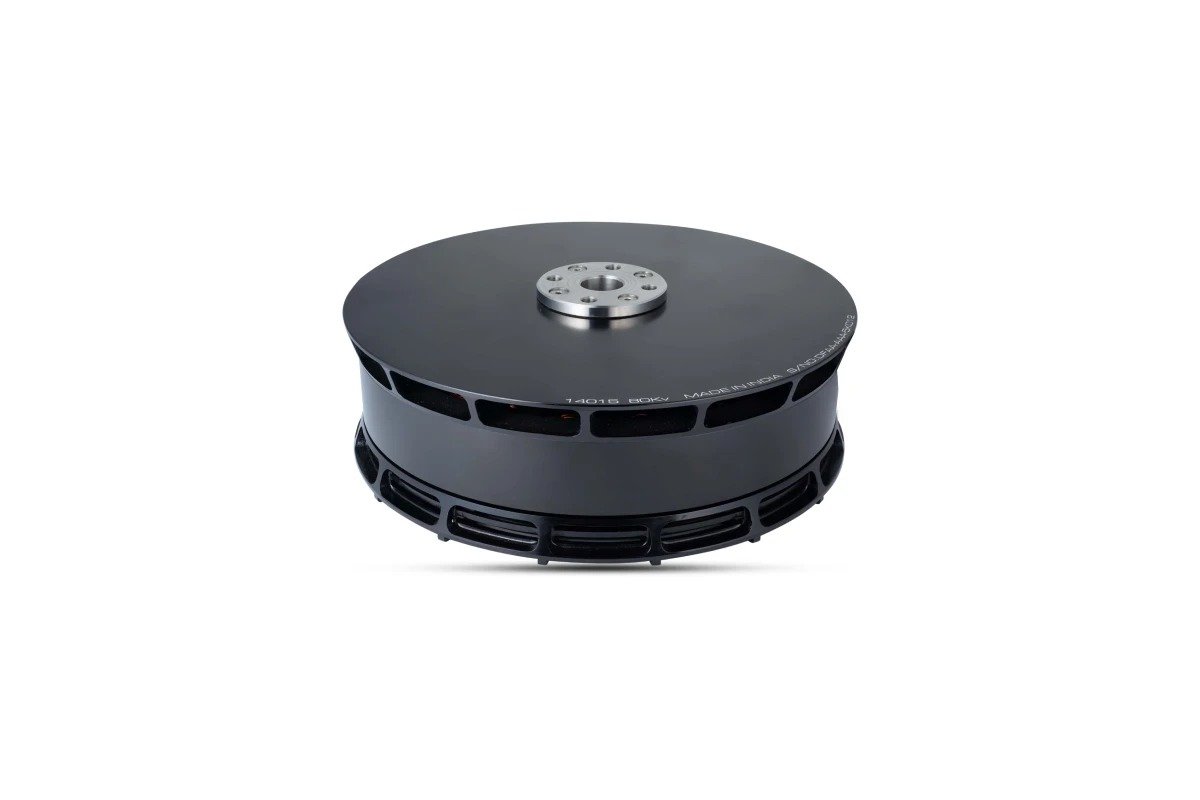
Vector Technics is a Hyderabad-based propulsion company and a subsidiary of listed defence major Zen Technologies. From a 26,000-square-foot integrated facility at Shamshabad, near Hyderabad’s international airport, it designs and builds the complete propulsion stack for unmanned aircraft — brushless DC motors, electronic speed controllers, carbon-fibre propellers, power electronics, IC engines and starter-generators — entirely in-house. The company says it is the only Indian manufacturer that makes every element of a drone’s propulsion system under one roof.
The dependency hiding inside every Indian drone
For a decade, India built world-class drones on a propulsion supply chain it did not control. The company says as much as 80% of the motors and controllers inside Indian drones traced back to Chinese-origin channels — a strategic dependency hidden inside an otherwise indigenous success story. Vector Technics set out to close that gap the hard way: by building the whole stack itself.
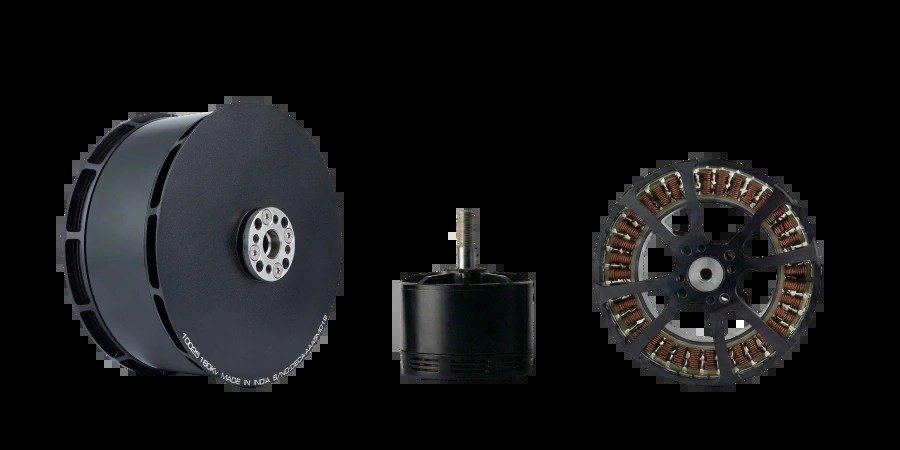
It winds its own motors, writes its own field-oriented-control firmware, machines its own components and designs and manufactures its own carbon-fibre propellers. The company says its systems use no Chinese parts and no imported firmware — the intellectual property, from electromagnetic flux geometry to power-conversion logic, lives in Hyderabad. Its propulsion already flies on frontline Indian defence programmes, and its customer list spans more than 200 drone and robotics makers across 19 countries.
One roof, one system
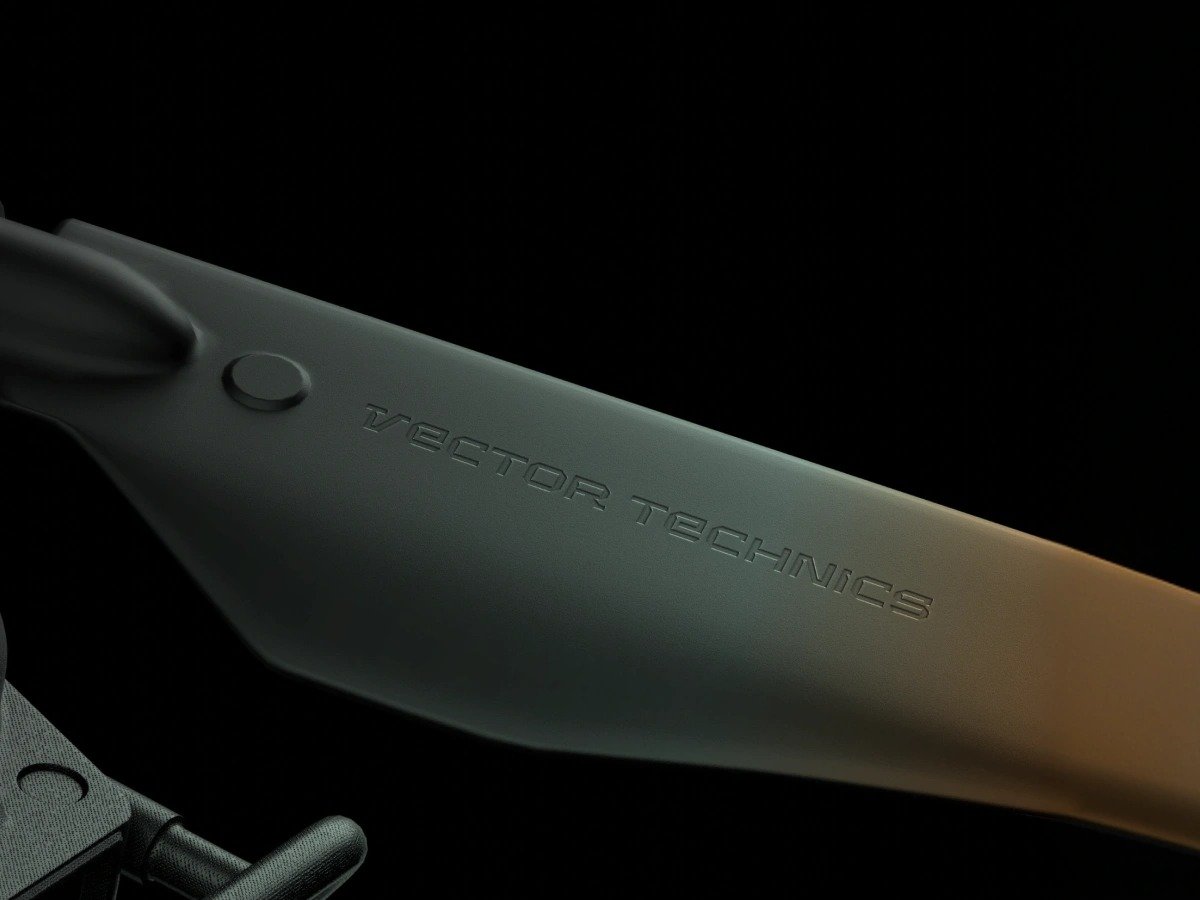
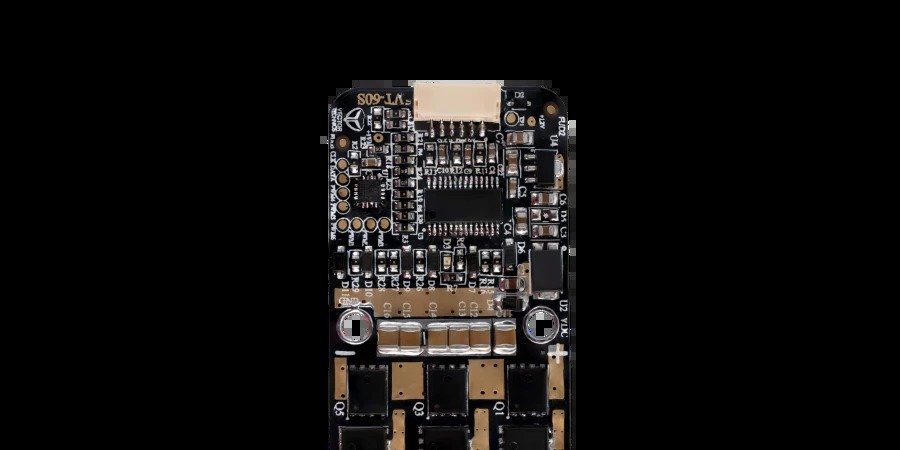
The catalogue covers the whole flight envelope. Its 27 BLDC motors, in Superlight and Professional lines, deliver thrust from under a kilogram to more than 100 kilograms per motor, for everything from FPV racers to heavy-lift cargo drones, fixed-wing long-range aircraft and VTOL platforms. Its carbon-fibre propellers run from 7 inches to more than 60 inches, engineered as part of the propulsion system rather than bolted on as an accessory. Its speed controllers use sensorless BEMF control with DShot300 and DShot600 input, in sealed IP65 housings, matched and tested with its own motors — so one supplier stands behind the whole propulsion set.
For long-endurance aircraft, the company builds 60cc, 170cc and 210cc boxer internal-combustion engines for hybrid VTOL and fixed-wing drones, with starter-generators already shipping. It has also moved into robotic actuators, from 20 mm to 160 mm in diameter, for the robot builders now coming to it. The Shamshabad plant has capacity for 300,000 propulsion units a year, and the company says it turns out more than 15,000 motors a month — including more than 1,300 custom motors delivered since 2025, each wound to a customer’s airframe.
More Read
Proven before it ships
Vector Technics’ proudest claim is not a specification but a process. The company says no design reaches its catalogue until it has run 1,000 hours on the bench and flown 100 hours without a crash, on thrust benches rated from 5 to 150 kilograms. Every production unit is then validated on three NABL-accredited thrust benchmarks before it ships, and its motors are dynamically balanced to better than G0.4, so vibration does not interfere with the IMUs, cameras and LiDAR payloads a drone carries.
The paperwork backs the process: the company is ISO 9001:2015 certified by TÜV SÜD, its PRO-series motors and speed controllers are qualified to MIL-STD-810G, an AS9100D aerospace audit is under way, and its group holds three granted Indian patents and three registered designs covering damped BLDC motors, propeller designs and modular UAV engine systems.
What comes next
“A drone is only as indigenous as what drives it,” says Prudhvi Raj Pakalapati, Vector Technics’ co-founder and chief executive. “We don’t promise indigenous propulsion. We prove it on three accredited benchmarks, before every unit ships.”
The bet is that propulsion is the choke point of India’s drone story — and that owning it end to end, from copper winding to flight test, is what turns a drone assembler into a drone power. With its hybrid engines, robotic actuators and a plant built to make 300,000 propulsion units a year, Vector Technics is positioning itself as the propulsion partner for the next generation of Indian drones, robots and unmanned systems. If it keeps scaling, the aircraft India flies next will lift off on motors that were designed, wound, coded and tested in Hyderabad.
Keep reading: Inside Trishul Space, the Prayagraj Startup Building a Plug-and-Play Rocket Engine for India’s Small Launchers · Upside Down in Hyderabad: Inside Axial Aero’s 360° Flight Simulator, Built by Fighter Pilots · More Aerospace & Defense stories
Like stories like this? Add Exceptional Technology as a preferred source on Google to see more of our reporting in your search results and Discover feed.







