


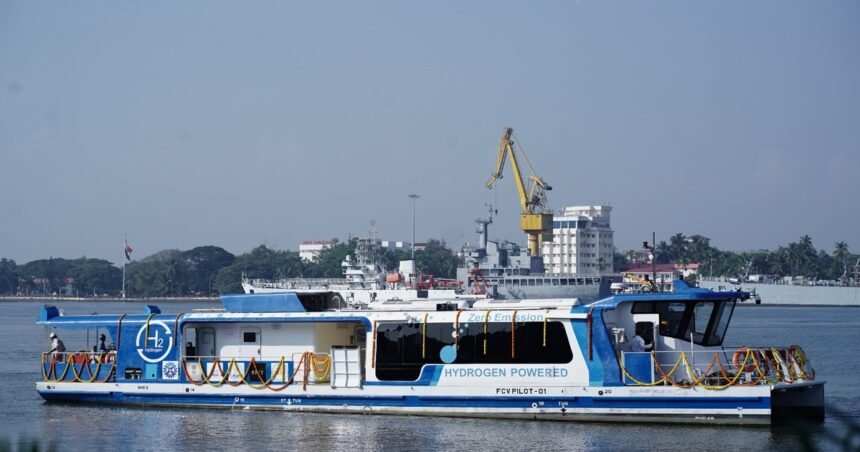
On the Ganga at Varanasi, a ferry glides between the ghats without a wisp of smoke or the thrum of a diesel engine. The only thing it leaves behind is water. FCV Pilot-01 is India’s first hydrogen fuel cell passenger vessel, and it is already carrying passengers in commercial service — a quiet, clean crossing on one of the world’s oldest riverfronts.
The vessel was designed and built by Cochin Shipyard Ltd (CSL) in Kochi, the yard that built INS Vikrant, India’s first indigenous aircraft carrier. The 24.8-metre catamaran is owned by the Inland Waterways Authority of India (IWAI) and runs on National Waterway 1 under the government’s Harit Nauka (Green Boat) initiative. It is certified by the Indian Register of Shipping.
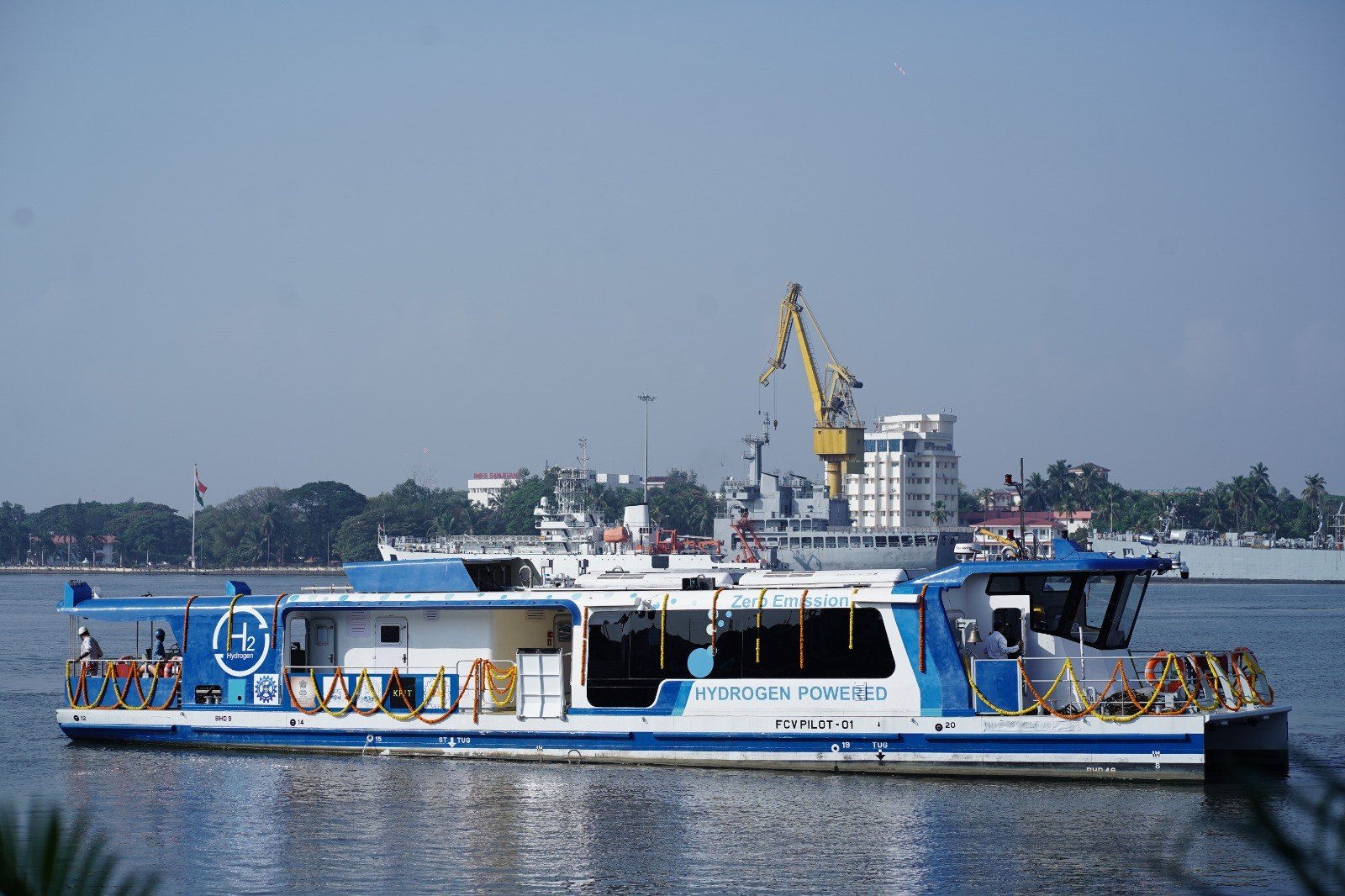
The heart of the ferry is a low-temperature proton exchange membrane (LT-PEM) fuel cell system. Stored hydrogen is turned into electricity, and the only exhaust is water. KPIT Technologies developed, integrated and tested the fuel cell together with the energy storage, power management, control and powertrain systems before installation; CSL built the aluminium hull, marinised the fuel cell system and carried out the overall integration. The automation and power management systems were developed in India.
The ferry carries 50 passengers in a fully air-conditioned cabin at a service speed of 6.5 knots. Its shallow 0.835-metre draught suits the Ganga’s variable water levels along the Varanasi ghats. A KPIT FCV-71-192 40 kW induction motor drives the vessel, backed by two 25 kWh lithium iron phosphate batteries, a 3 kW rooftop solar array and a 48 kW auxiliary generator. The ministry says a single hydrogen fill gives the ferry up to eight hours of operation.
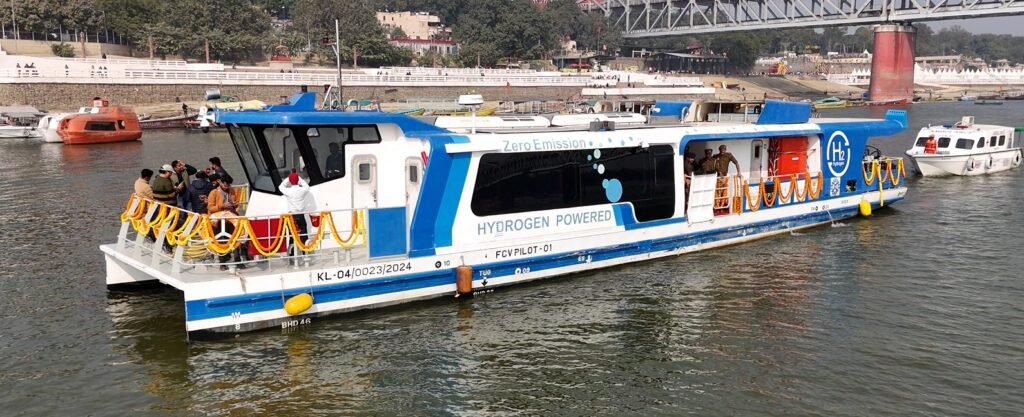
The journey to service took shape in public. Prime Minister Narendra Modi formally introduced the ferry in February 2024, it entered Indian Register of Shipping class in October 2024, and after trials the Ministry of Ports, Shipping and Waterways cleared it for commercial service. On 11 December 2025, Union Minister Sarbananda Sonowal flagged off commercial operations at Namo Ghat, and the maiden run carried ministers and officials on the five-kilometre crossing to Lalita Ghat. A tripartite agreement between IWAI, Cochin Shipyard and Inland and Coastal Shipping Ltd governs the pilot phase — technical support, operations, safety and monitoring.
What Cochin Shipyard has built is more than a single ferry. It is a working demonstration that hydrogen propulsion, designed and integrated in India, can carry real passengers on a real river, every day. The vessel now runs as a demonstration of hydrogen fuel cell propulsion ahead of any decision on a wider fleet — and every silent, smoke-free crossing on the Ganga is a small preview of what India’s waterways could become.
More Read
Keep reading: Mission Ready, Built in India: Inside iNDiC, the Bengaluru Brand Building India’s Own Diving Gear · AI Takes the Helm: Inside Zen Technologies’ Next-Generation Ship Handling Simulator · More Shipbuilding & Maritime stories
Like stories like this? Add Exceptional Technology as a preferred source on Google to see more of our reporting in your search results and Discover feed.







