


In a field in Maharashtra, a farmer scoops up a single gram of soil, presses it onto a paper strip, and plugs a pocket-sized device into her phone. Five minutes later, she has the answer that used to take a laboratory a fortnight: exactly what her soil needs, and exactly what it does not. The device is NutriSensX, and the Pune startup behind it, Proximal Soilsens, has spent more than a decade shrinking an entire soil laboratory into something that fits in a shirt pocket.
Proximal Soilsens was incorporated in 2017 by Dr Rajul Patkar, who began working on agricultural sensors during her PhD in electrical engineering at IIT Bombay in 2011, under Professor Ram Gopal Rao. Her colleague Dr Mukul Singh joined the work, and the two are named inventors on the NutriSensX patent. What started as doctoral research, supported by the Department of Science and Technology, is now a commercial product reaching farmers across eight states.

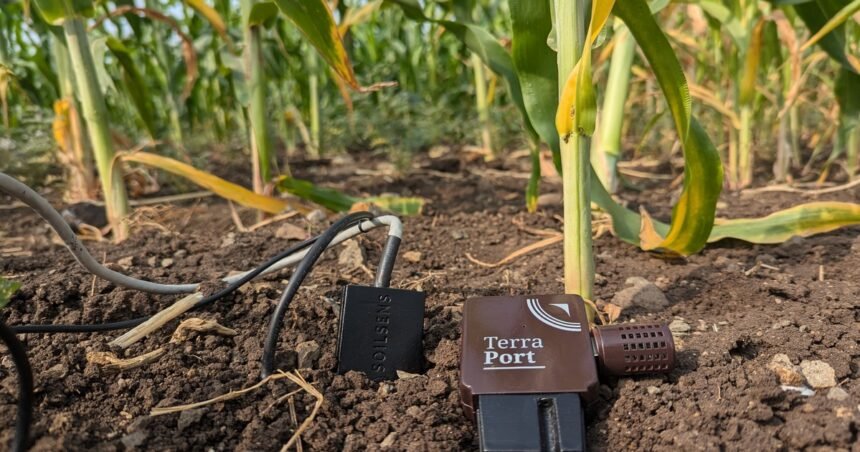
Proximal Soilsens’ NutriSens soil-testing device. (Official visual: Proximal Soilsens)
A glucometer for soil
The idea behind NutriSensX is borrowed from the blood-glucose meter: take a test that once needed a laboratory and make it so simple it can happen wherever the patient — or in this case, the field — is. The device uses paper-based sensor strips to measure six parameters, including pH, electrical conductivity, nitrate, phosphate and potassium, from a single gram of soil. Each parameter reads in seconds, and the full panel is done in under five minutes. The device plugs into a mobile phone, which supplies its power and internet connection, and the results arrive on the app as a downloadable soil health card.
The engineering is deliberately frugal. The company builds the whole system itself — the hardware, the sensors, the testing strips and the chemical reagents — and the device weighs around 500 grams, where a tabletop soil-testing system can weigh about 20 kg. It needs no mains electricity and no laboratory infrastructure, which is precisely the point: the test happens in the field, before the sowing, while the answer can still change what the farmer does.
More Read

From a PhD lab to the field
The path from research to product began when the Mahindra Group approached the IIT Bombay team to pilot the technology. That engagement led to the company’s incorporation in 2017 and an initial paid pilot worth around Rs 3.5 lakh. Orders followed from the Indian Council of Agricultural Research and Coromandel International, and field deployments across Maharashtra, Assam, Punjab, Telangana, Gujarat, Jharkhand, Madhya Pradesh and Rajasthan have recorded over 95% accuracy against conventional laboratory testing, the company says.
The technology has now been adopted by more than 100 institutional customers, including agribusinesses, farmer producer organisations, research institutions, universities and government agencies, and the company says it has reached an estimated 10,000 to 15,000 farmers. At Rs 35,000, the device costs about half of the alternatives on the market, and a field test costs around Rs 300 against roughly Rs 500 at a private lab. The company has also built TerraPort, a 100-gram portable soil-moisture sensor that has received an Indian patent, and two apps — SoilSens FARMER for farmers and SoilSens AGRIWISE for agri-consultants.
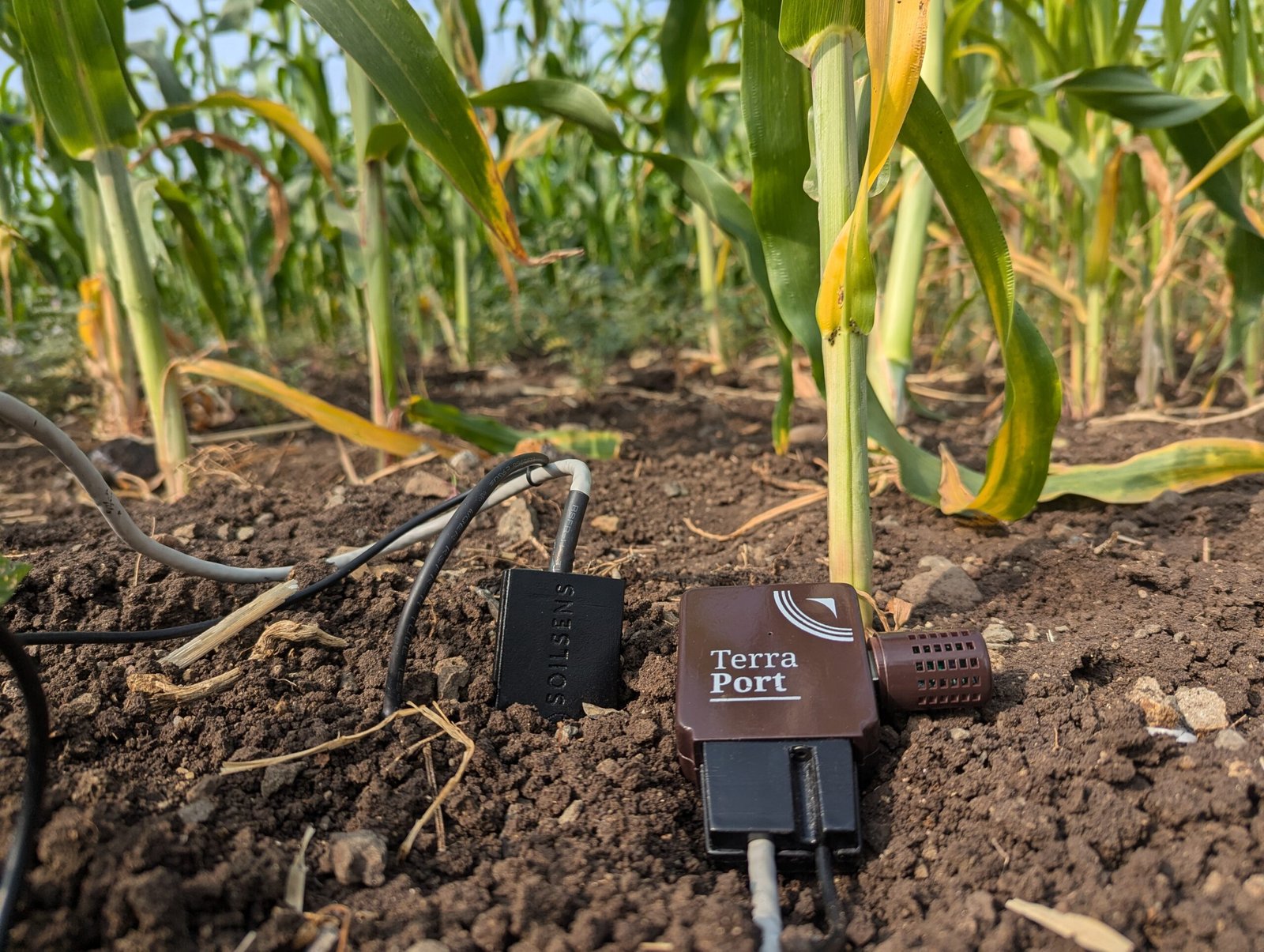
Proximal Soilsens’ TerraPort soil-moisture sensor at work in a maize field. (Official visual: Proximal Soilsens)
The company shows its soil-monitoring system at work in the field:
Why it matters
India has only around 3,000 soil testing laboratories serving some 14 crore farmers, and a sample sent to a lab can take two weeks to come back — by which time the farmer has usually already fertilised and sown. Without knowing what the soil actually needs, farmers keep adding fertiliser, which degrades the soil and eats into their income. A test that takes five minutes, in the field, before a single seed goes in, changes the whole sequence: the farmer knows first, and fertilises only what the soil is missing.
The road ahead
Proximal Soilsens describes itself as being in a commercial growth phase, with annual turnover of around Rs 95 lakh and active pilots and deployments across several states. The team is building out its institutional customer base and its agripreneur network, carrying a decade of IIT Bombay research into more fields, one gram of soil at a time.
A laboratory that once took two weeks and a truck ride now takes five minutes and a phone. For India’s farmers, that is not a small convenience — it is the difference between guessing and knowing, and Proximal Soilsens has put the knowing in their pocket.
Keep reading: Every Farm on the Map: Inside FarmwiseAI, the Chennai Startup That Gave 40 Million Tamil Nadu Land Parcels a Digital Identity · Seven Minutes an Acre: Inside Vaimanika Aerospace, the Patna Startup Spraying India’s Fields by Drone · More Food Processing & Agri-Tech stories
Like stories like this? Add Exceptional Technology as a preferred source on Google to see more of our reporting in your search results and Discover feed.







