


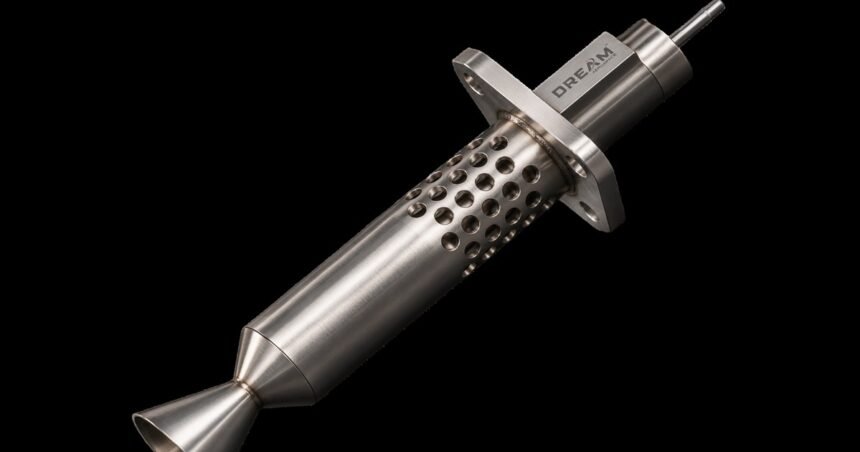
Every satellite, once it reaches orbit, needs a push. A nudge to hold its place, a shove to dodge debris, a final burn to come home safely at the end of its life. For more than half a century, that push has come from hydrazine — a fuel so toxic that engineers handle it in full protective suits, and so hazardous that fuelling a satellite is one of the most expensive and nerve-wracking jobs in the whole mission. A 25-person team in Chennai, with an average age of just 25, is building the alternative: a thruster that burns green.
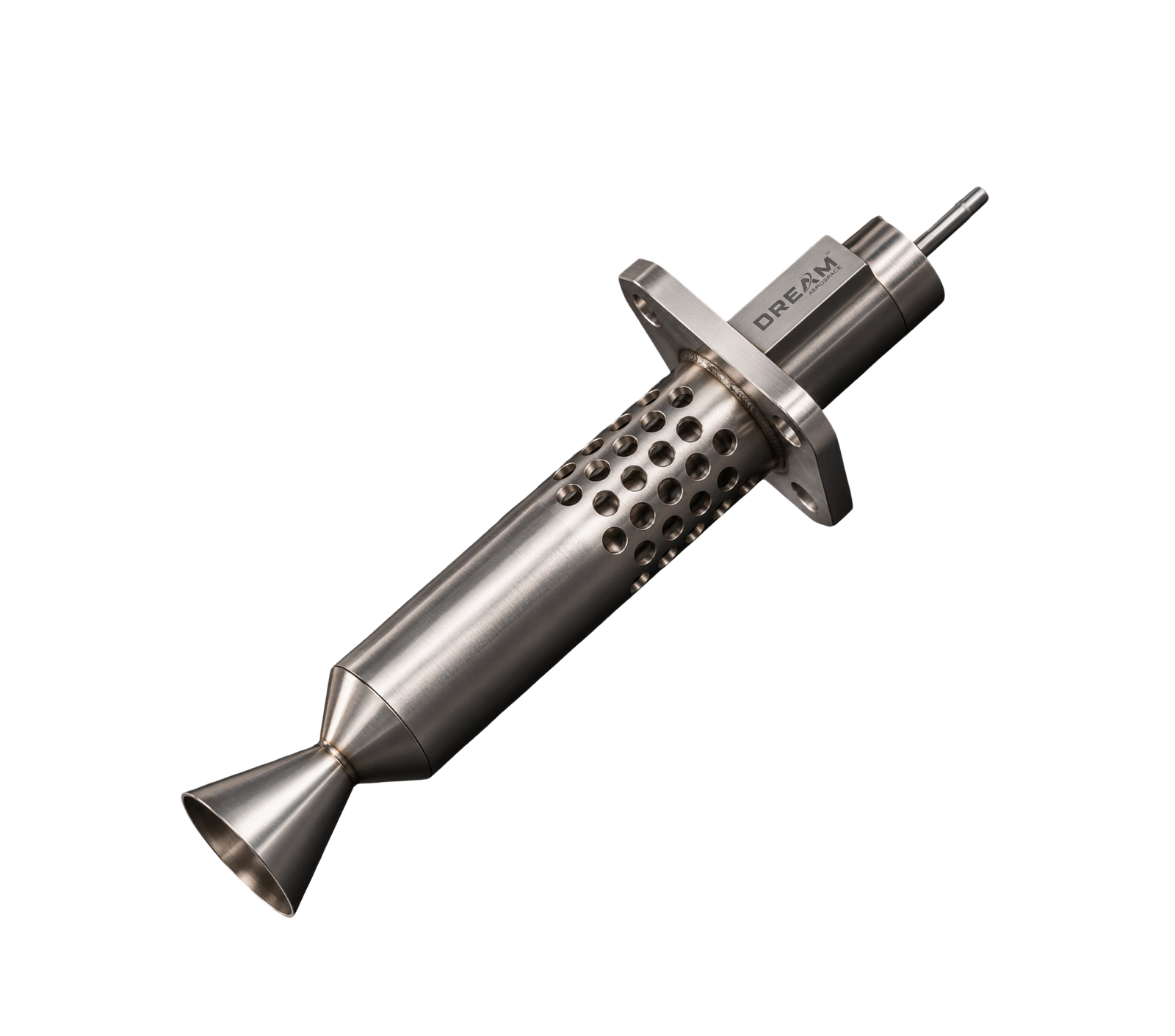
Dream Aerospace was founded in 2022 by Hari Krishnan KJ, a propulsion PhD candidate at IIT Kanpur, and aerospace engineer Rogith S. Their flagship product is ATOM, a monopropellant thruster that swaps hydrazine for a hydroxylammonium nitrate (HAN)-based green propellant the company calls RH521, broken down by its ARC26 catalyst system. The result, the company says, is a thruster that delivers 30% higher performance than traditional hydrazine-based alternatives — with none of the poison.
The poison in the tank
Hydrazine has powered satellites since the dawn of the Space Age, and it works brilliantly. It is also carcinogenic, corrosive and volatile enough that a satellite’s fuelling campaign needs specialist crews, sealed suits and dedicated facilities — costs that fall hardest on the small-satellite teams that can least afford them. Dream Aerospace’s bet is simple: if the fuel is safe to handle, the whole mission gets cheaper, faster and more accessible.
ATOM is built for attitude control and orbital manoeuvring — the precise, repeated burns that keep a satellite pointed the right way and in the right slot. The thruster covers a 1N to 200N-plus thrust range, and it is designed to be compact and reliable enough for the small satellites that now make up the fastest-growing part of the space economy. The company has built its own high-altitude test facility to prove the hardware under conditions close to space, and a Sea-Level Thruster Validation Facility at IIT Kanpur, where the ATOM-Green thruster is being qualified.
Four products, one idea
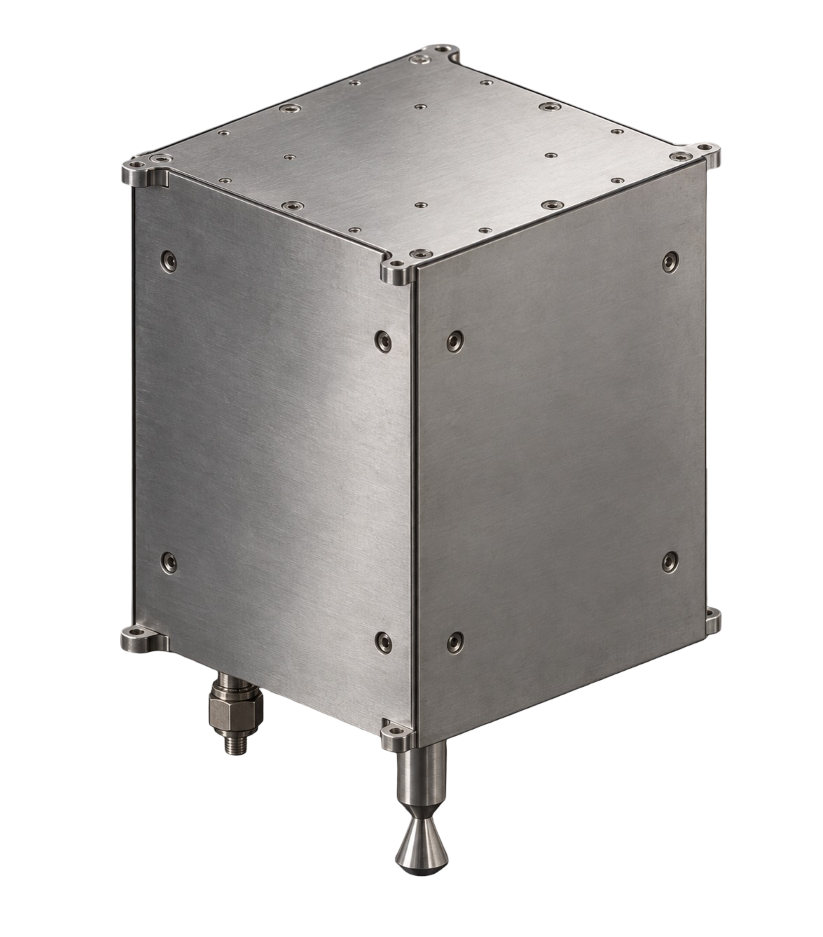
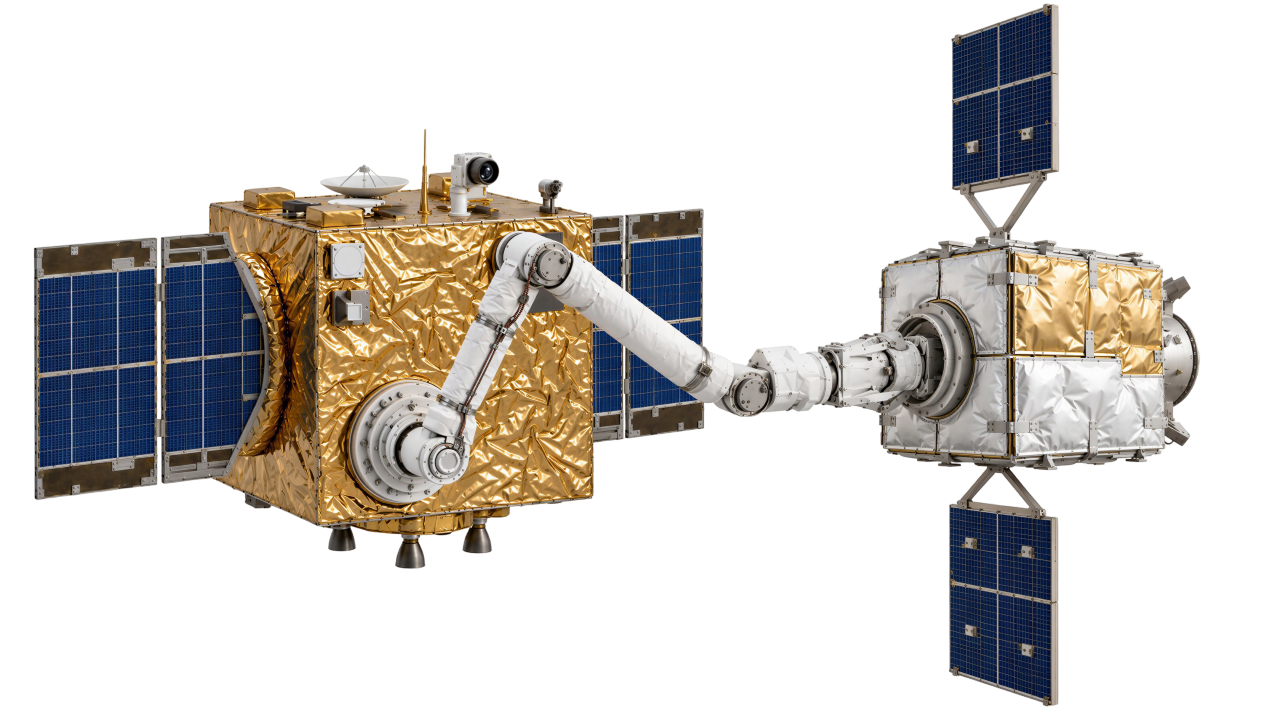
ATOM is only the beginning. Dream Aerospace is building a whole family of propulsion systems around the same green idea. CUBEHOOD packs a complete propulsion system into a 2.5U module that plugs straight into a CubeSat platform — the company unveiled it at Abhivyakti’25 at IIT Kanpur in January 2025, and it is designed for CubeSats from 1U to 26U and beyond. MOLECULE is a bipropellant and cold-gas platform built as one integrated system, using self-pressurising propellant technology to keep the architecture simple. And PRISM looks further ahead still: an autonomous servicing platform for robotic docking and precision propellant transfer, built to refuel satellites in orbit and stretch their working lives.
It is a remarkably complete vision for a team of 25. The company is incubated at IIT Kanpur’s Startup Incubation and Innovation Centre, backed by IN-SPACe, StartupTN, DST NIDHI Prayas and STPI, and mentored by Dr A. Sivathanu Pillai, the former chief executive of BrahMos Aerospace, alongside former ISRO scientists. Grants from TANSEED 4.0, Chunauti 5.0 and the Nidhi Prayas programme helped the early work along, and the company raised a Rs 3 crore pre-seed round led by Inflection Point Ventures in January 2025, followed by a Rs 10 crore pre-Series A round led by 247VC and the Campus Angels Network in June 2026.
More Read

Tested on the ground, aimed at orbit
The new funding is going towards finishing flight qualification tests for the ATOM thruster series and the CUBEHOOD module, expanding the production and testing facility at IIT Kanpur, and the company’s first in-orbit demonstration of CUBEHOOD, planned for 2026 with technical support from ISRO under an existing memorandum of understanding. The company plans to build manufacturing capacity for 40 to 50 propulsion units a year, and the founder told the Prime Minister that customer orders are lined up for the next two to three years.
That ambition is already drawing attention. Dream Aerospace showcased its green propulsion module at India Mobile Congress 2024, and in November 2026 Air Marshal Tejinder Singh visited the company’s facility at IIT Kanpur. The clearest sign of how far the young team has come, though, arrived aboard a Chennai Metro train.
A metro ride with the Prime Minister
During Prime Minister Narendra Modi’s visit to Chennai on 11 October 2026, 17 startup founders were invited to present their work to him during a Metro ride. Hari Krishnan KJ, Dream Aerospace’s founder, CEO and CTO, was among them, and he discussed the company’s propulsion systems for satellites, spacecraft and re-entry vehicles. The Prime Minister asked about the company’s founding, its team size and the employees’ average age — and was surprised by how young the team was. Krishnan told him the startup was focused on increasing its domestic manufacturing capacity, with customer orders lined up for the next two to three years.
Why it matters
India is launching more satellites than ever, and every one of them needs propulsion to stay useful — to hold its orbit, dodge the growing cloud of debris, and de-orbit cleanly when its work is done. Today, that capability is largely imported or built around toxic fuels. Dream Aerospace is building it at home, around a fuel that is safer to handle, cheaper to work with and kinder to the space it operates in. A thruster that burns green is not just a cleaner engine. It is a lower bar for every Indian team that wants to fly — and a longer life for every satellite that does.
Keep reading: No Fire, Just Thrust: Inside SiriNor, the Pune Startup Building the World’s First All-Electric Jet Engine · The Four-Legged Soldier: Inside AeroArc’s MULE, the Robot Dog Marching With the Indian Army · More Aerospace & Defense stories
Like stories like this? Add Exceptional Technology as a preferred source on Google to see more of our reporting in your search results and Discover feed.







