Every Indian home knows the drill. The power goes, the inverter kicks in, and somewhere in a corner a lead-acid battery is quietly dying — it needs water top-ups, it swells in the summer heat, and after a few years it gives up. The bigger alternative, the diesel generator, is louder, dirtier and dearer by the month. And the modern answer, lithium, comes from mines and supply chains India does not control. A young Hyderabad company has spent two years building a different answer out of one of the most abundant materials on Earth: ordinary salt.
Naxion Energy was founded in 2024 — first as Sodion Energy — and is headquartered in Hyderabad, building its systems at a plant in Coimbatore. In December 2025 the company launched what it describes as India’s first sodium-ion energy storage systems, at an event attended by G. Satheesh Reddy, former chairman of the Defence Research and Development Organisation and scientific adviser to the Defence Minister. The company positions itself as India’s first dedicated sodium-ion battery manufacturer.
One box, three jobs
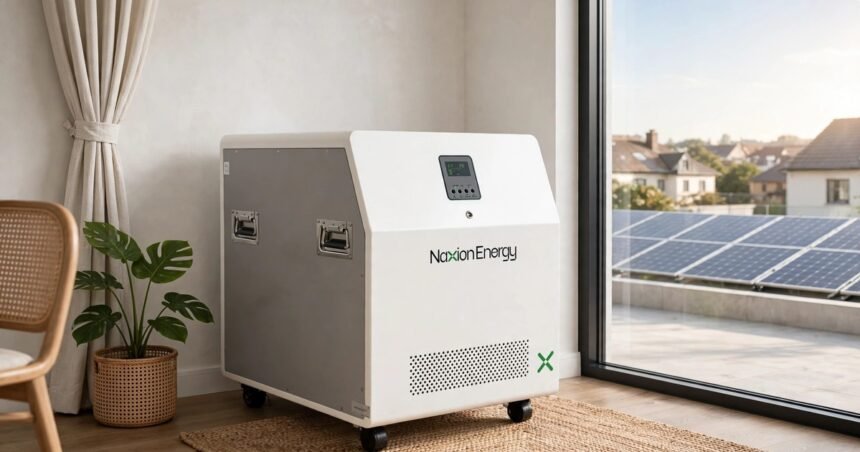
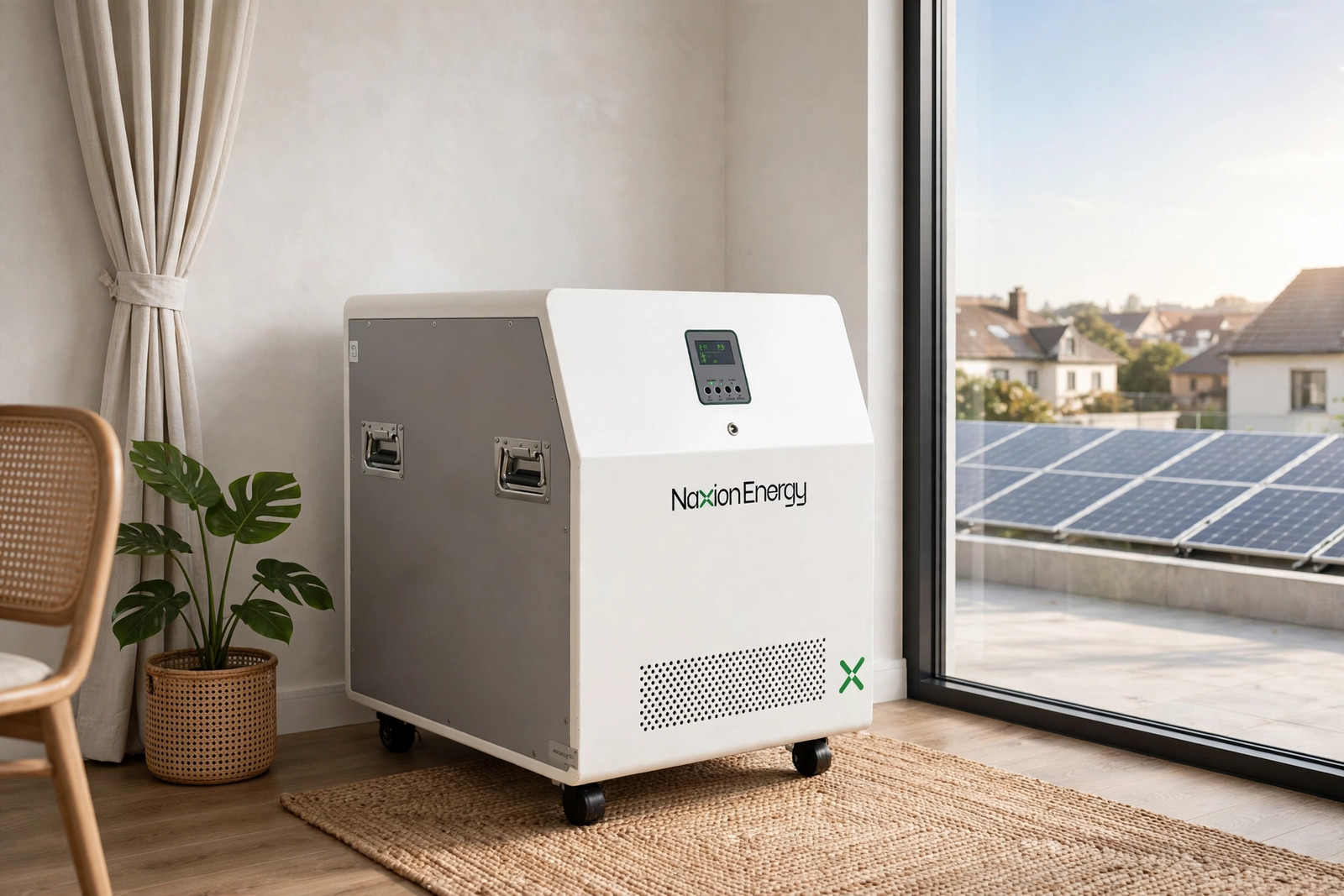
The heart of the launch is an all-in-one energy platform: battery, inverter and solar charge controller built into a single unit. It comes in 3.5 kW, 5 kW and 10 kW models, and the battery can be expanded to double the system’s storage capacity — so a home or a small factory can start small and grow the backup as its needs grow. The design is zero-maintenance, with no water top-ups, no corrosion and no periodic servicing, and it is engineered to keep working from –30°C to +70°C, through Indian summers and Himalayan winters alike. The company says the systems weigh up to 60 per cent less than comparable lead-acid setups and last up to two to three times longer.
That combination is aimed squarely at the two incumbents Naxion wants to replace. Against lead-acid, sodium-ion offers longer life, no maintenance and a far wider temperature window. Against diesel generators, it offers silence, no fuel bills and no fumes — the company says its platform is designed to directly replace generators for homes, shops and small industry.
Why salt changes the maths
Sodium sits directly below lithium in the periodic table and behaves similarly enough to run a battery — but where lithium is scarce and geopolitically tangled, sodium is everywhere, in the sea and in the earth. That abundance is the whole bet: a battery chemistry India can build without depending on imported critical minerals. The company says its sodium-ion chemistry is non-flammable and non-toxic, eliminating the risk of thermal runaway that has haunted lithium batteries — a difference that matters most for a box that sits inside a home, a shop or a crowded commercial building.
The chemistry also brings a practical edge the company is keen to show off: much higher charge and discharge rates than lead-acid or lithium systems, which means faster charging and enough power to run high-inductive loads — air conditioners, compressors, pumps, and even industrial work such as welding, cutting and grinding, which traditional backup batteries cannot reliably support. Speaking at the launch, G. Satheesh Reddy said sodium-ion technology could help India reduce material dependence and strengthen long-term energy security, and chief executive Abishek Reddy said the goal is to build an indigenous supply chain around the technology, “without dependency on scarce imports”.
More Read

From Coimbatore to the country
The Coimbatore plant already has an annual sodium-ion battery pack production capacity of 1.5 GWh, and the company has laid out a Rs 200 crore expansion: a pilot sodium-ion cell manufacturing plant of 500 MWh by 2027 and a 1 GWh battery pack assembly plant in Hyderabad, the company’s second manufacturing site, alongside a 50 per cent increase in headcount. The company has raised Rs 25 crore so far.
The systems are already out in the field. Naxion works through a dealer network across major Indian cities, serving customers such as Sagar Cements, the Tamil Nadu Forest Department, TAFE dealerships and MSME industrial clusters, alongside regional logistics operators and specialty vehicle manufacturers. And storage is only half the story: the company also makes sodium-ion battery packs for mobility — for heavy machinery, marine applications and defence — betting that the same safe, hardy chemistry belongs wherever a battery has to survive Indian conditions.
Why it matters
India remains one of the world’s biggest users of diesel generators for backup power, and millions of homes and small businesses still lean on lead-acid inverters that demand constant care and die young. Both are stopgaps that cost money, health and quiet. Naxion Energy’s bet is that the replacement does not have to come from a lithium mine on another continent — it can come from salt, assembled in Coimbatore, in a box that needs no maintenance, never catches fire and keeps working from a desert afternoon to a Himalayan night. If sodium-ion scales the way the company plans, the backup power in Indian homes will stop depending on imported lithium and start depending on the sea.
Keep reading: From Paddy Straw to Diesel: Inside Greenjoules, the Pune Company Turning Farm Waste Into Fuel · The Powder That Powers Every Battery: Inside Altmin, the Hyderabad Startup Making India’s Cathodes · More Energy & Power stories
Like stories like this? Add Exceptional Technology as a preferred source on Google to see more of our reporting in your search results and Discover feed.